
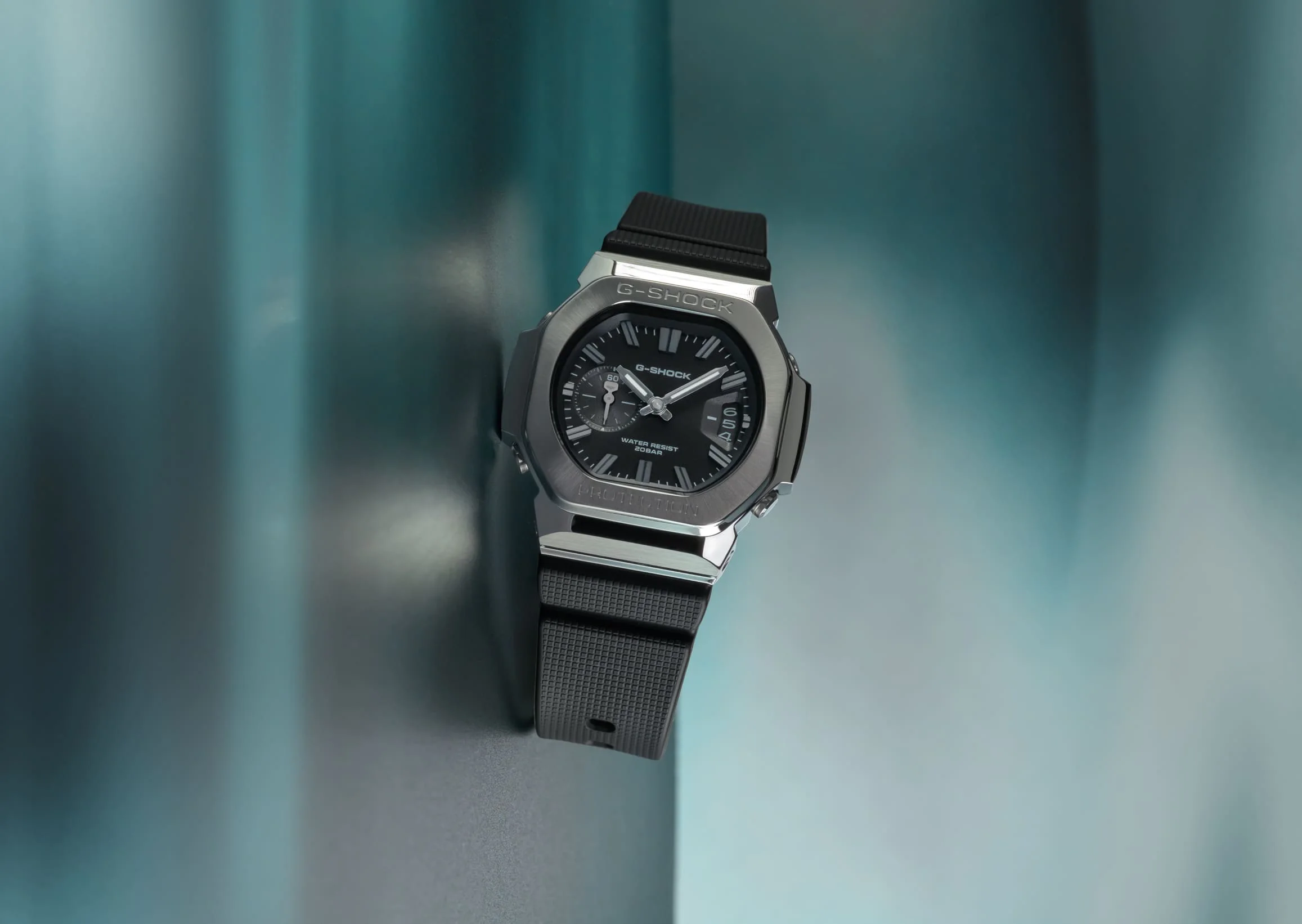
Casio announced the GMC-2500 and GAC-2500 families on 22 October 2026 as analog descendants of the 1983 DW-5000C. The important move is not simply removing the digital display. Casio rebuilds the original watch’s functional hierarchy with broad hands, a small-seconds register and a three-cell Multi-Mission Date window. For collectors, this is a test of whether an icon can change display language while keeping its operating logic.
The collector read in 30 seconds
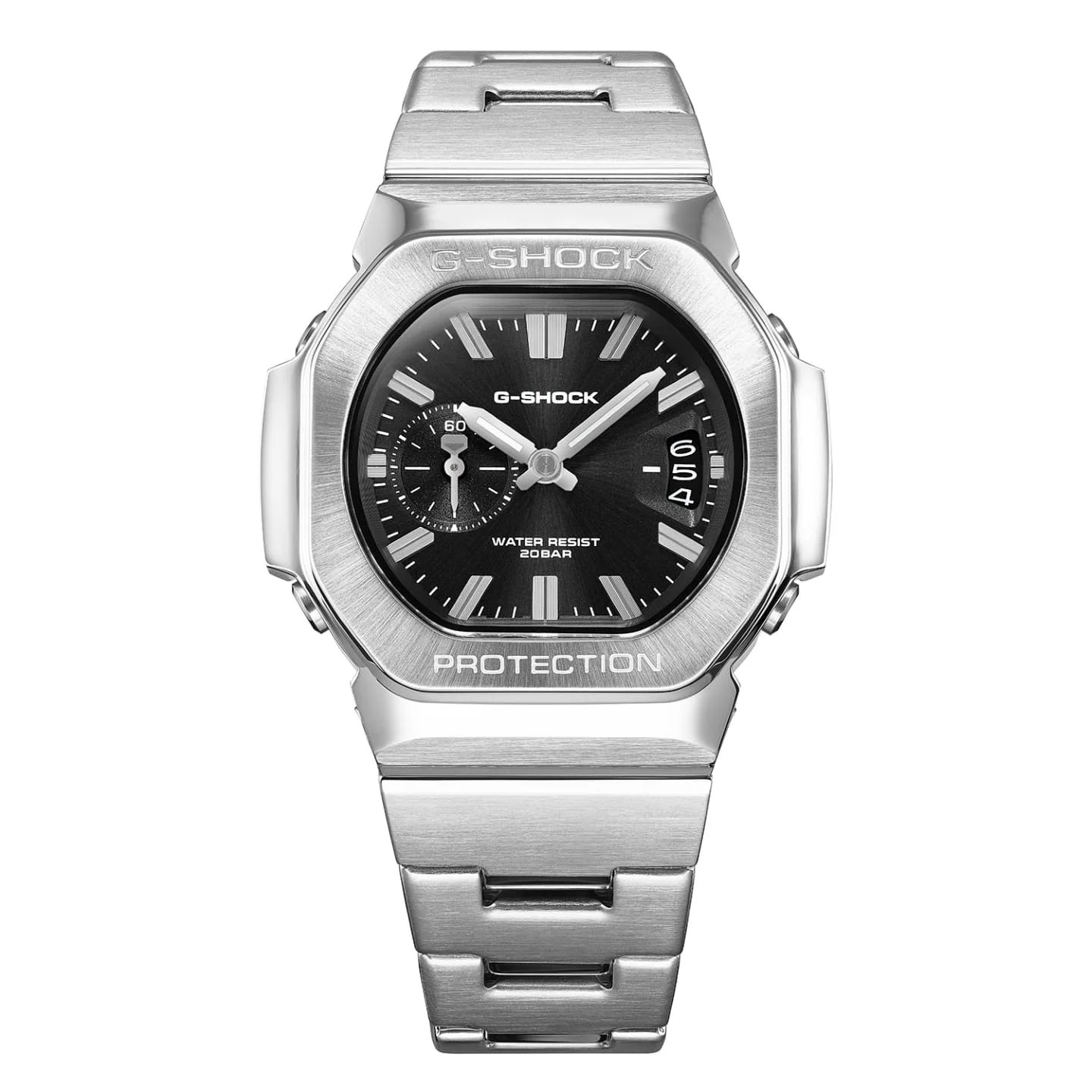
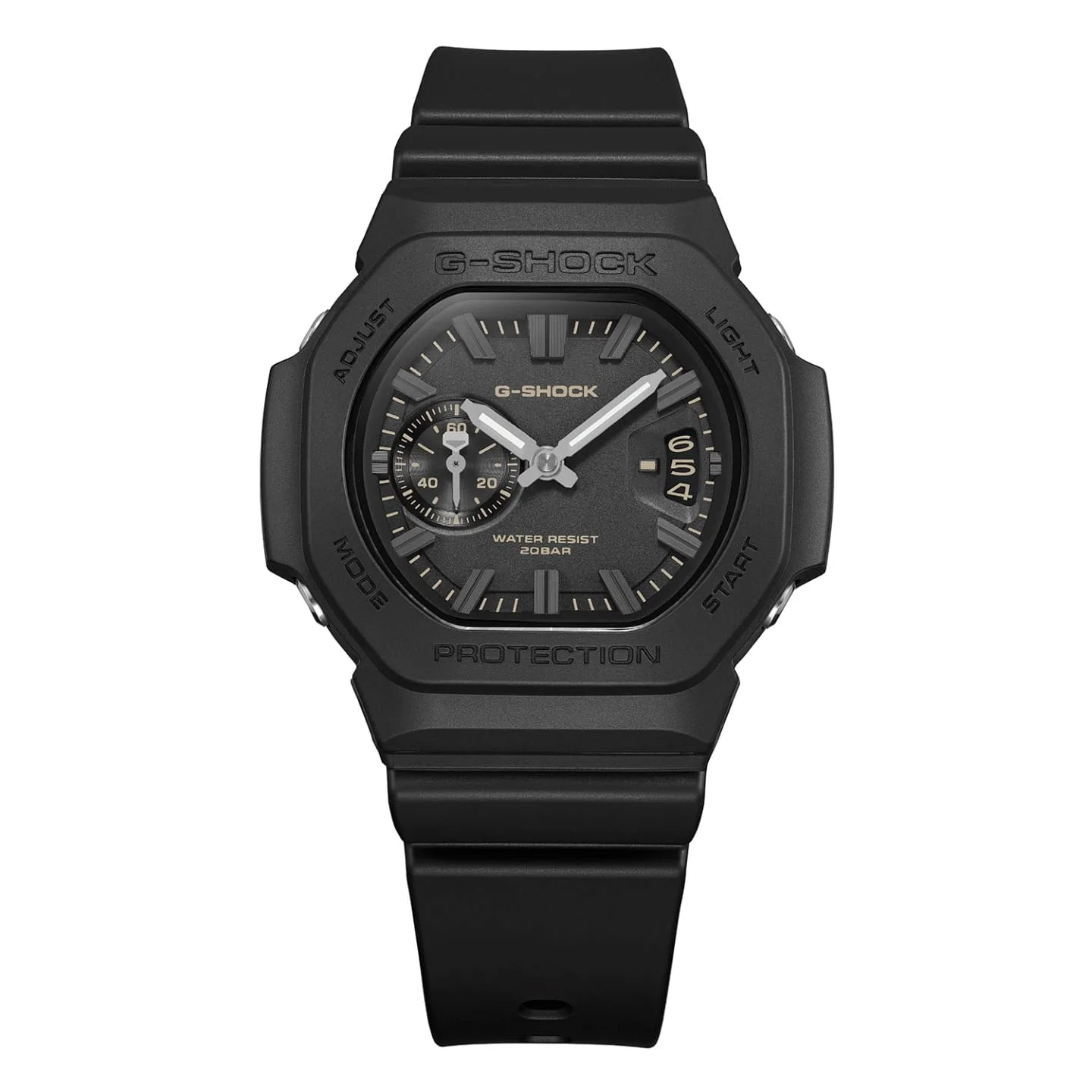
Both families use the same fully analog concept, 200-metre water resistance, shock-resistant construction, a 30-minute stopwatch, LED light and full auto-calendar to 2099. The GMC models add a metal bezel and range from bracelet to resin-strap variants; the GAC line uses bio-based resin and weighs just 47 g in the black reference. Choose GMC for material presence, GAC for lightness. Neither offers solar charging or Bluetooth, and the mineral crystal is a practical compromise to price and impact resistance.
The date window does several jobs
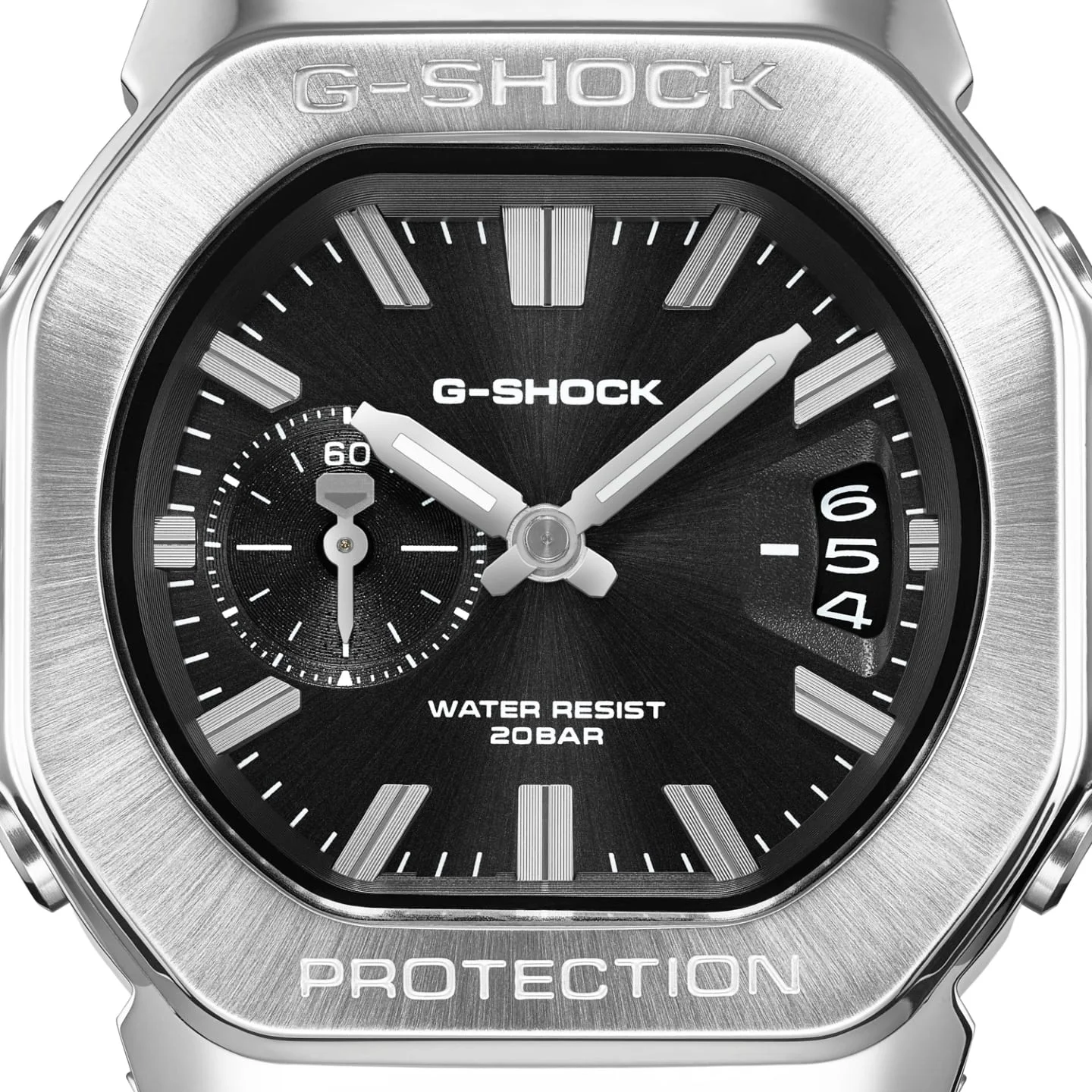
At three o’clock, the three-cell display shows the date, elapsed stopwatch minutes and setting information according to mode. It keeps the main dial free of an LCD while preserving a genuinely multifunctional interface. The small seconds at nine can be stopped to reduce power use. This is the strongest connection to early G-SHOCK thinking: every visible part is asked to explain status, not merely decorate the case.
Shock Release Hand is the real engineering story
The minute hand is attached magnetically rather than fixed directly to its shaft. Casio says this allows the hand to absorb and dissipate impact; after a strong shock it may move temporarily, then return to the correct position within minutes. That behaviour should be understood before purchase. It is an engineered recovery mechanism, not the absolute visual stillness expected from a conventional analog watch.
Metal and resin create two ownership choices
The GMC-2500D-1A measures 46.7 × 43.8 × 12.9 mm and weighs 138 g on its steel bracelet. The GAC-2500-1A measures 46.7 × 44.5 × 12.7 mm and weighs 47 g on bio-based resin. Both use a CR1025 battery rated around two years, mineral glass and ±15 seconds per month accuracy. The specifications make the split clear: similar wrist footprint, radically different mass and tactile character.
What remains to be judged on the wrist
Nine references cover black, blue-grey, silver, gold, green, white and yellow executions, with release marked for November 2026. Buyers should verify local price, availability, hand alignment after impact, crown-and-pusher feel and how the 44 mm-class width sits on the wrist. Casio has supplied a coherent design argument; comfort and long-term interface clarity still require physical use.
Loading comments...