
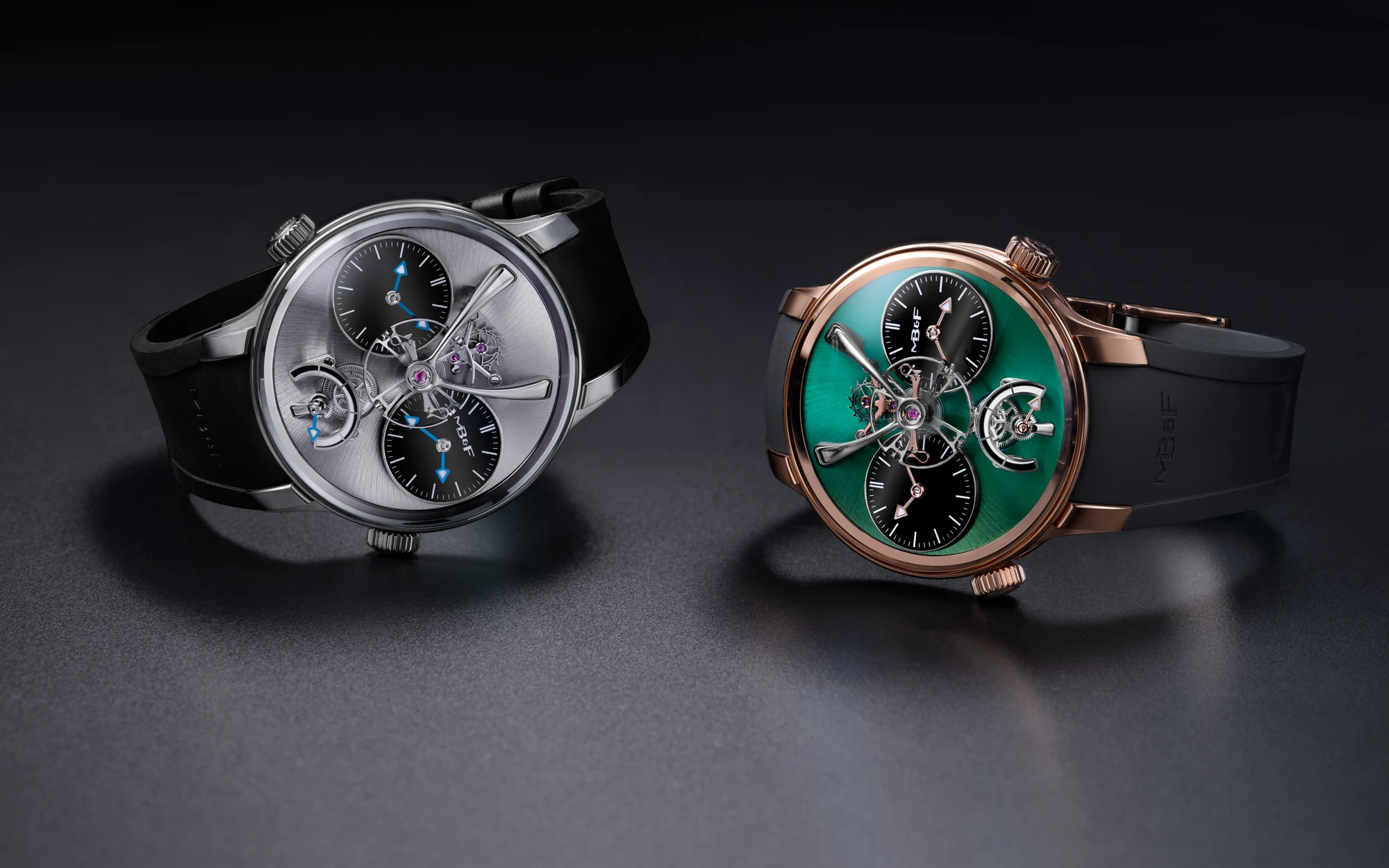
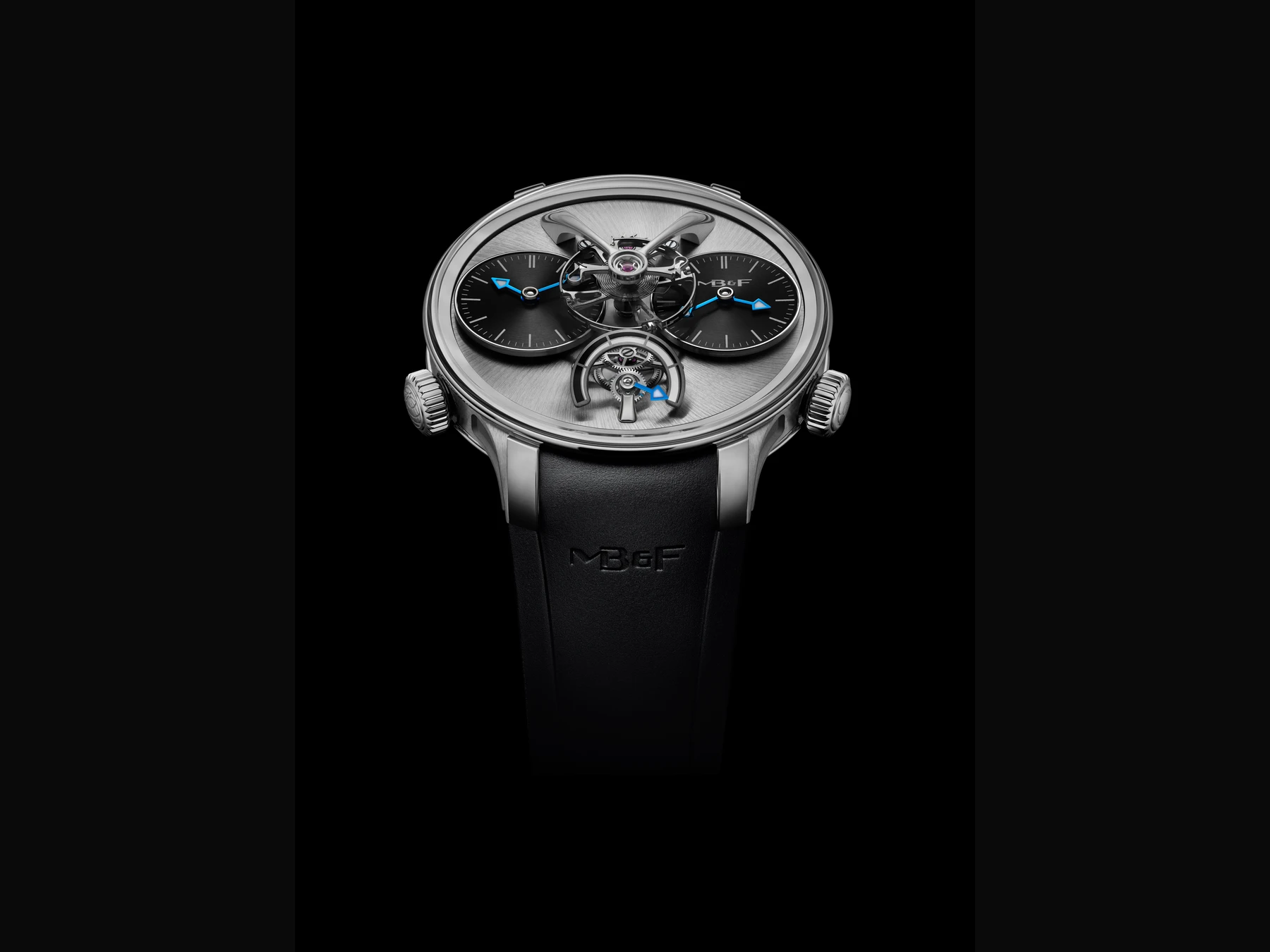
Fifteen years after Legacy Machine N°1 opened a second design language for MB&F, the architecture has returned as LM1 EVO. The two independent time displays and suspended 14 mm balance are immediately familiar, but the new watch is not a commemorative reissue. A 42 mm case, 80 metres of water resistance, screw-down crowns, FlexRing shock protection and quick-change rubber straps move the idea from display-case theatre toward repeatable daily wear.
Why a collector should care
The original LM1 was important because it proved that traditional round-watch codes could still feel radical. The EVO question is harder: can practical engineering improve that object without sanding away the tension that made it memorable? Collectors should look beyond the sports strap. The meaningful changes are the ones that alter when, where and how often the watch can be worn.
Two time zones that do not assume whole hours
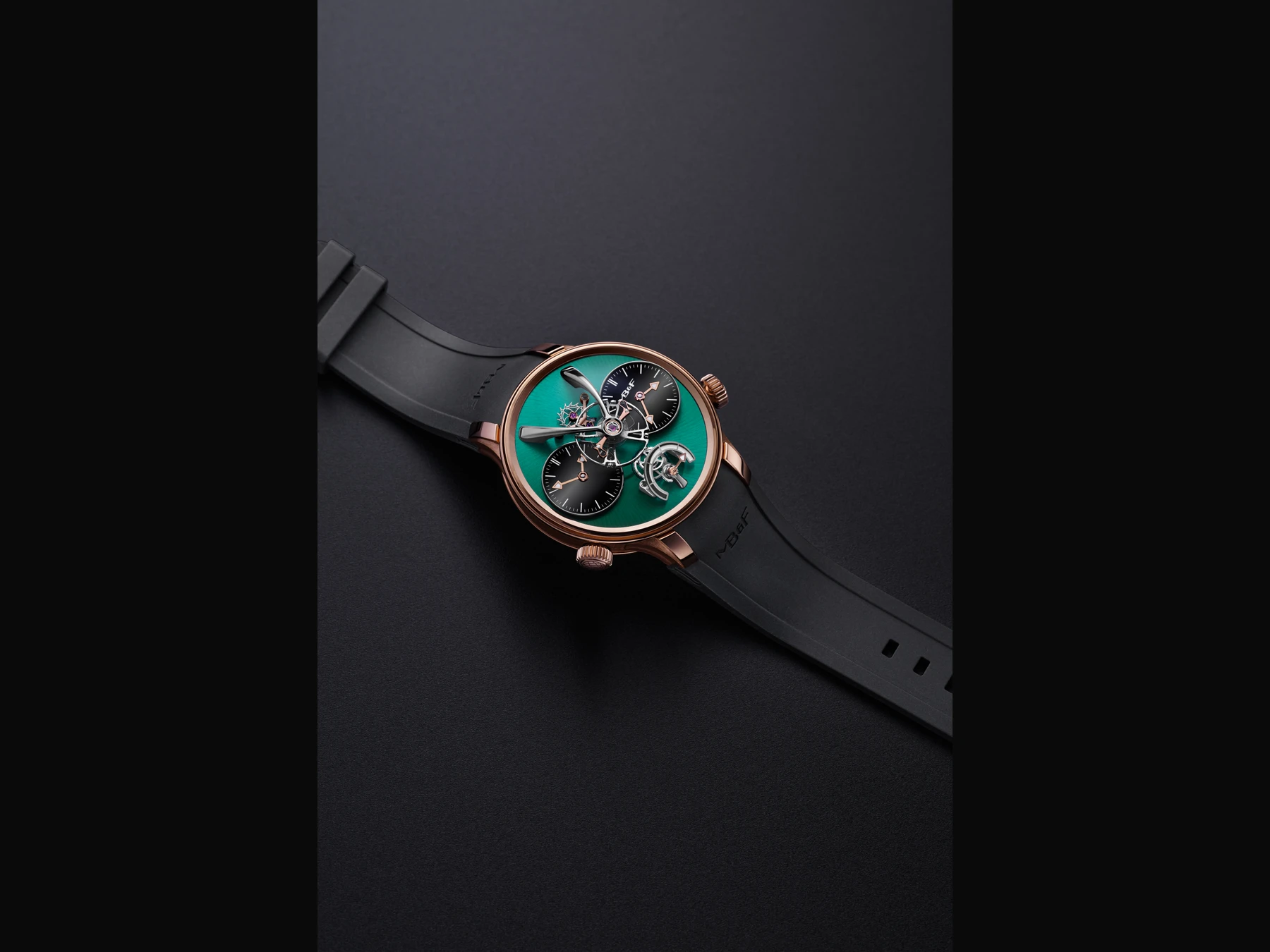
Each subdial sets hours and minutes independently. This is different from a conventional GMT display tied to full-hour offsets, so it can represent places offset by 30 or 45 minutes. One dial may also serve as a simple elapsed-time reference while the other keeps local time. The complication is visually dramatic, yet its usefulness comes from refusing the usual GMT shortcut.
A smaller case, not a small watch
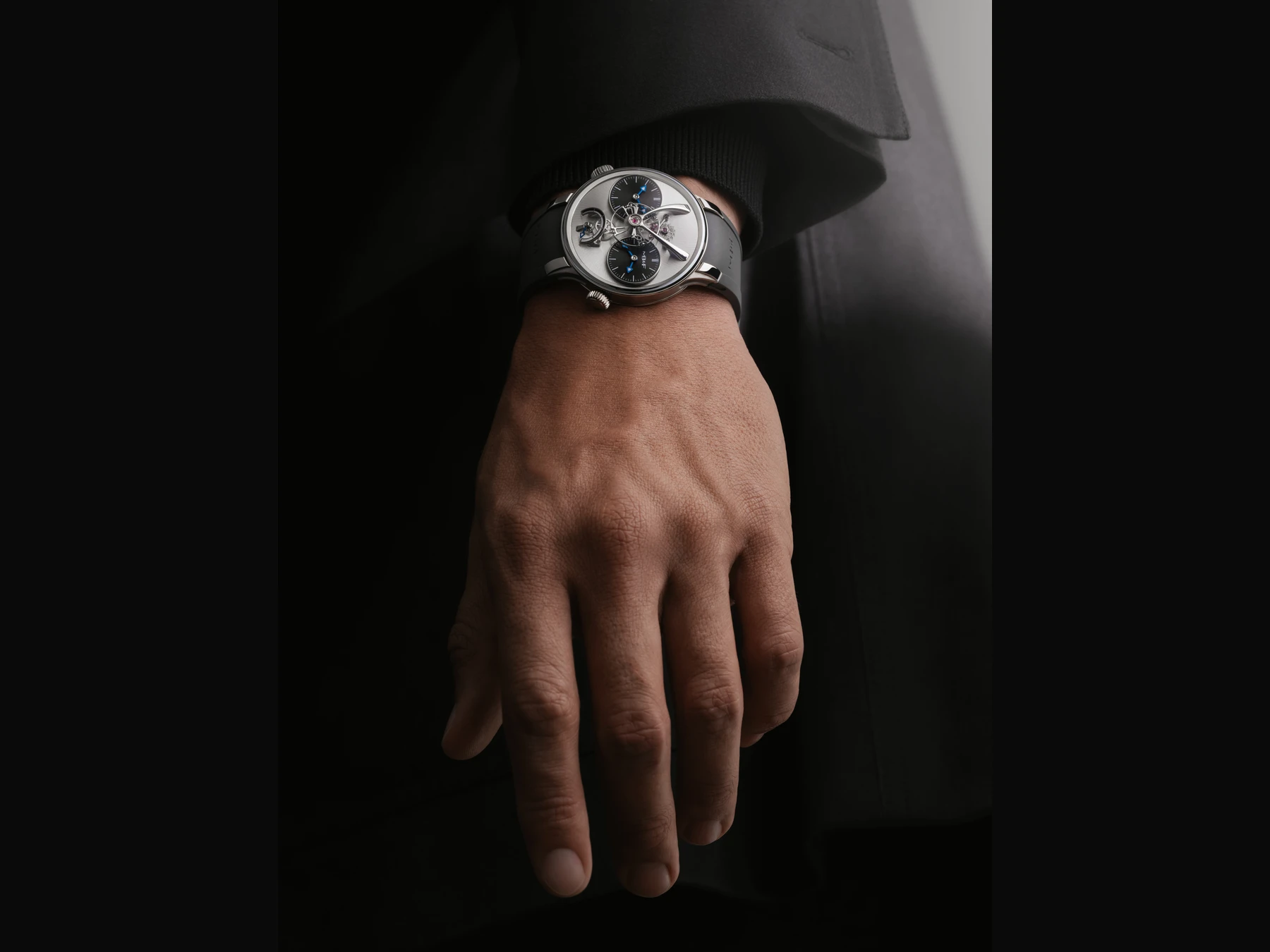
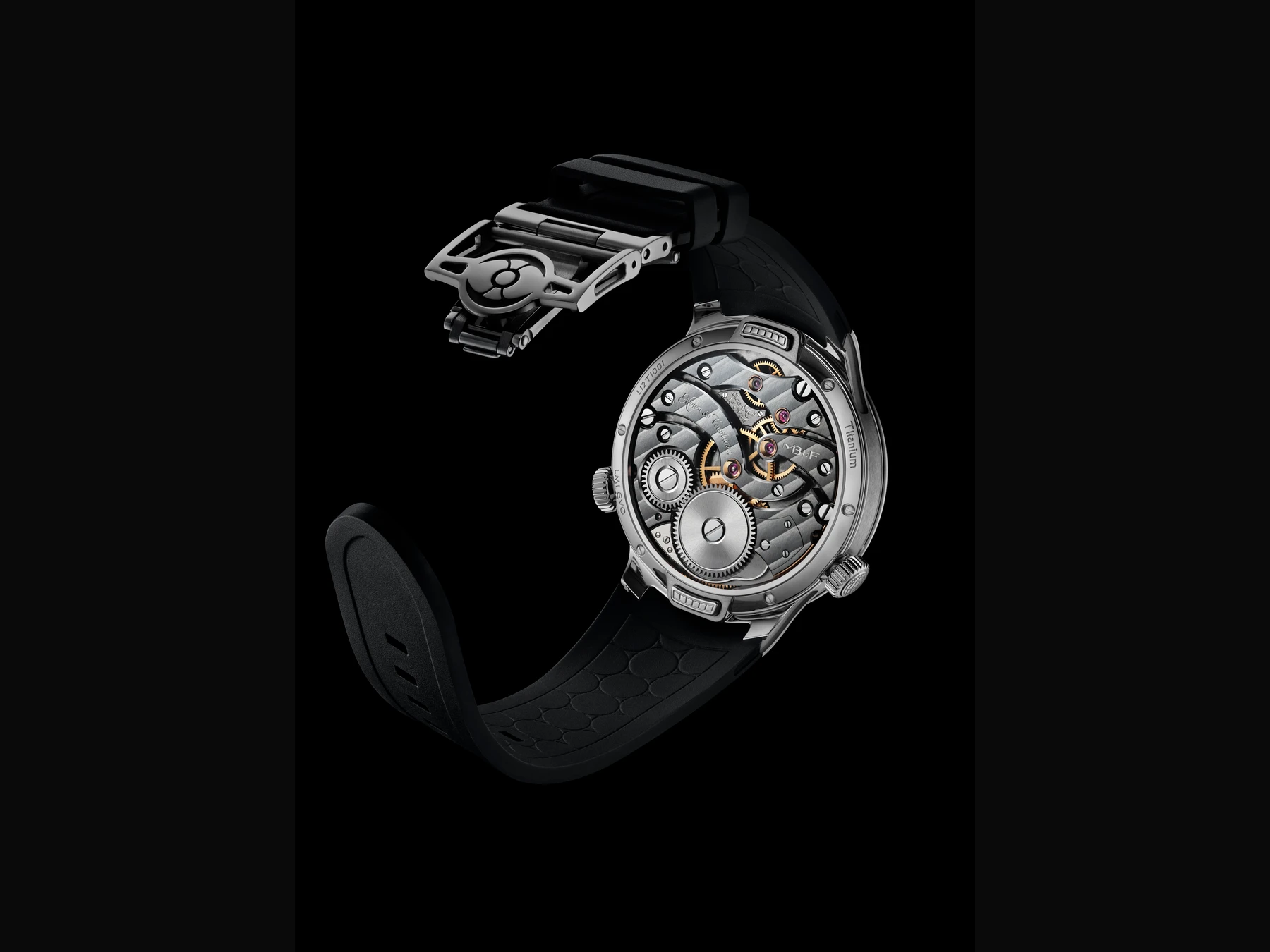
At 42 mm across, 16.8 mm high and 52 mm lug to lug, LM1 EVO remains a large three-dimensional object. The reduction from the original is therefore about proportion and accessibility, not discretion. A high domed crystal, twin crowns and the flying balance still demand space. The titanium edition should reduce mass, while the rose-gold version deliberately keeps physical and visual weight. Wrist fit cannot be inferred from diameter alone.
The movement trades theatre for useful reserve
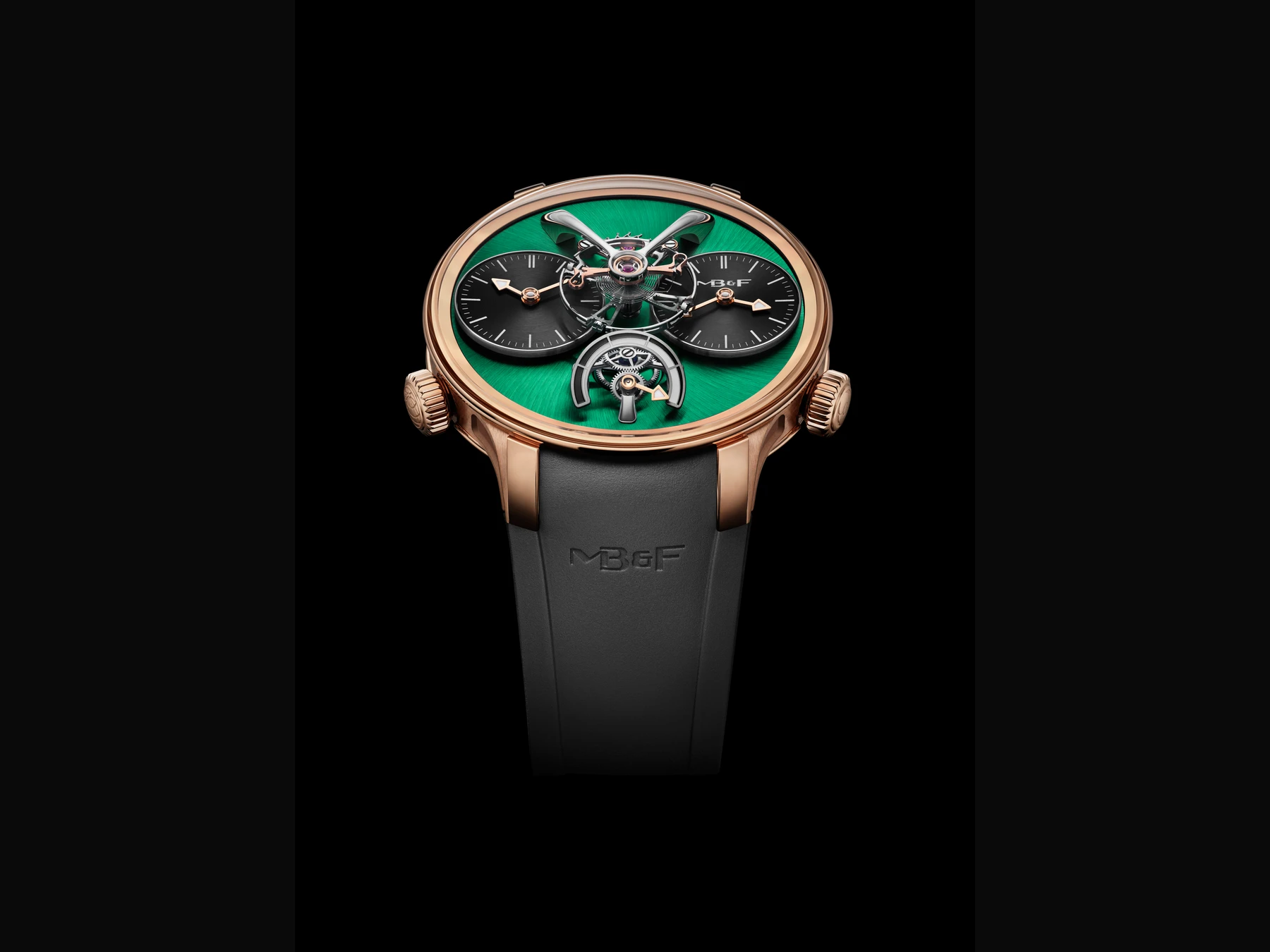
The vertical power-reserve tower of the original gives way to an inclined display integrated near six o’clock. In return, reserve rises from 45 to 60 hours. The manually wound calibre uses a Straumann double hairspring, runs at 2.5 Hz and retains finishing specified with Kari Voutilainen: gold chatons, polished countersinks, internal angles, Geneva waves and hand engraving. The new indicator is less sculptural, but its extra autonomy is easier to appreciate after a weekend away from the crown.
Titanium or rose gold?
The grade-5 titanium model uses a rhodium dial plate and is not described as limited. The 5N+ rose-gold version pairs a green dial plate with a run of 33 pieces. These are not merely two colours. Titanium supports the EVO promise of lighter, more active wear; rose gold makes the contrast between sporting protection and traditional precious-metal watchmaking more explicit. The right choice depends on whether the buyer wants the case to disappear physically or announce the machine visually.
The ownership test
LM1 EVO earns its case only if the practical changes translate into more wrist time. The collector test is straightforward: confirm that the 52 mm span sits securely, that the two crowns remain comfortable, that the independent displays are genuinely useful and that the quick-change system invites rather than complicates strap changes. If those checks pass, this is not a softened LM1. It is the original argument rebuilt for owners who want to live with the spectacle instead of preserving it.
Loading comments...