
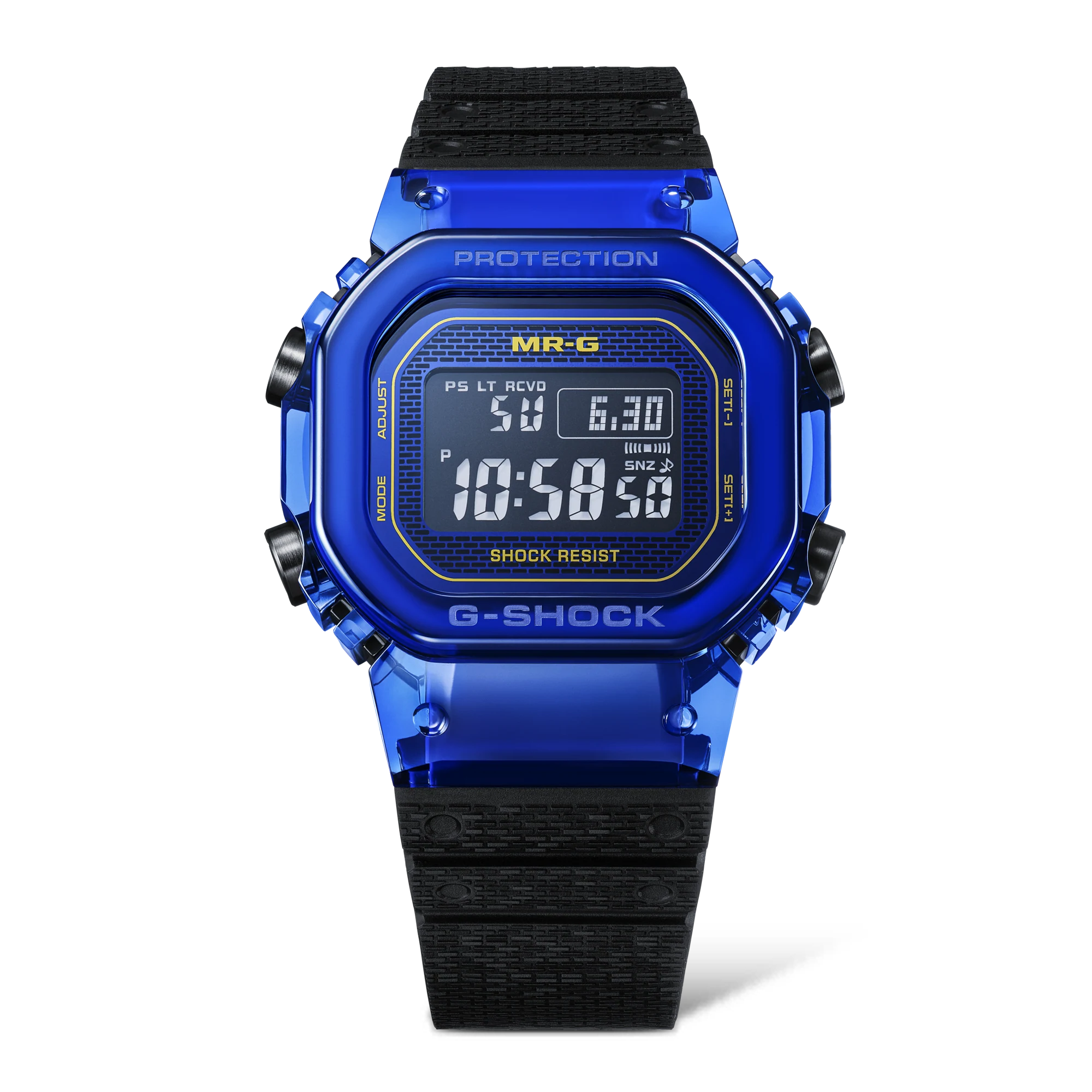
Sapphire is a natural material for a watch crystal because it resists scratches. It is a much stranger choice for the structure expected to survive a shock. That contradiction is the point of Casio’s new G-SHOCK MR-G MRG-D5000: a 20-piece digital watch that asks whether the brand’s toughness language can support an object built around a brittle, expensive material.
Casio announced the MRG-D5000 on 1 October 2026, with release scheduled for December. The blue sapphire bezel and case components do not simply replace metal parts. Casio developed a screwless multi-component layout intended to keep stress away from holes and other places where sapphire can crack. For collectors, that engineering decision matters more than the inevitable price headline: it makes the material part of the watch’s problem-solving rather than a decorative skin.
A fragile material inside a toughness brief
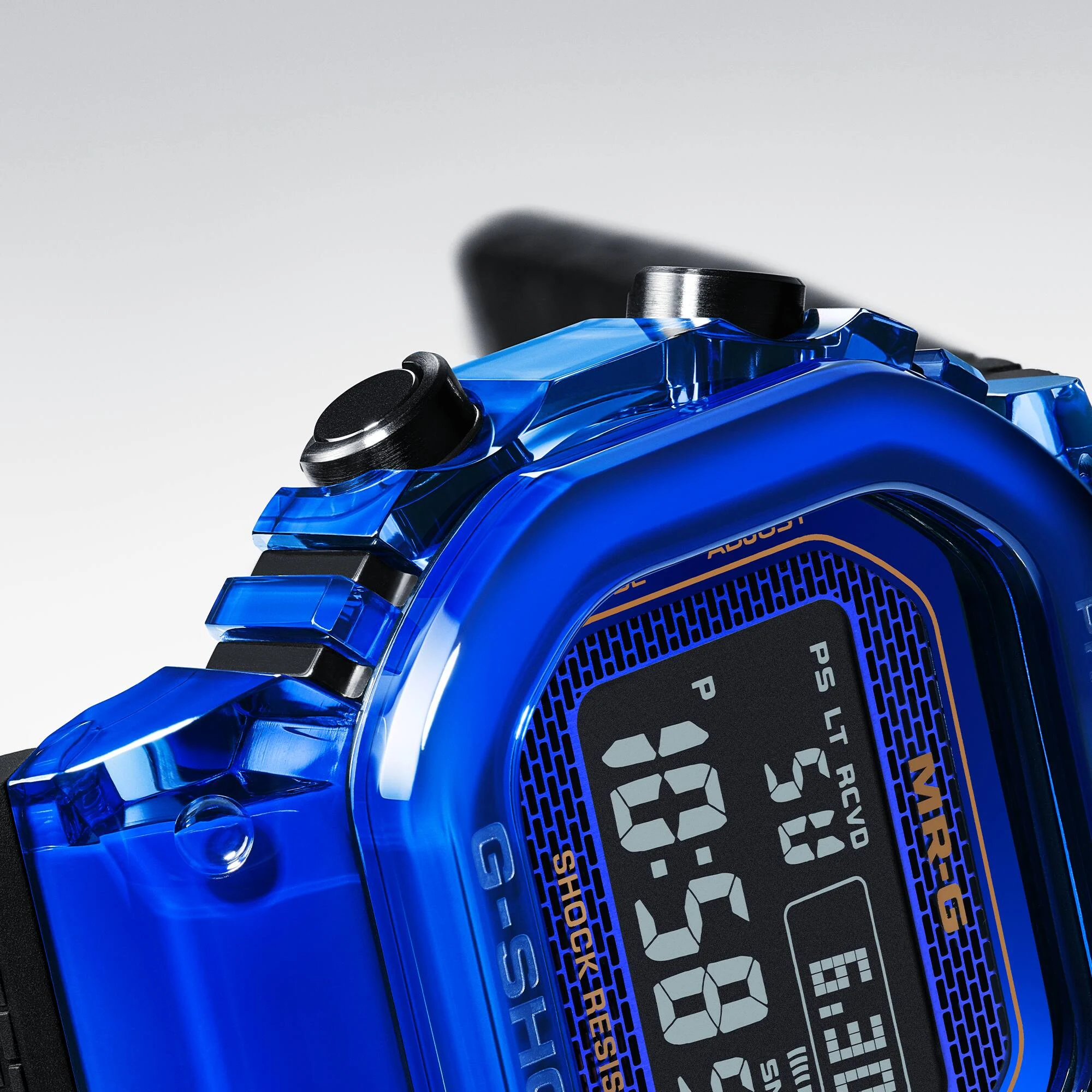
The proprietary MR-G Multi-Guard Structure splits the bezel and case into separate pieces. Casio says it analysed how impact force travels through sapphire, then shaped the protective architecture around those loads. Traditional Japanese kigumi joinery is the stated design reference: interlocking parts rather than screws through the sapphire itself.
This does not make sapphire unbreakable, and Casio does not publish a consumer claim that it does. The more useful reading is that the company treated brittleness as a design constraint. That is a stronger collector story than simply setting stones into a familiar case.
The square remains recognisably G-SHOCK
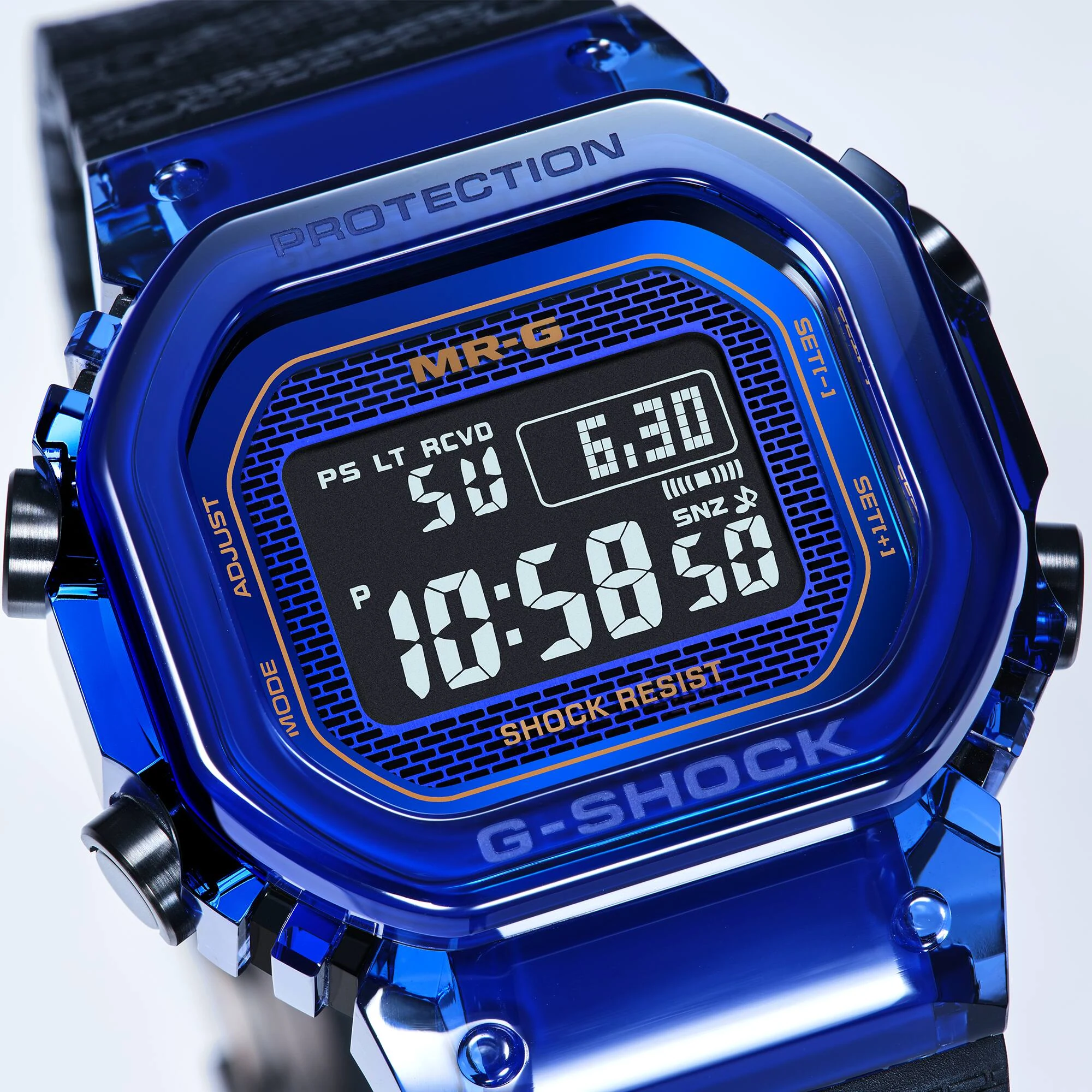
The result is visually extravagant, but the interface remains legible as a descendant of the original square G-SHOCK. The brick pattern around the display is finished in blue, while the MR-G and SHOCK RESIST lettering uses 24-karat gold. The case measures 51.1 × 43.2 × 16.5 mm and weighs 121 g. A Dura Soft rubber strap carries the brick motif, while a titanium three-fold clasp keeps the wearing hardware practical.
The module is deliberately familiar rather than exotic. Multi Band 6 radio control, world time, alarms, stopwatch, timer, LED backlight and a full calendar to 2099 sit alongside Gallium Tough Solar. Casio lists roughly 11 months of normal operation after a full charge, or 22 months in darkness with power saving.
- Reference
- MRG-D5000
- Case
- 51.1 × 43.2 × 16.5 mm
- Weight
- 121 g
- Water resistance
- 200 m
- Power
- Gallium Tough Solar
- Edition
- 20 worldwide
Luxury is being defined by development cost
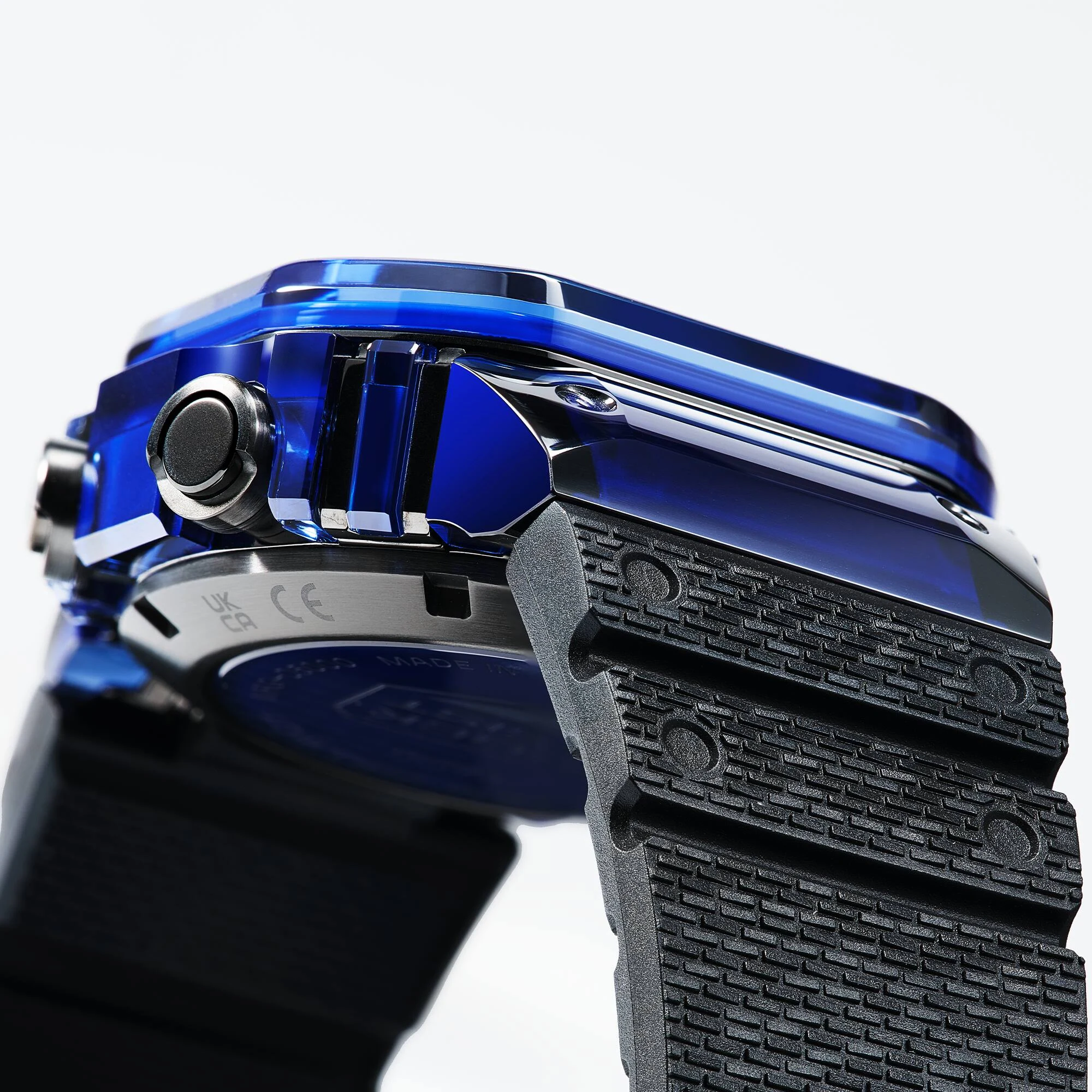
MR-G has long translated G-SHOCK into polished titanium, complex finishing and high prices. The MRG-D5000 pushes that logic further: luxury is presented as the cost of making an unsuitable material behave well enough for the brand’s core promise. The appeal is less about adding functions than about showing what engineering resources can do to one iconic outline.
That also creates the watch’s main risk. A production run of 20 ensures rarity, but rarity alone does not prove lasting importance. The MRG-D5000 will matter if collectors see the screwless sapphire structure as a genuine technical chapter in MR-G, not merely the most expensive route to a blue square.
What the official pages do not settle
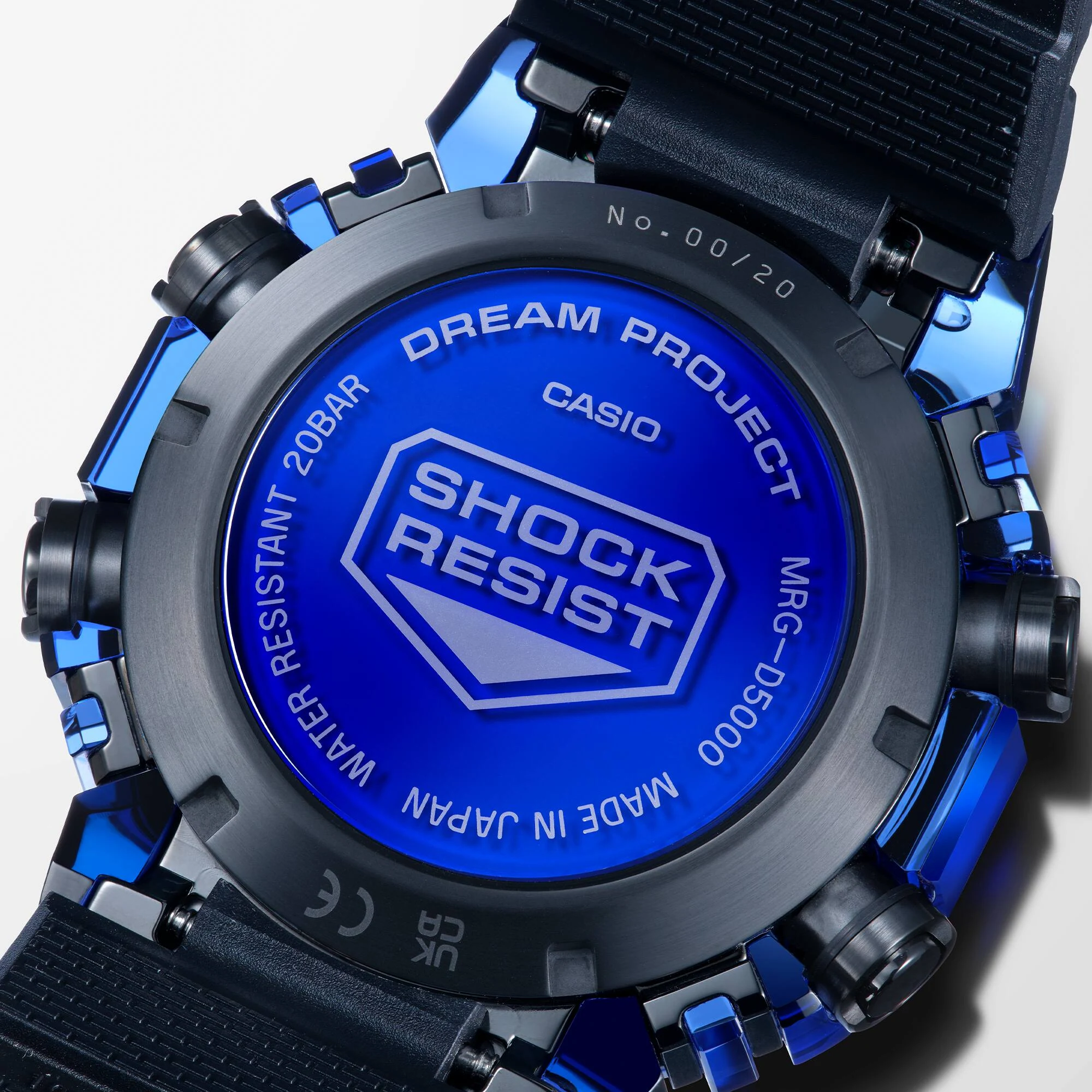
Casio’s global announcement and product page establish the construction, specifications, edition size and December timing. They did not list a final global retail price at the time of review. The US campaign describes a registration process, but eligibility, selection and purchase terms remain subject to final rules. Horomag therefore does not treat third-party price reports or early registration language as settled availability.
There is also no hands-on evidence here. A 121-gram watch on rubber may be manageable, but a 51.1 × 43.2 × 16.5 mm case still needs a wrist test. Sapphire’s scratch resistance does not eliminate impact or ownership risk, and the limited edition should not be framed as an investment forecast.
The collector signal is the contradiction
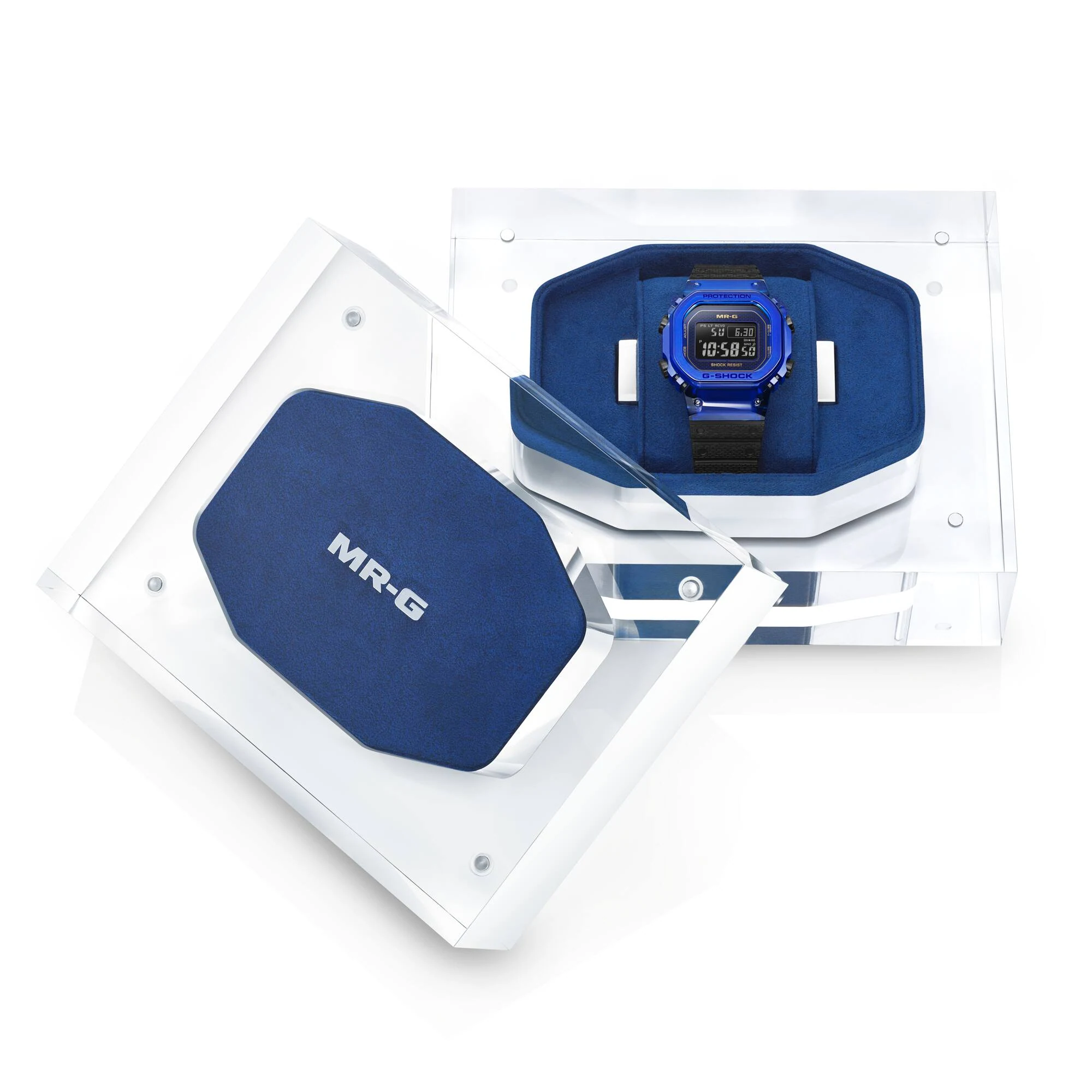
The MRG-D5000 is useful because it exposes a shift in Japanese watch luxury. Casio is not asking the mechanical-watch world for permission; it is taking a mass-recognised digital form and spending development effort on material, structure and finishing. The display stays digital, the functions remain practical, and the engineering theatre happens around them.
That makes the watch easier to understand than its scarcity suggests. Collectors do not need to believe that sapphire is the ideal G-SHOCK material. They only need to see why Casio chose the difficult one: the Blue Rose project turns the brand’s oldest promise—surviving impact—into a fresh engineering problem.





Loading comments...