
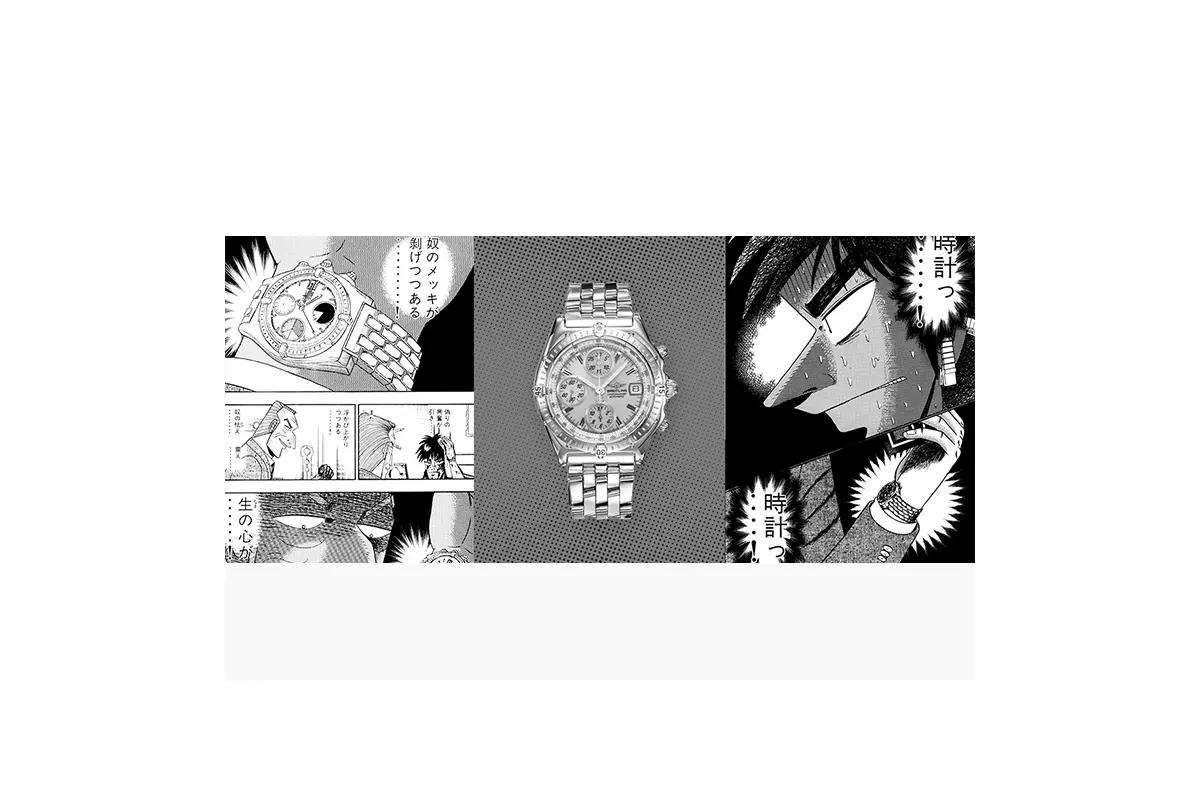
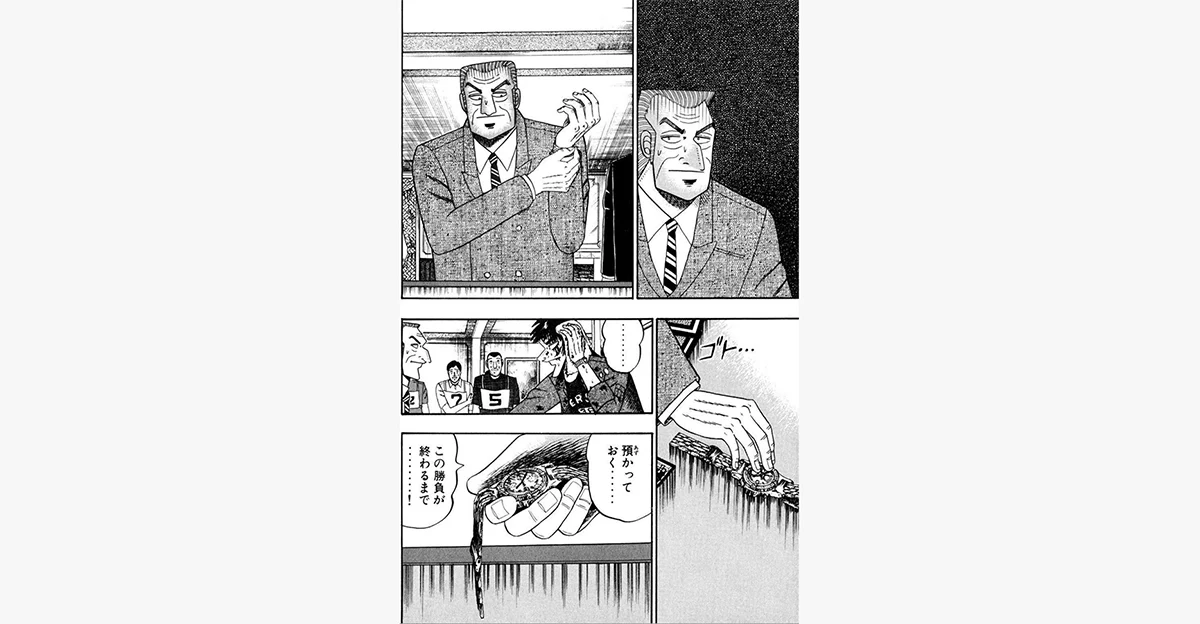
A watch cameo matters when the object does work that no generic prop could do. In Nobuyuki Fukumoto’s manga Kaiji, Tonegawa’s Breitling Chronomat ref. 13050 is status symbol, cheating instrument and plot clue at once. Its three chronograph registers are reimagined as readouts for Kaiji’s pulse, temperature and perspiration during the E-Card gamble. The choice shows how a late-1990s audience read the Chronomat: expensive, technically assertive and conspicuous enough for a powerful antagonist.
Why This Watch Matters
The Chronomat is not decoration. Its layout drives the deception, its inside-wrist position reveals the trick, and it becomes physical evidence once Kaiji understands the game. Ref. 13050 is narrative design rather than a passive logo cameo.
A Chronograph Turned Into A Lie Detector
Breitling identifies the watch as Chronomat ref. 13050. In the story, an earpiece secretly monitors Kaiji’s vital signs. Tonegawa reads those signals from the watch’s three subdials, predicting which card Kaiji is likely to play. The fiction stretches the watch’s function, but uses its real architecture intelligently: three registers become three biometric channels.
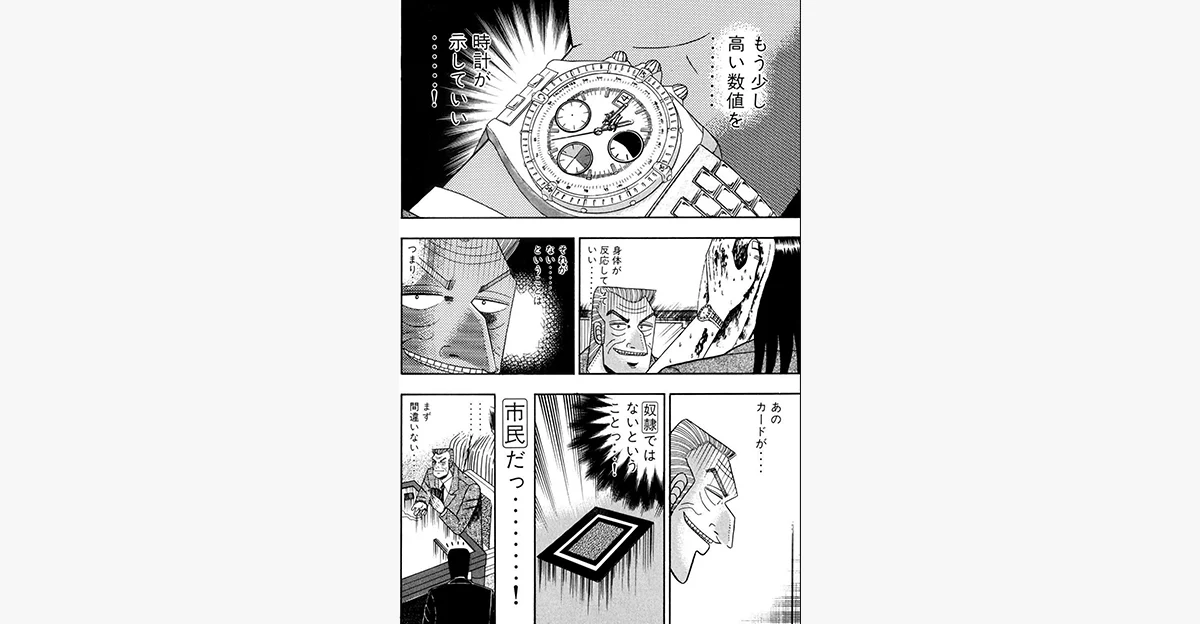
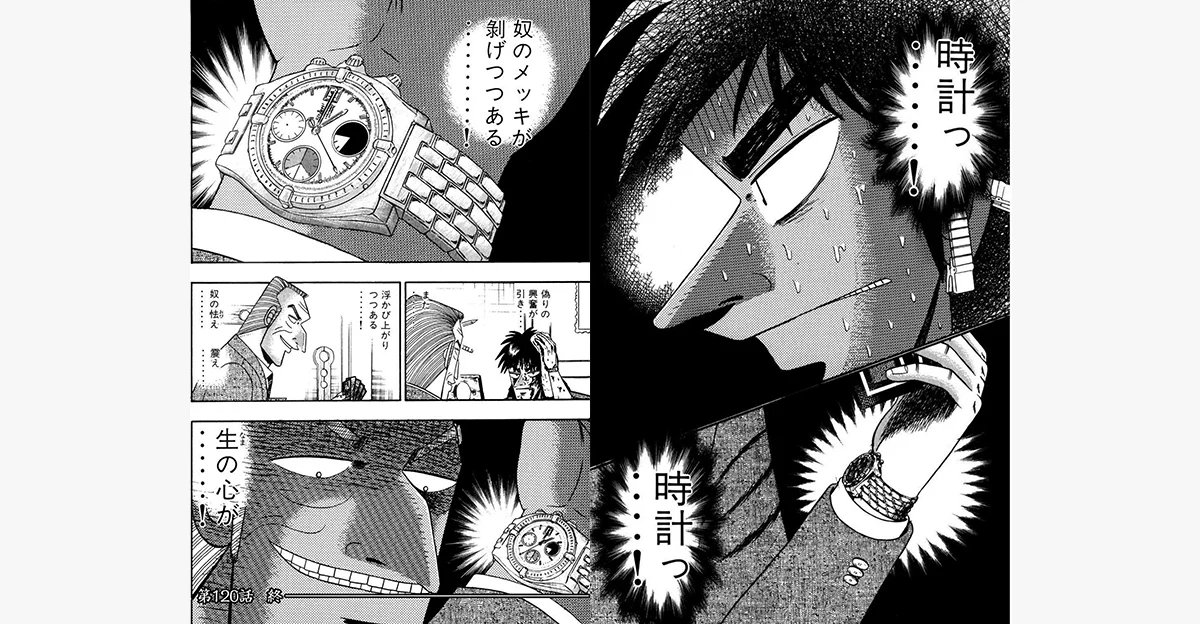
The decisive clue is equally watch-specific. Tonegawa wears the watch inside his wrist so he can consult it while holding his cards. Kaiji notices the orientation and works backward from gesture to mechanism. A symbol of control becomes the weak point in Tonegawa’s performance.
Why Fukumoto Chose The Chronomat
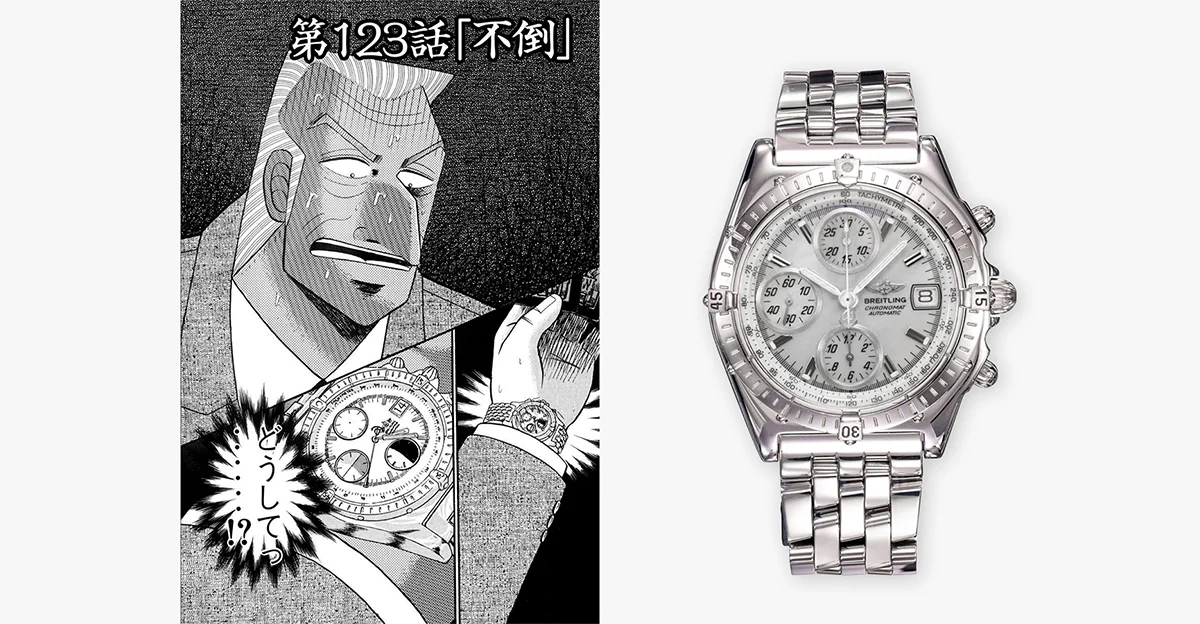
Fukumoto told Breitling that he wanted a watch matching Tonegawa’s prestige and that the chronograph layout suited the vital-sign display. Ref. 13050 also has the visual force the scene needs. Its rider-tab bezel, busy dial and rouleaux bracelet remain readable in black-and-white panels. A quieter dress watch might signal wealth, but would not create the same mechanical tension.
The collector lesson is simple. Screen and comic watches become memorable less through price than through silhouette and function. Strong examples can be recognized in outline, and their real controls or displays help the story. The Chronomat satisfies both tests.
An Eighties Survivor In A Nineties Manga
Breitling traces the modern Chronomat to the 1983 Frecce Tricolori chronograph developed under Ernest Schneider for the Italian aerobatic team. At a time when quartz was reshaping Swiss watchmaking, the model made automatic chronograph construction part of its identity. By the late 1990s, ref. 13050 had become an easily read emblem of mechanical confidence.
That history mirrors Kaiji without requiring mythology. The manga follows an underdog forced to understand systems controlled by more powerful people; the Chronomat emerged when traditional Swiss mechanical watches had to justify their continued existence. The parallel is retrospective, but explains why this watch feels more apt than a random luxury badge.
What Changed By 2026
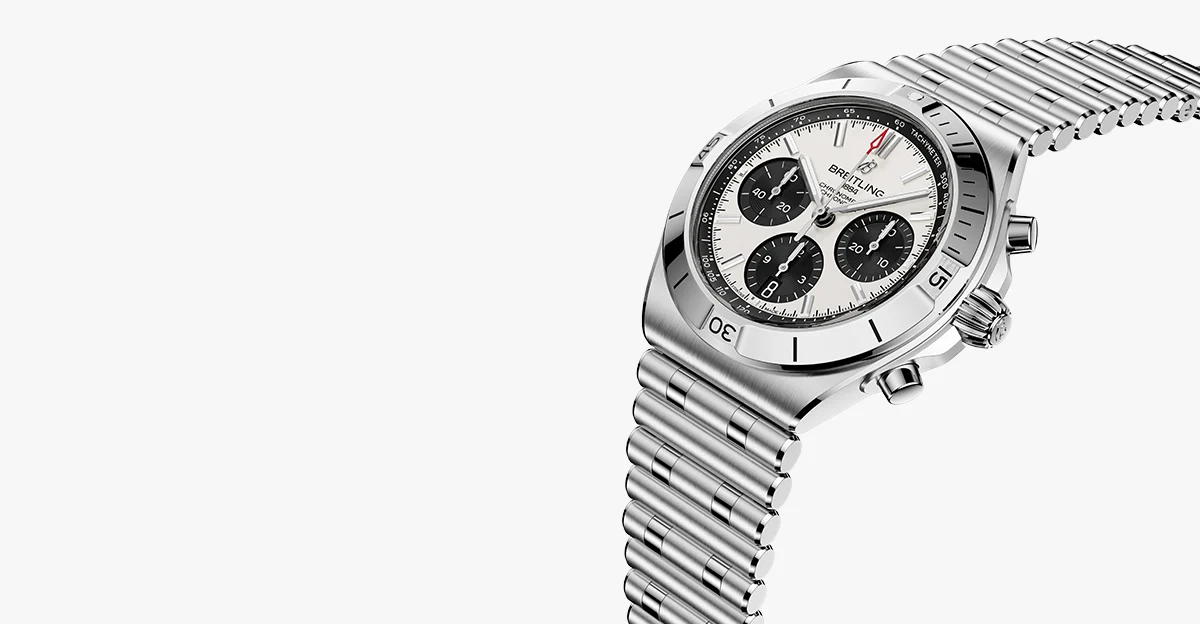
Breitling redesigned the Chronomat family in May 2026. The brand says the 36 and 40 mm time-and-date models and 42 mm chronograph gained integrated bracelets, a bezel simplified from 18 components to one, and revised ergonomics. The current B01 Chronograph 42 is not Tonegawa’s ref. 13050. What persists is the forceful bezel, rouleaux-style bracelet and chronograph identity that reads across a room or a manga panel.
The Detail Collectors Should Keep
The real legacy is not that a fictional villain wore a Breitling. The Chronomat’s design solved a storytelling problem. Its registers became data screens, its bracelet and bezel survived reduction into ink, and its wrist position exposed a cheat. Ref. 13050 earned the scene by being unmistakably itself. That is a stronger measure of cultural durability than a cameo asking only whether the logo can be seen.
Loading comments...