
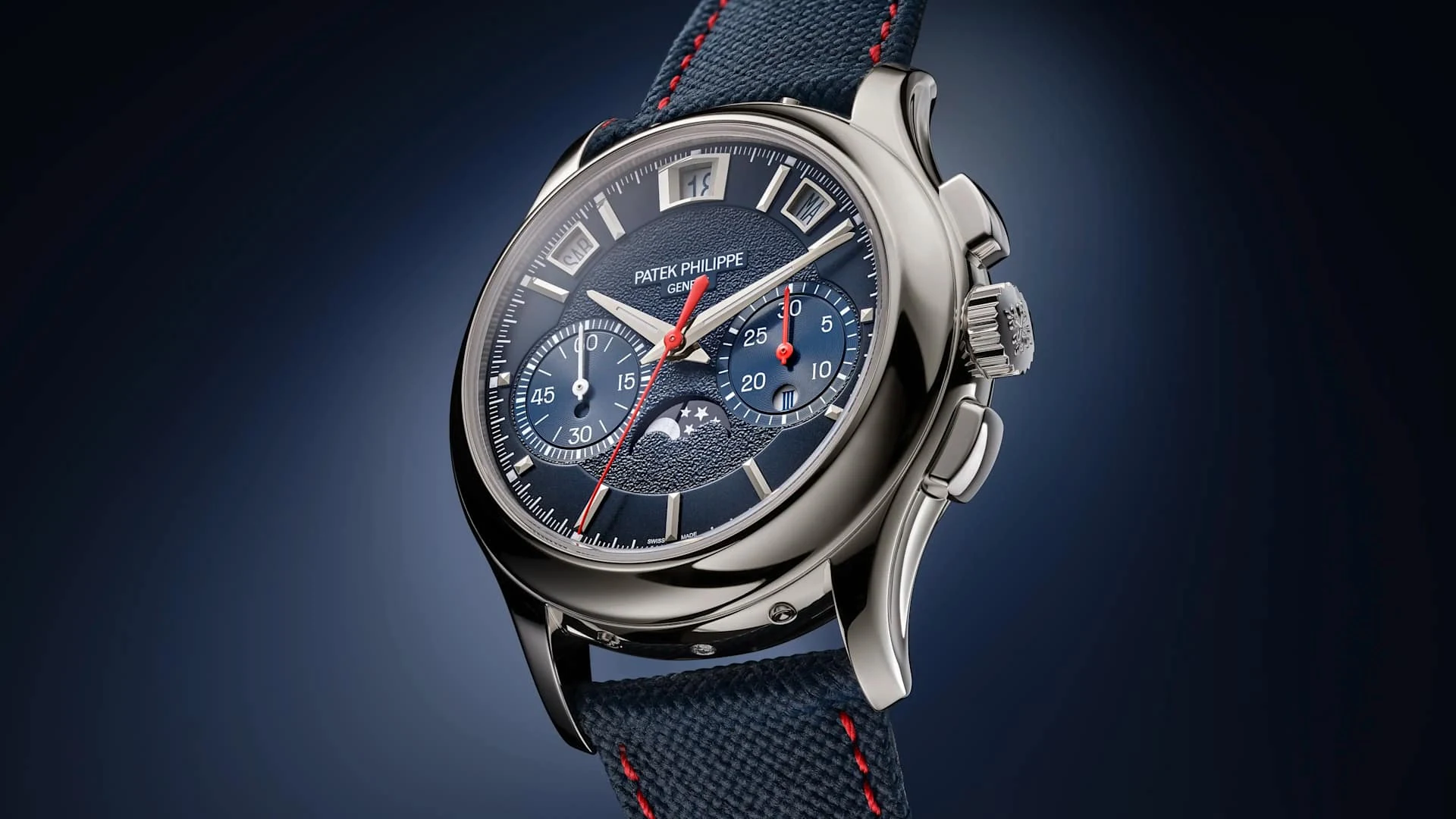
At midnight, most perpetual calendars do not stage one perfectly synchronized change. Their indications can move in sequence, sometimes over a window of several minutes. Patek Philippe’s new 5978P-010 turns that quiet transition into the central event: day, date and month are designed to jump together, while the watch also carries a manually wound chronograph.
The reference was unveiled for the opening of the Watch Art Grand Exhibition in Milan on 2 October 2026. It is limited to 120 pieces, but scarcity is not the most useful collector angle. The real story is the new CH 29-535 PS QI and the energy-management problem created when several calendar displays must move at the same instant.
Instantaneous means an energy bill
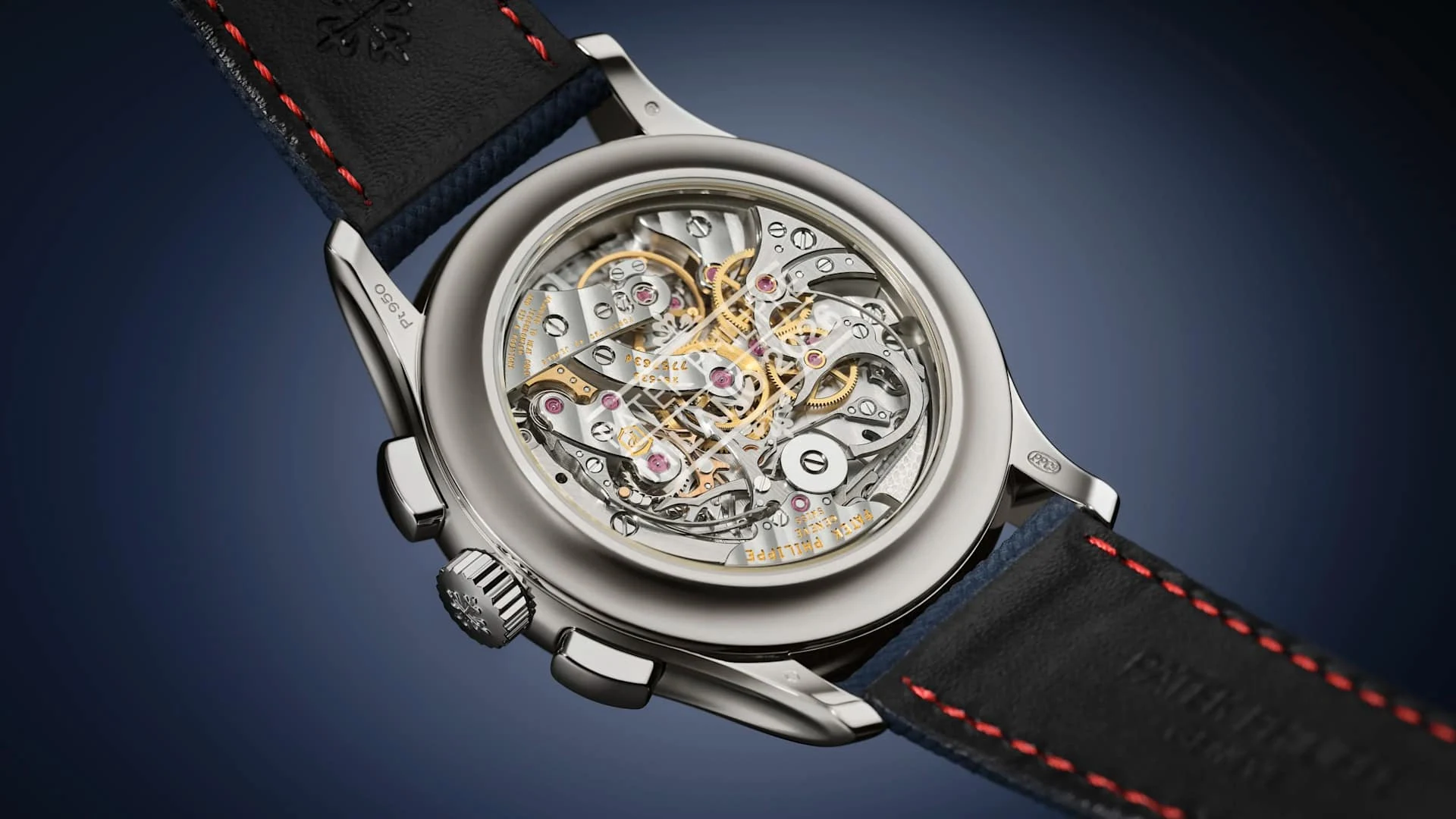
A perpetual calendar already has to distinguish months of different length and account for leap years. Making its indications jump simultaneously adds another demand: energy has to be accumulated, released quickly and controlled without destabilizing the rate of the watch. Patek says the caliber uses energy-management mechanisms to synchronize all displays precisely.
That is why “instantaneous” should not be read as a novelty animation. It changes how the mechanism stores and spends power. The watch’s 55-to-65-hour reserve is stated with the chronograph disengaged, an important qualifier for an owner evaluating a movement that already has two energy-hungry systems.
A chronograph remains the foundation
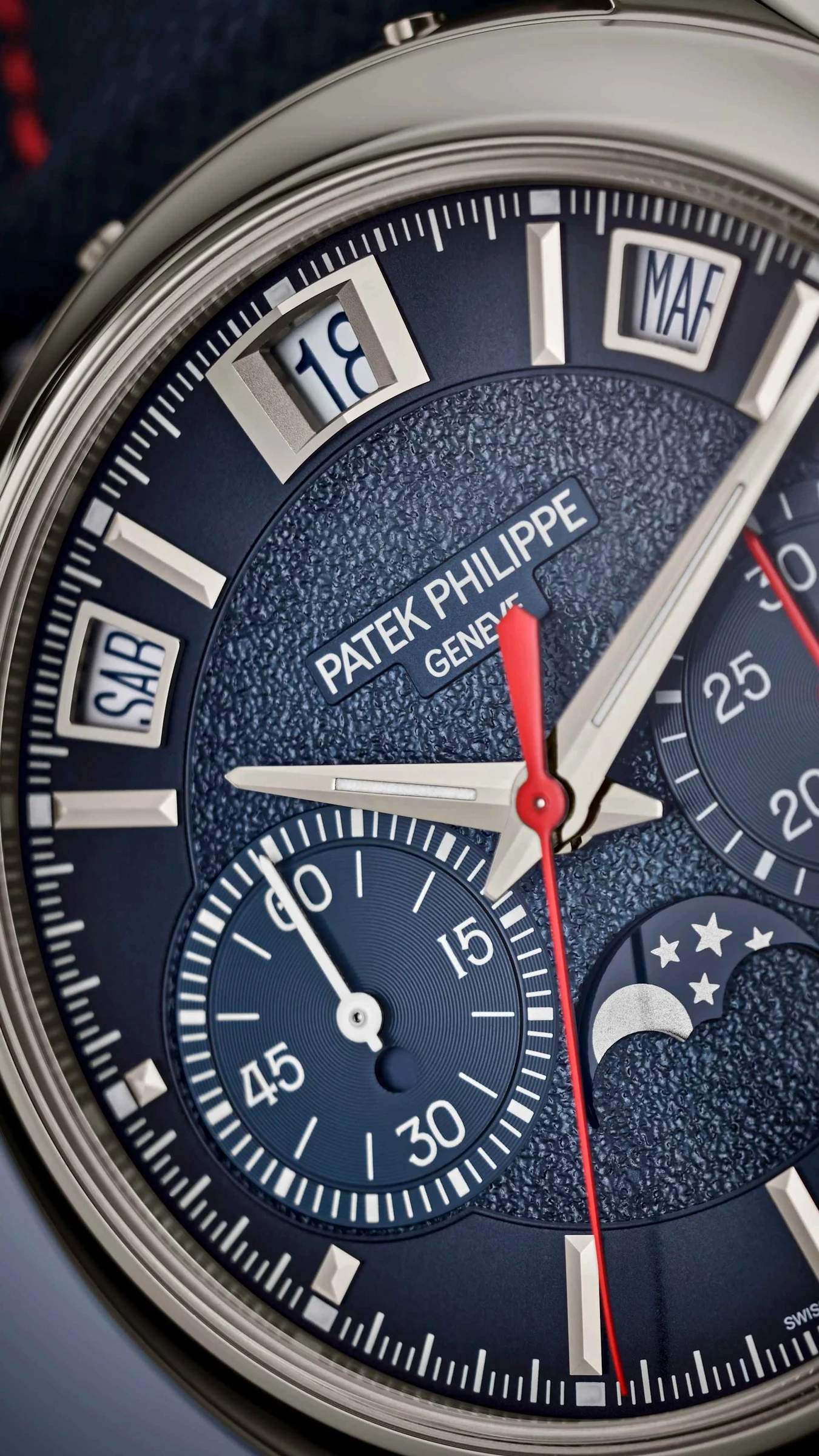
The base is Patek Philippe’s manual-winding chronograph architecture. The central hand records seconds, the counter at 3 o’clock combines 60 elapsed minutes and 12 hours, and the counter at 9 o’clock holds small seconds plus the moon phase. The calendar uses framed apertures across the upper half of the dial, with Italian abbreviations for the Milan edition.
The caliber measures 32 mm by 8.1 mm, contains 500 parts and 42 jewels, and runs at 4 Hz. Those numbers do not prove quality on their own. They show the density of the task: chronograph switching, an instantaneous 30-minute counter and an instantaneous perpetual calendar must coexist in one manually wound movement.
- Reference
- 5978P-010
- Caliber
- CH 29-535 PS QI, manual winding
- Case
- 42 mm × 14.24 mm, platinum
- Power reserve
- 55–65 hours, chronograph disengaged
- Water resistance
- 30 m
- Edition
- 120 pieces
The size is part of the proposition
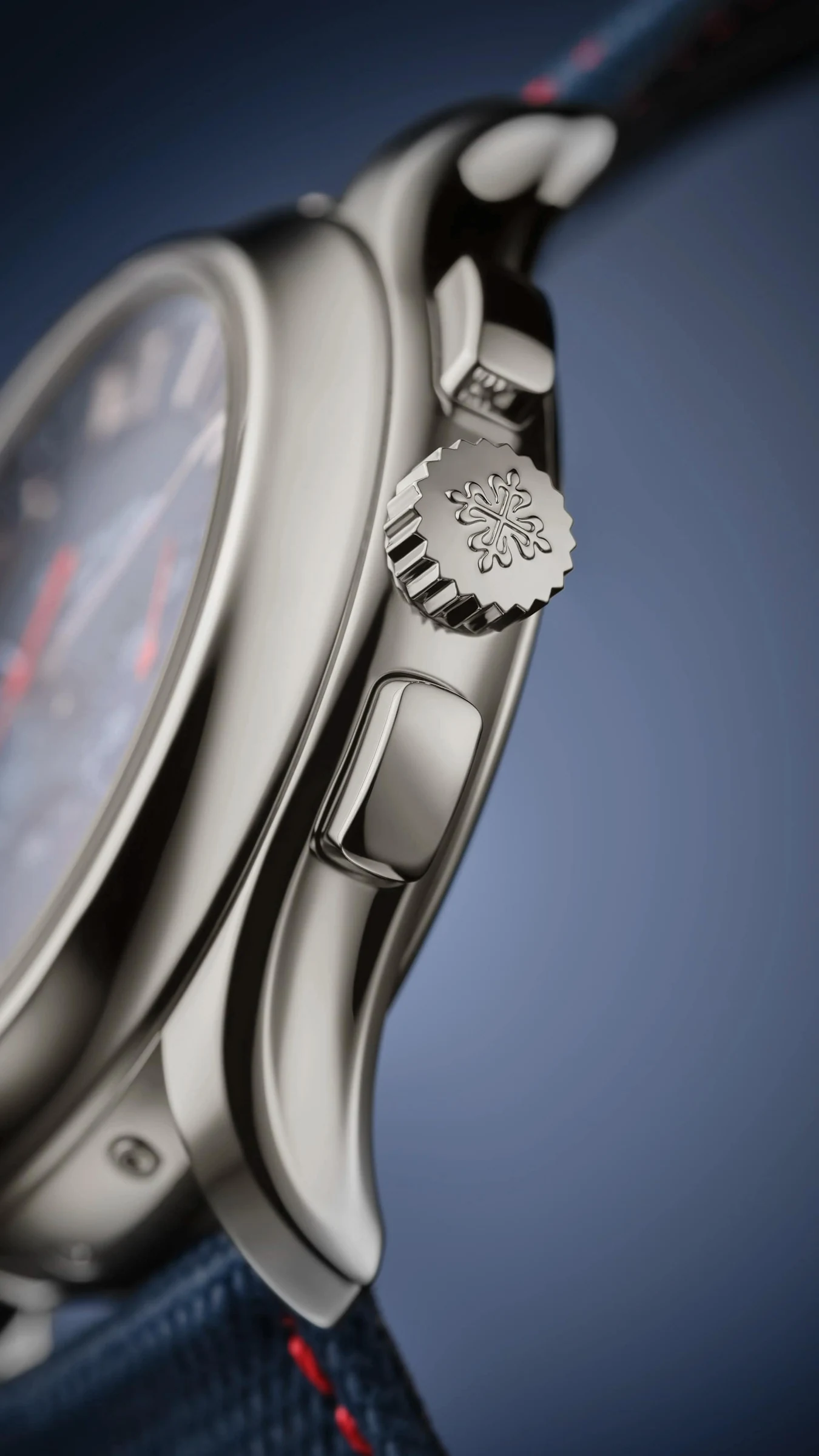
The 42 mm diameter and 14.24 mm thickness place the 5978P outside the discreet proportions associated with many classic perpetual calendars. Its composite strap, luminescent hands, red chronograph accents and textured blue dial reinforce the point. This is a complicated Patek intended to look contemporary and technical.
That scale is also the ownership trade-off. Platinum adds mass; 30 metres of water resistance limits carefree use; and the case requires a wrist rather than a spec sheet to judge. Horomag has not handled the watch, so comfort, pusher feel and real-world legibility remain open questions rather than claims.
What collectors should separate
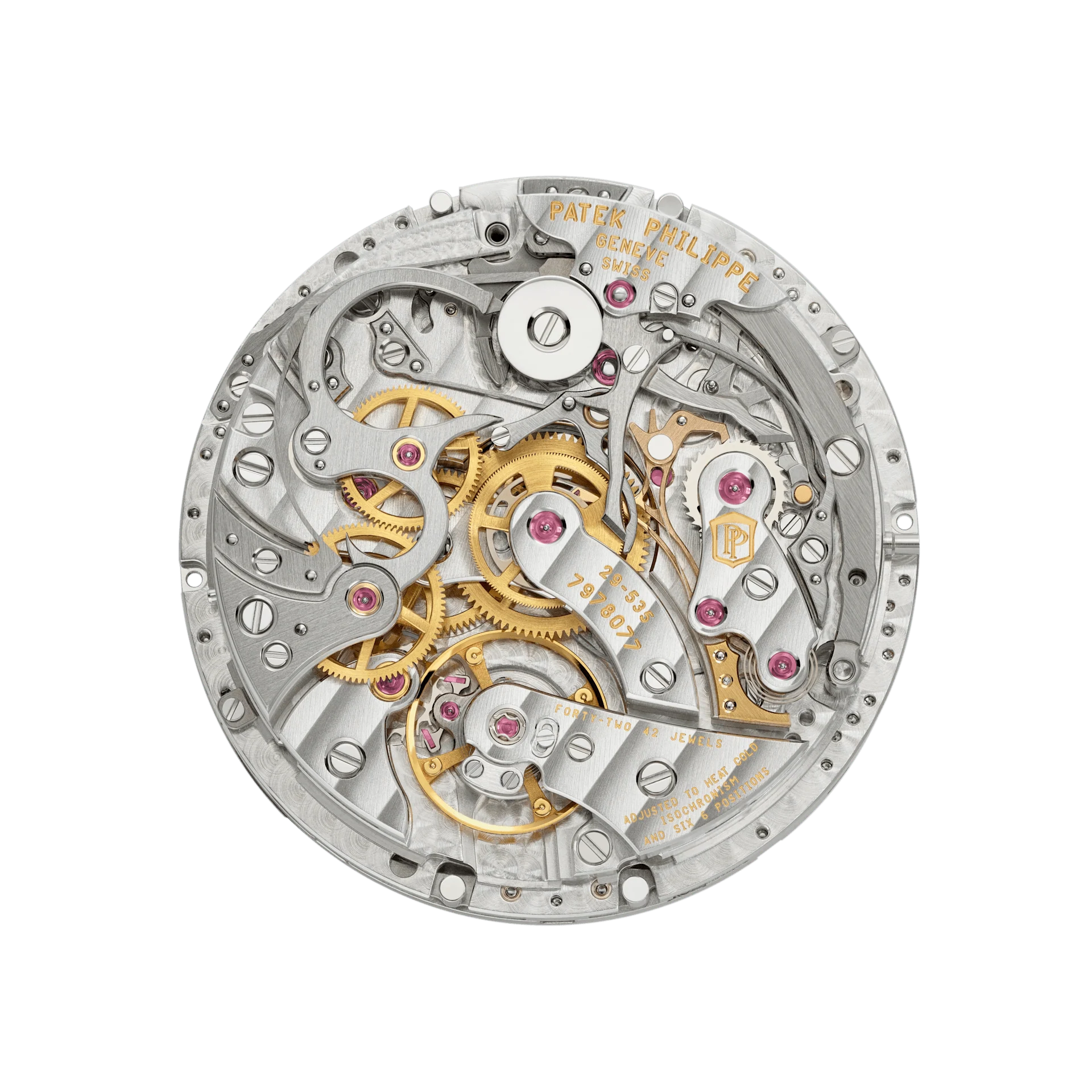
The Milan inscription, Italian calendar and 120-piece run make the 5978P a commemorative object. They should not eclipse the technical first. Patek describes this as the first time it has combined its manually wound chronograph movement with an instantaneous perpetual calendar. That factual change gives the reference significance beyond event branding.
Price and rarity will dominate discussion, but neither explains the mechanism. The collector test is sharper: does synchronized calendar switching add enough mechanical meaning to justify a larger, heavier and more complex watch? For the 5978P, the answer lies in watching one midnight transition—and understanding how much architecture is required to make that moment look effortless.

Loading comments...