

The 2026 Aiguille d’Or did not go to a grand complication, a brand anniversary piece or a record-breaking technical stunt. On Saturday, 7 November, the Grand Prix d’Horlogerie de Genève gave its top prize to Rexhep Rexhepi’s Chronograph Flyback, reference RRCHF: the Geneva watchmaker’s first chronograph, built around a newly designed movement and a case only 9.7 mm thick.
That choice says something specific about how this year’s jury read contemporary high watchmaking. The winner is not loud. Its achievement sits in proportion, architecture and finish, the qualities collectors usually judge slowly rather than at first sight.
What won the Aiguille d’Or
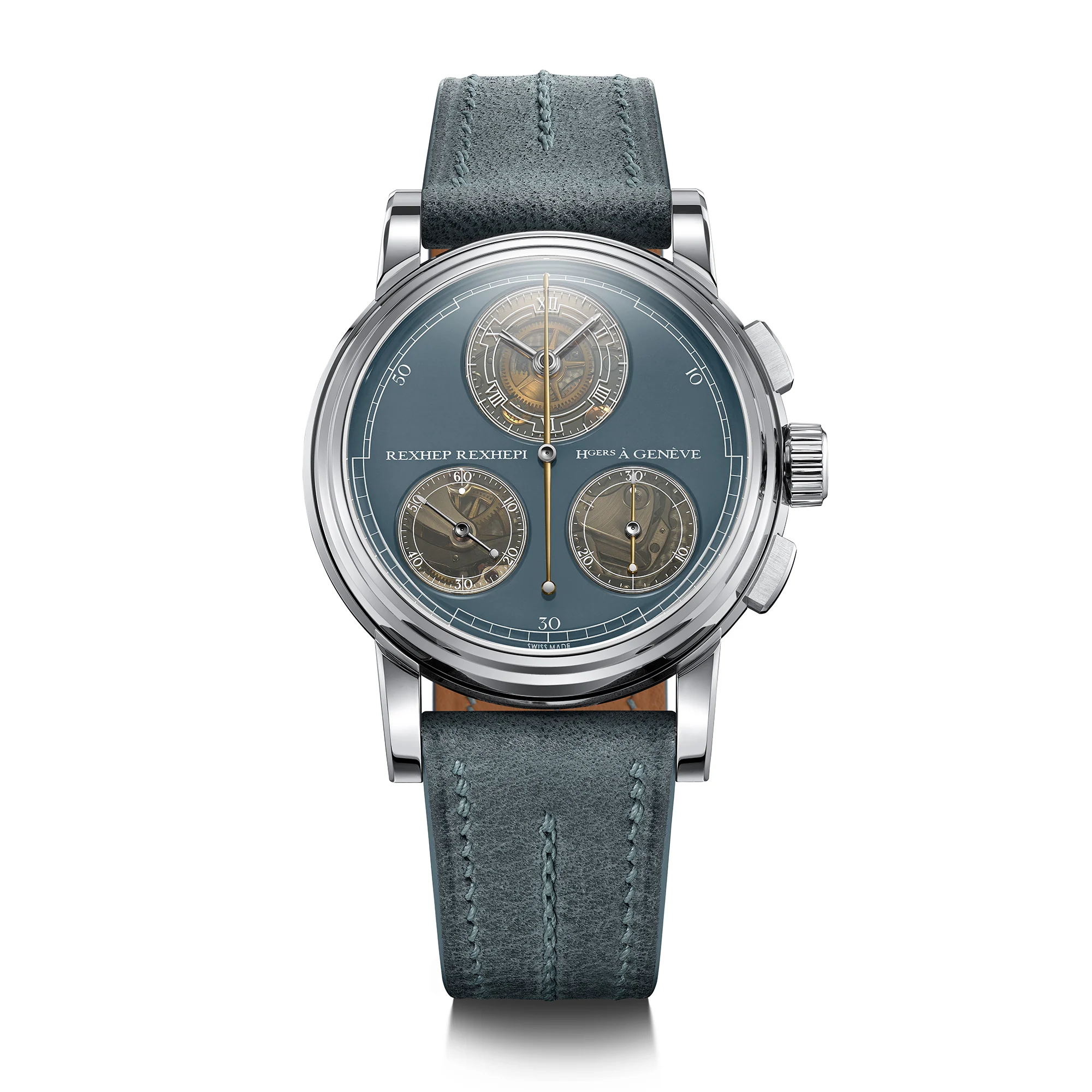
The GPHG’s official entry describes a platinum watch measuring 38.8 mm across and 9.7 mm thick, water resistant to 30 m and fitted with a hand-wound calibre running at 21,600 vibrations per hour with a 72-hour power reserve. It shows hours, minutes and small seconds, with a central flyback chronograph seconds hand and an instantaneous minute counter. The listed launch date is April 2026, and the GPHG entry gives a price of CHF 150,000 including VAT.
The RRCHF at a glance
- Case
- Platinum, 38.8 mm, 9.7 mm thick, 30 m
- Movement
- Hand-wound, 21,600 vph, 72-hour reserve
- Chronograph
- Flyback, column wheel, lateral clutch, instantaneous minute counter
- Dial
- In-house storm-blue grand feu enamel with smoked sapphire counters
- Listed price
- CHF 150,000 including VAT
Why a first chronograph matters
A watchmaker’s first chronograph is a revealing exercise because the complication exposes every compromise. Rexhepi’s own description says the pursuit of slimness drove the project from the start and that the target proportions made an integrated chronograph the only viable route. In other words, the thin case is not a styling decision added afterwards; it dictated how the movement had to be built.
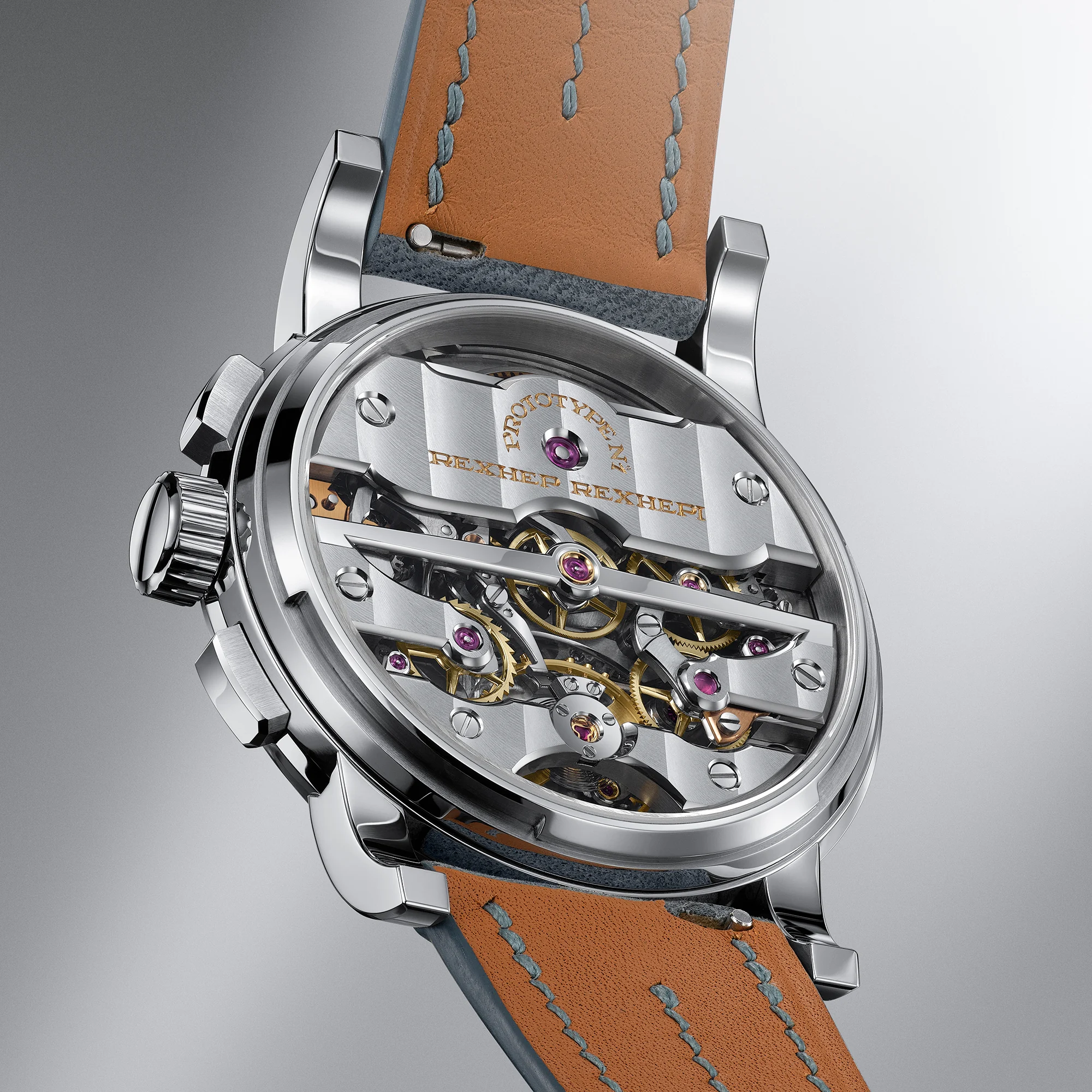
The layout follows that logic. The chronograph uses a column wheel and a lateral clutch, the minute counter jumps rather than creeping, and the movement’s architecture is deliberately asymmetrical. Through the caseback, only the chronograph works are shown, so the visible mechanism is the part that moves when the pushers are used.
Proportion, enamel and the workshop behind it
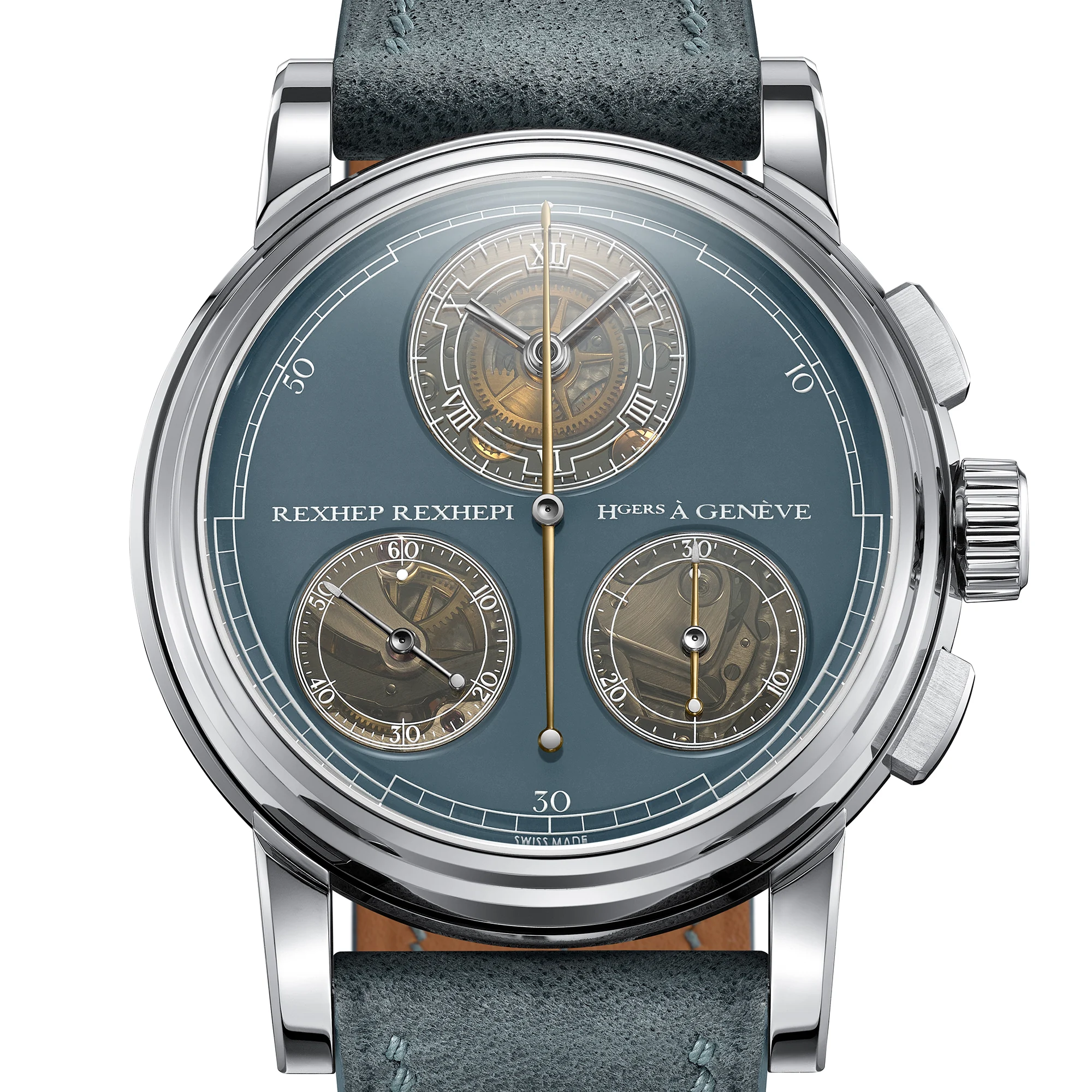
The dial is where the watch connects to Rexhepi’s recent expansion. The storm-blue grand feu enamel is made in-house; the brand opened its own enamel workshop, Les Emailleurs de la Cité, in Geneva’s Old Town in 2024. The dial draws on vintage pocket-watch chronographs, while the stepped tips of the minute and central seconds hands are described as functional as well as decorative: they aid legibility and allow the crystal to sit lower.
The case follows the same discipline, with a double-stepped bezel, angled lugs and pushers, and a screw-down caseback indexed so its markings align vertically with the case. Plates and bridges are German silver, and the GPHG entry states that every component, visible or not, is hand-finished with bevelling, black polishing, perlage, Geneva stripes and engraving.
A prize list shaped by independent workshops
Rexhepi is not new to the GPHG: his Chronomètre Contemporain II won the Men’s Watch Prize in 2022. This year, however, the context around him matters as much as the win. Selected by an Academy of more than 1,000 members and a jury chaired by Wei Koh, the 20 prizes included the Petite Aiguille for Otsuka Lotec’s No.8, the Complication prize for Cleguer’s Inspiration One, the Audacity prize for Konstantin Chaykin and the Horological Revelation prize for Dominique Renaud, alongside established houses such as Audemars Piguet, Chopard and Grand Seiko.
The GPHG also rewarded a separate chronograph, Parmigiani Fleurier’s Tonda PF Chronographe Mystérieux, in the Chronograph category. That makes the Aiguille d’Or choice more pointed: the jury’s overall verdict went to the restrained, thin, hand-wound interpretation rather than only to category novelty.
What the prize does not settle
An Aiguille d’Or is a judgement of the watch as an object, not a statement about delivery times, allocation or future prices. The official material does not give a production figure, and Horomag makes no assumption about how many pieces will be made or who can buy one. For most readers the practical value is more direct: the prize-winning watches can be seen at the Musée d’Art et d’Histoire in Geneva until 15 November and at Watches of Switzerland in Knightsbridge, London, from 18 to 23 November.
What the jury chose to reward
The RRCHF wins on the details that rarely photograph well: a chronograph designed around thinness, a jumping counter, an indexed caseback, enamel made a few streets from the workshop. For collectors, the signal is that the highest prize in Geneva went to coherence rather than spectacle, and to a maker who now controls more of that coherence under his own roof.
Loading comments...