
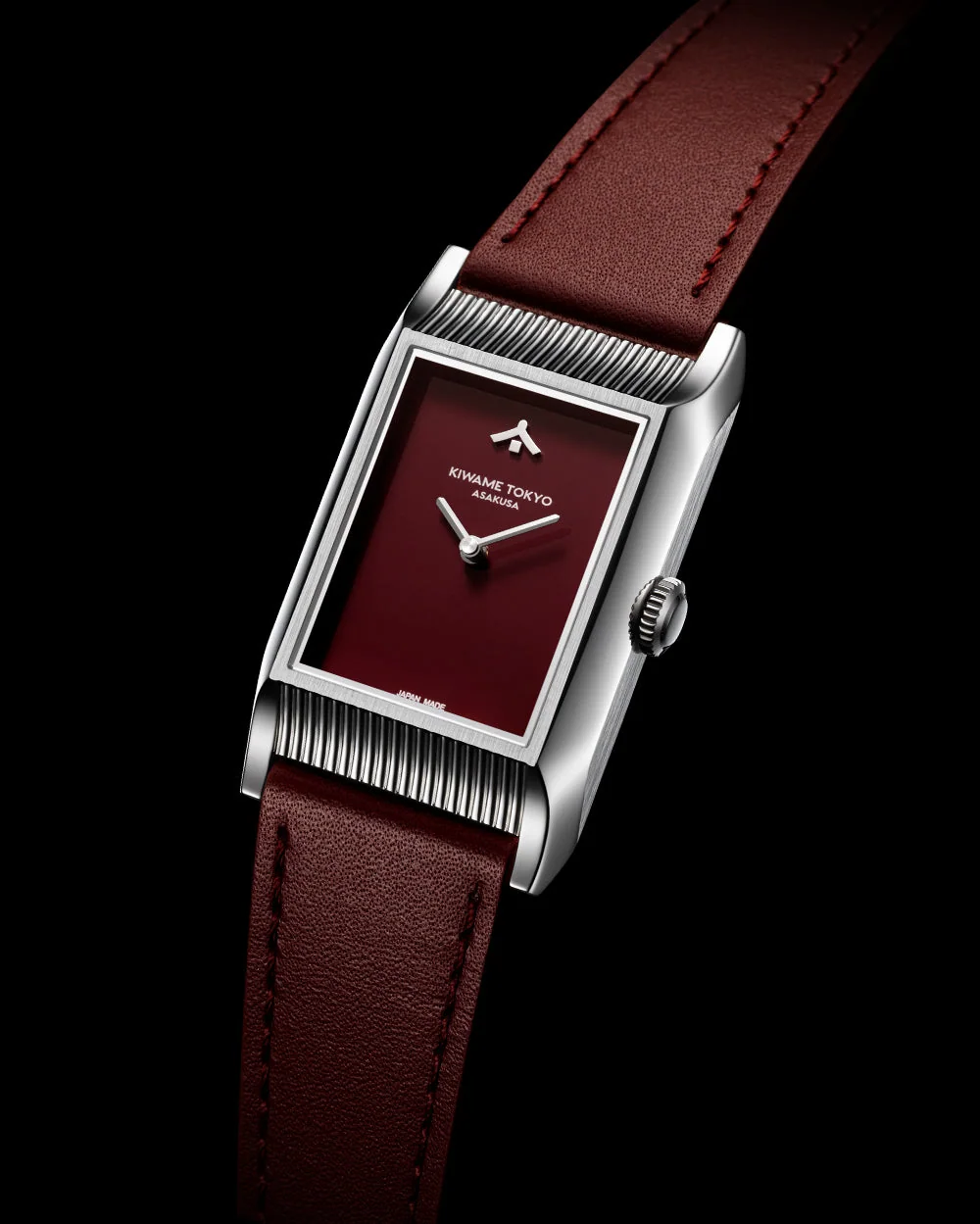
KIWAME TOKYO could have made the YANE a simple rectangular dress watch with a Japanese name. Instead, the Asakusa-based brand has built the whole object around one architectural idea: the roofline of a traditional temple.
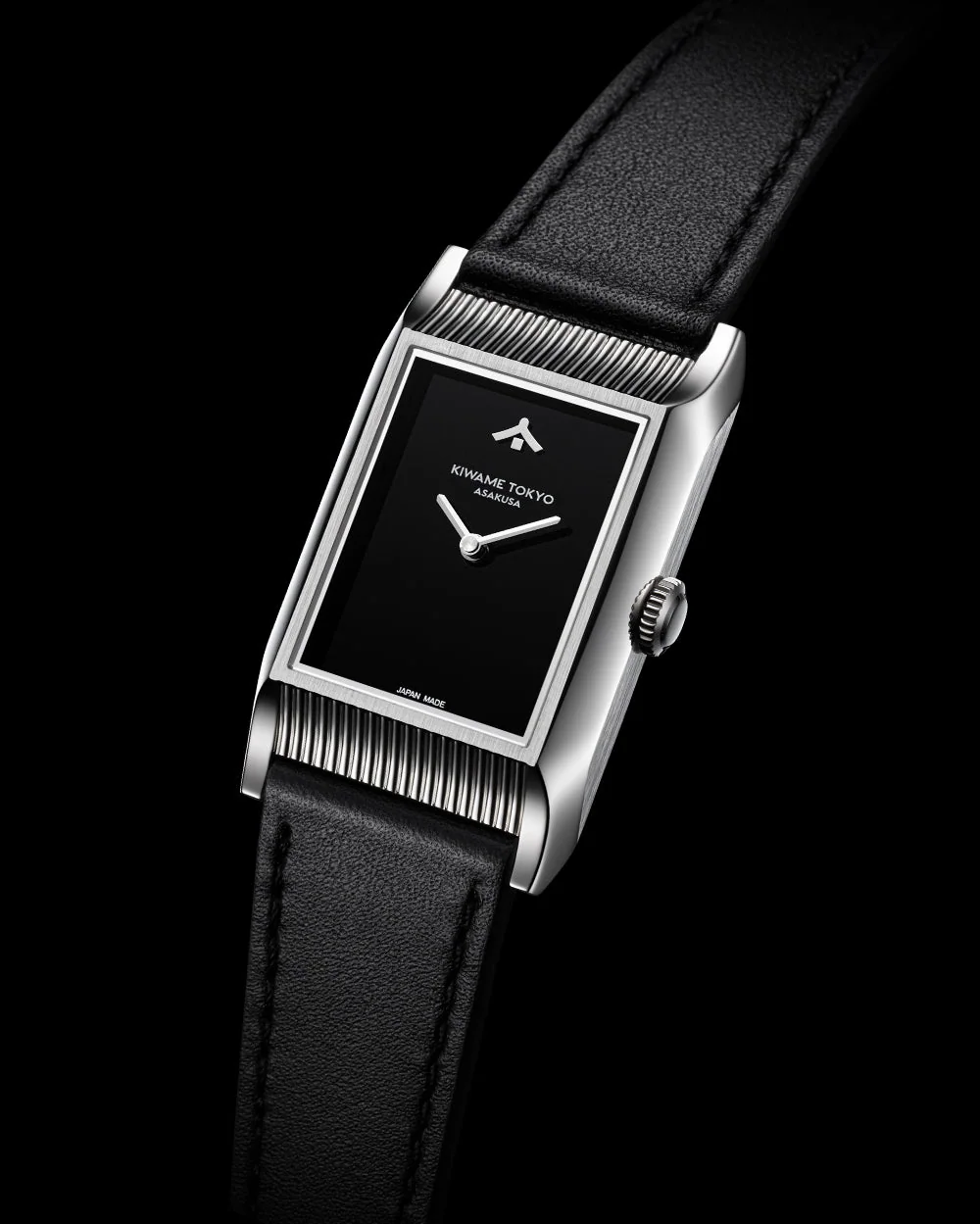
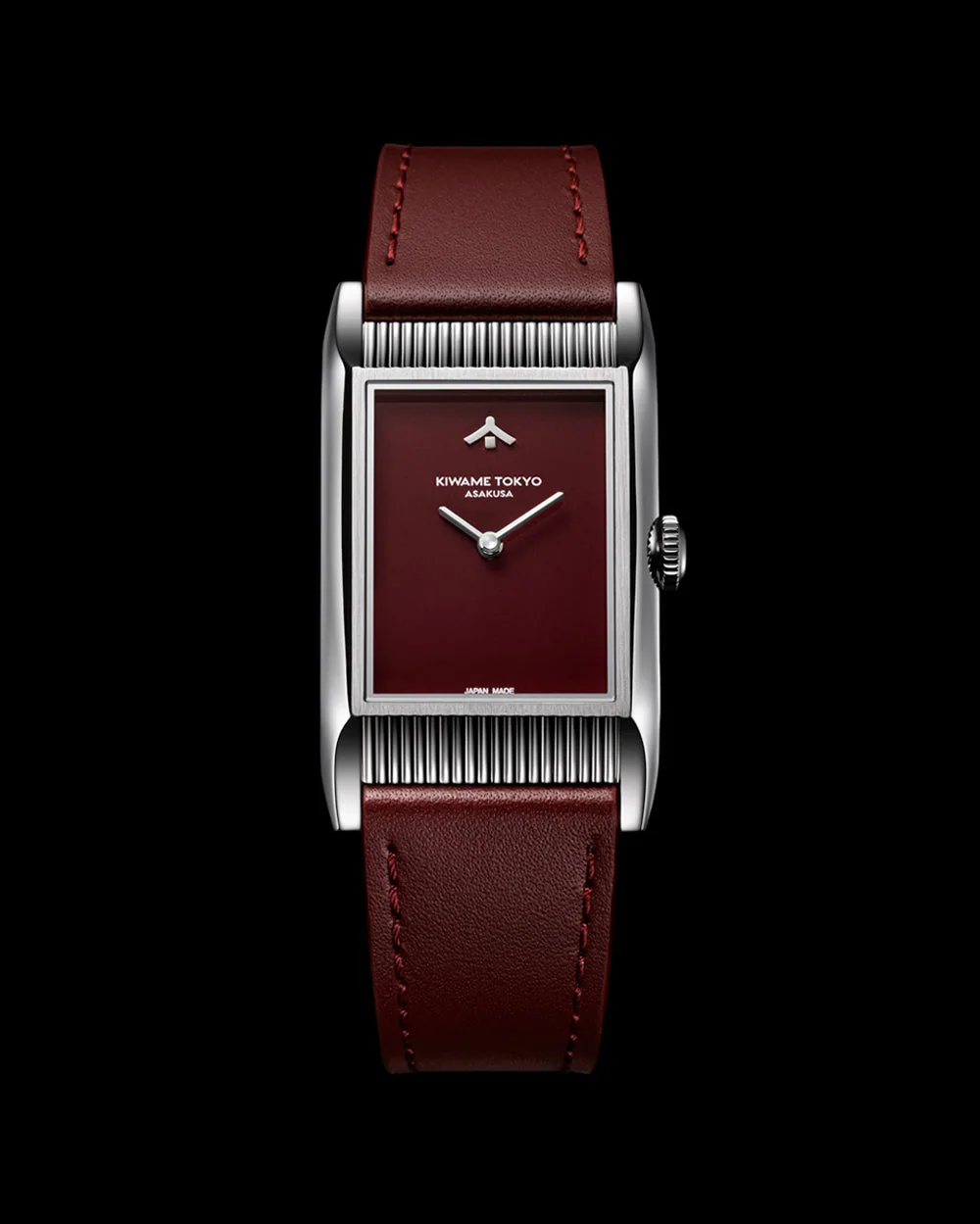
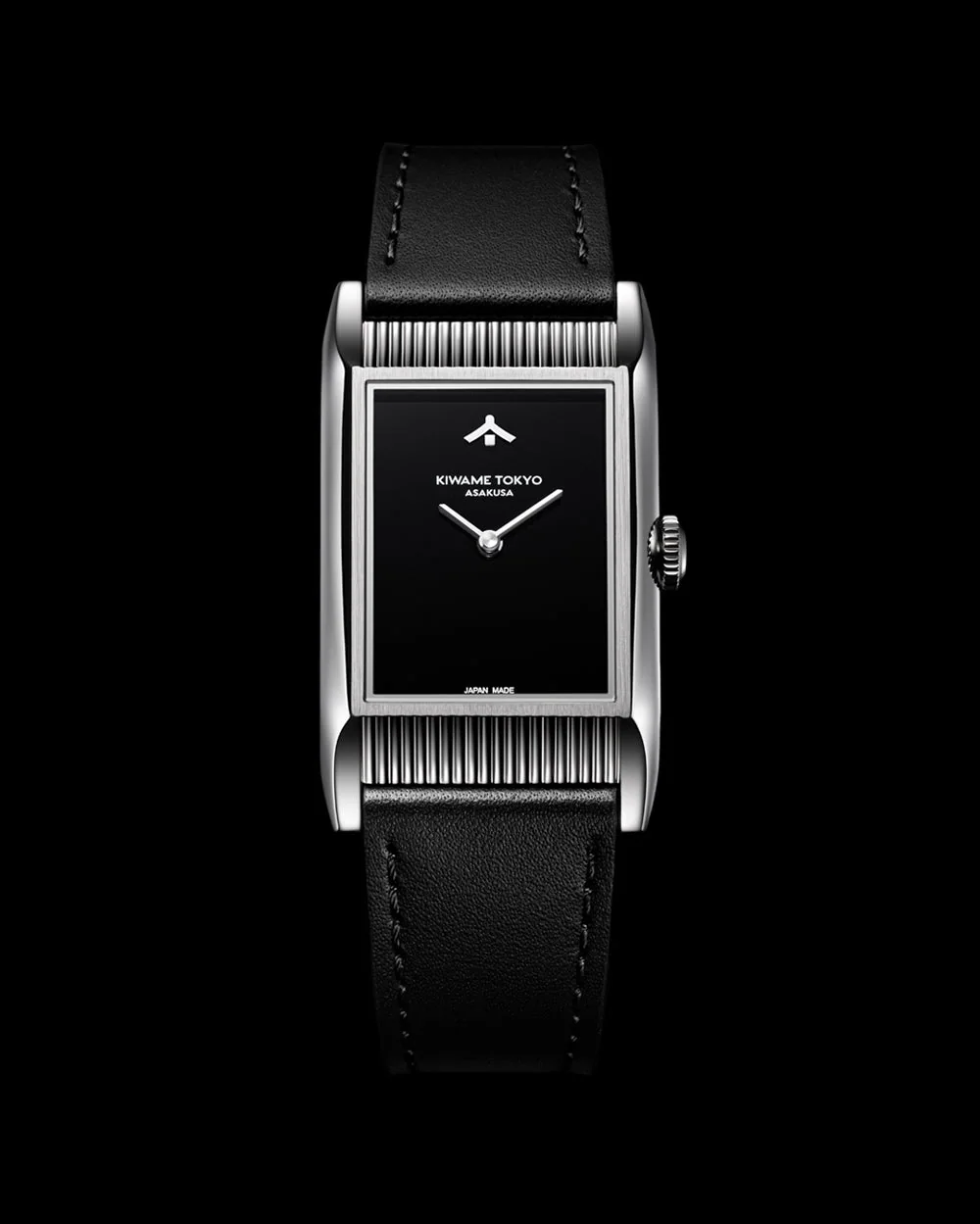
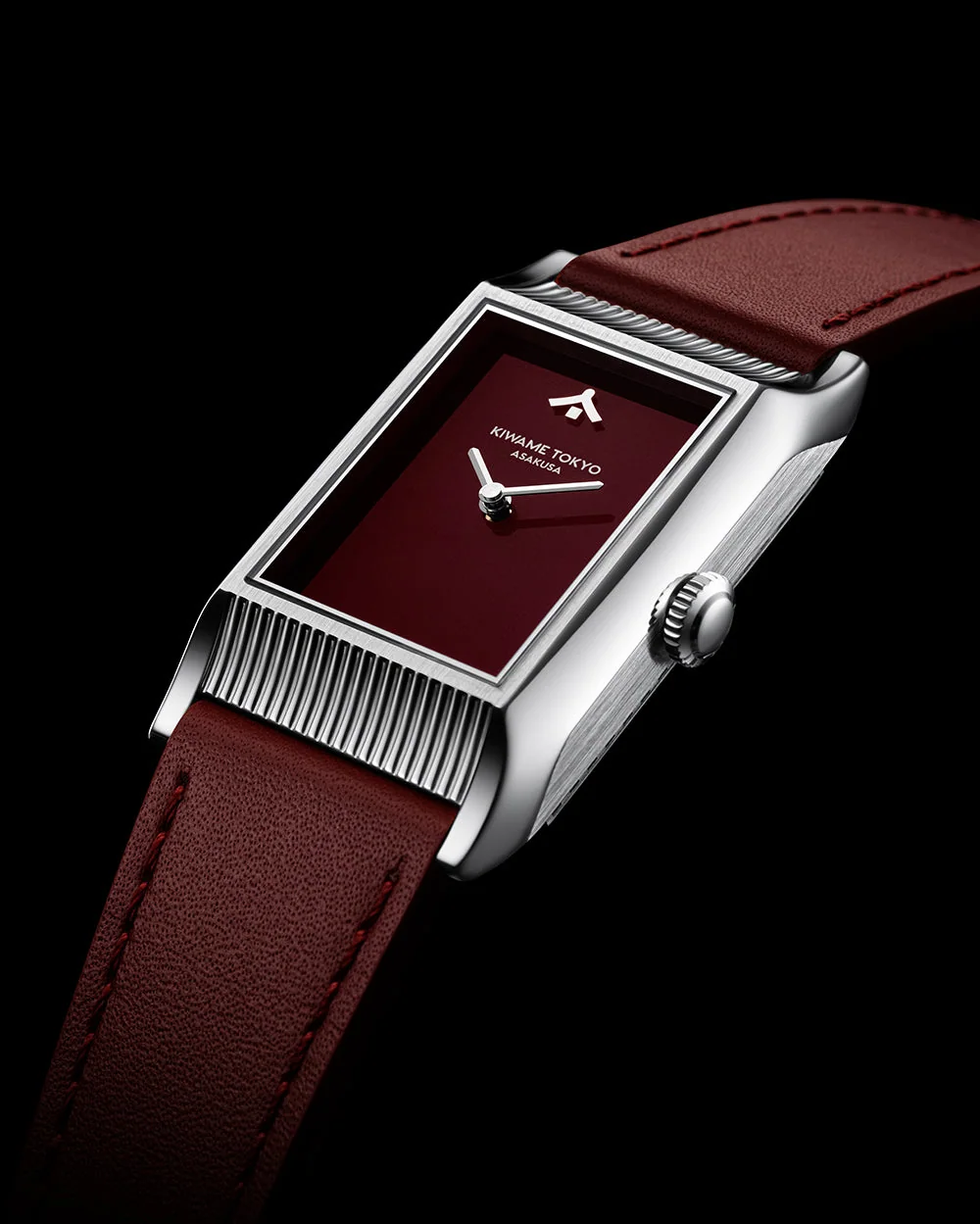
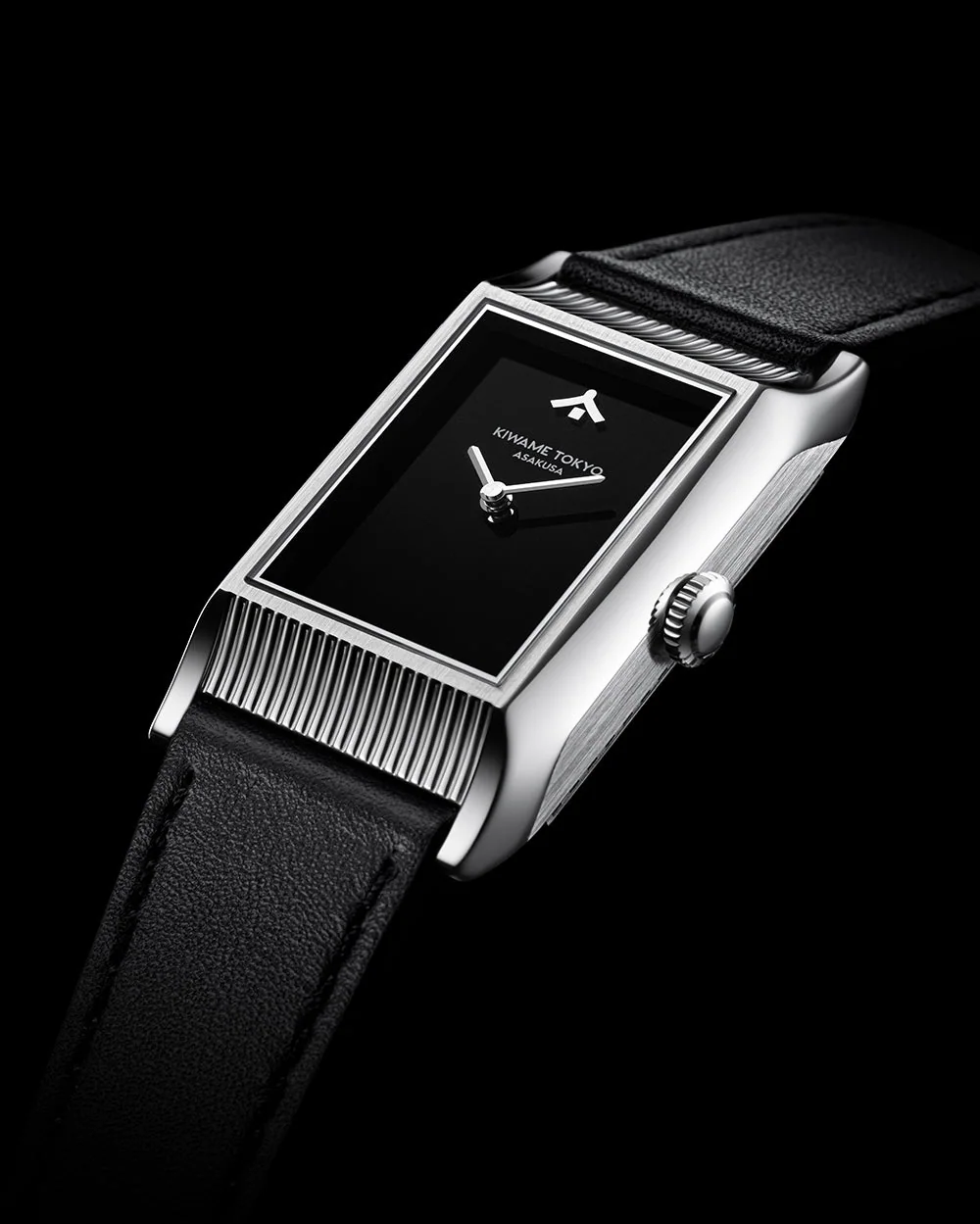
The result is unusually coherent for a sub-¥100,000 independent watch. The YANE comes in KURO with a black lacquer dial and ENJI with a deep burgundy lacquer dial, both in a 26.5 mm-wide stainless steel case that uses the roof motif in the case profile, the ribbed lug sections, the single 12 o'clock marker and the caseback decoration.
Why this small rectangle is worth covering
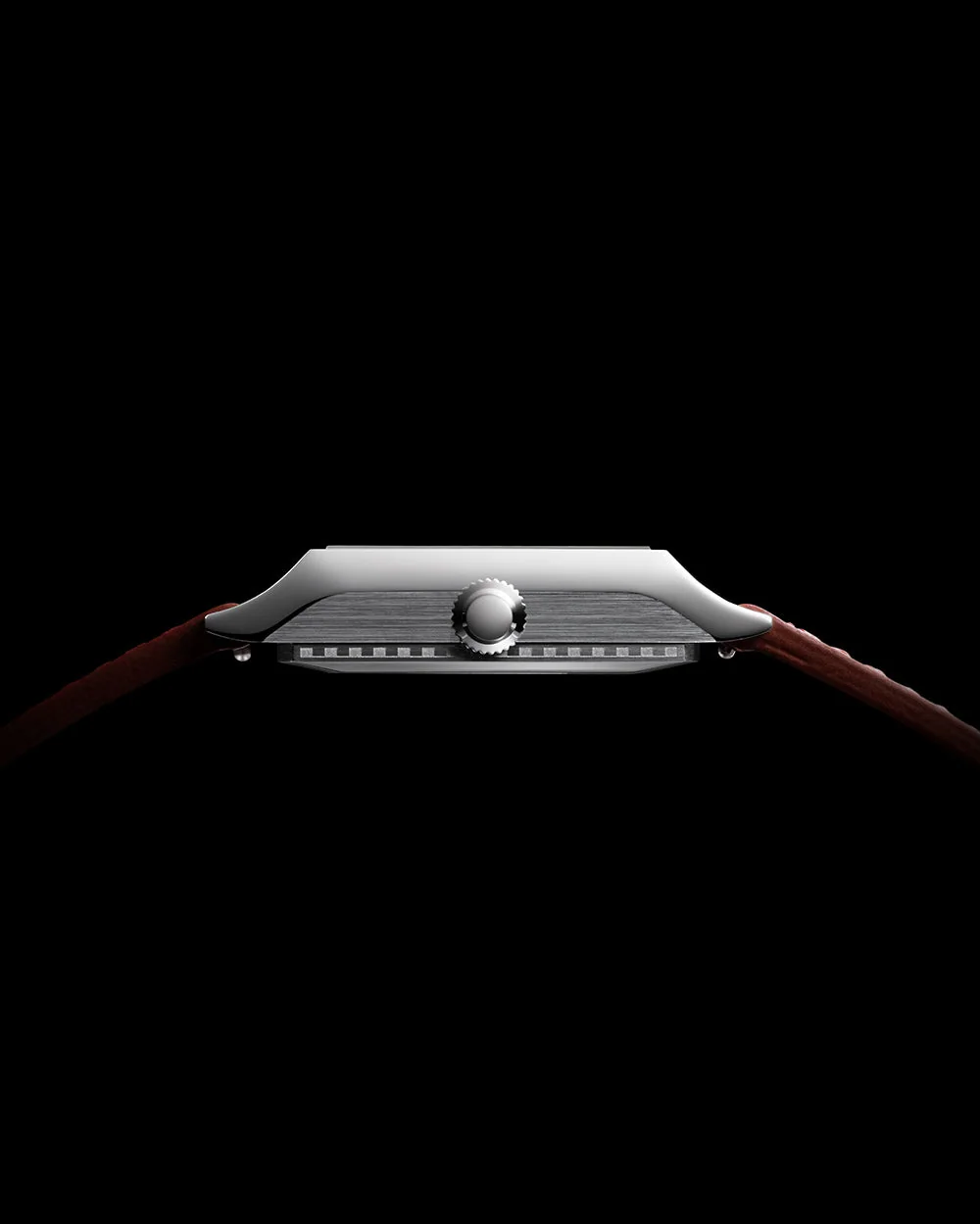
The collector interest is not scarcity or a loud collaboration. It is the way KIWAME TOKYO turns a local design reference into the structure of the watch instead of printing a cultural motif on the dial. Viewed from the side, the case has a gentle sweep meant to echo a temple roof. From above, the upper and lower lug sections carry a three-dimensional pattern inspired by roof tiles. At 12 o'clock, the lone applied marker takes its shape from the mune, the roof ridge.
That gives the YANE a stronger design argument than many affordable dress watches. The case is the story, but the dial stays quiet enough that the idea does not become costume.
The proportions are the practical part
Official dimensions put the stainless steel case at 26.5 mm wide, 44 mm lug to lug and 9.7 mm thick. The brand lists a 20-to-16 mm Italian calf leather strap, a sapphire crystal with inner anti-reflective coating, a push-pull crown and 3 ATM water resistance. It also states that the watch is intended for wrists from 16 cm to 21 cm.
Those numbers matter because rectangular watches can wear larger than their width suggests. A 44 mm lug span should keep the YANE wearable on many wrists, while the narrow case makes the roof-tile surface visible without turning the watch into a novelty object.
A modest movement, used honestly
Inside is the Miyota Cal. 6T27 automatic movement. KIWAME TOKYO lists it as a Japan-made calibre with manual winding, running at 28,800 vibrations per hour, with 21 jewels and about 40 hours of power reserve. It is not the romantic hand-wound choice some collectors might imagine for a rectangular watch, but it is a sensible one for a slim, compact case at this price.
The bigger point is that the movement does not have to carry the whole article. The YANE is design-led; the 6T27 is there to keep the watch thin enough and accessible enough for the case architecture to remain the focus.
Availability and the collector read
The English KIWAME TOKYO product pages list the YANE at ¥99,000 and show the first pre-order window as sold out. They also state that delivery is planned from the end of December 2026, with worldwide shipping, a one-watch-per-customer purchase limit and a 24-month warranty.
For Horomag, the YANE earns its space because it is not trying to look expensive in a generic way. It is a small, specific design object with a point of view. The question for buyers is whether that temple-roof case will feel quietly poetic after the launch cycle, or whether its architectural clarity is exactly what makes it harder to forget.






Loading comments...