
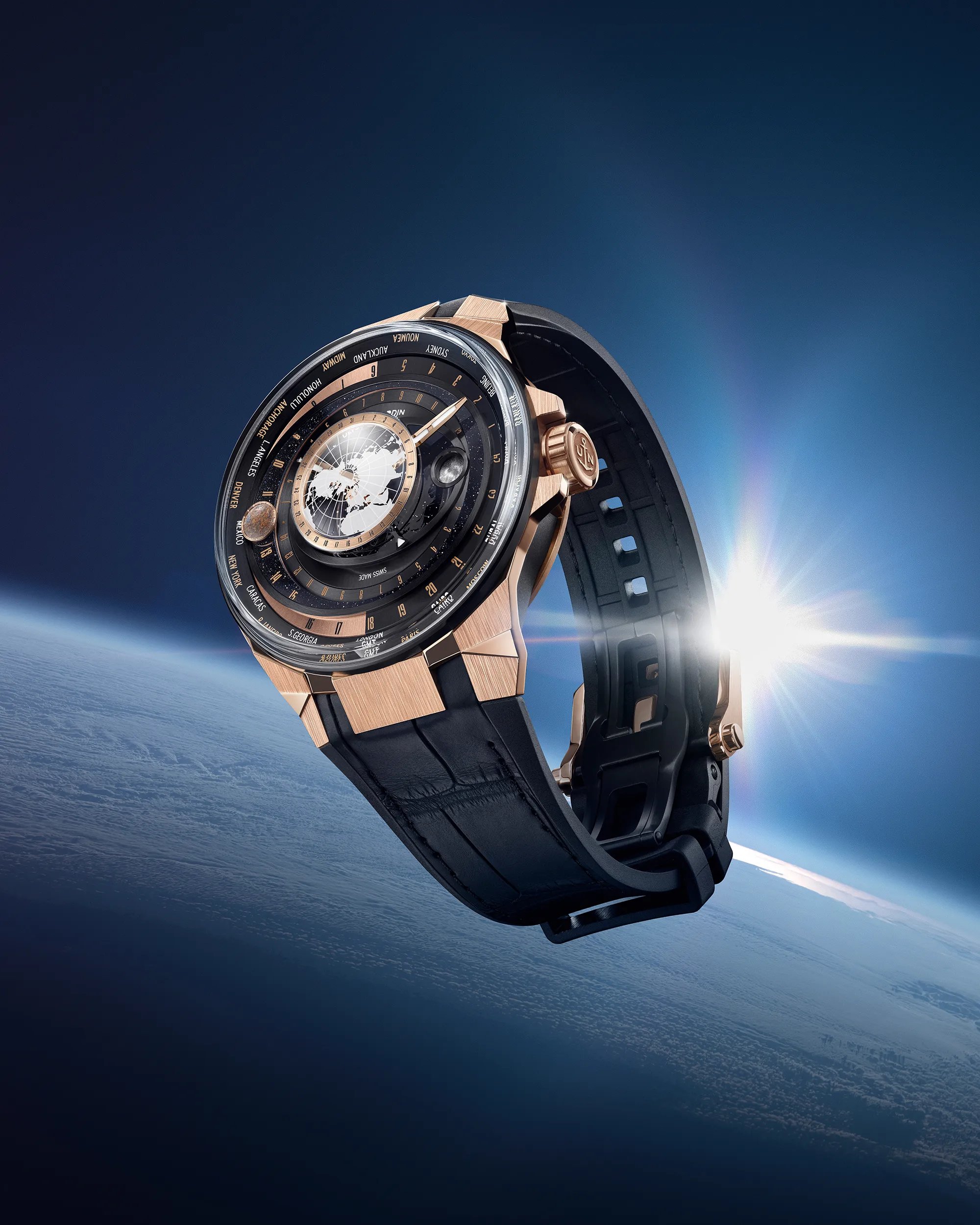
A moonphase watch does not look at the Moon. Its movement advances a programmed display that approximates the interval between successive new moons. That distinction explains both the romance and the limit of the complication: it turns a celestial rhythm into gears, but it can only remain correct while the watch keeps running and the display is set to the right day.
What the display actually tells you
The useful first question is therefore not whether the moon disc is beautiful. Ask what cycle the mechanism reproduces, how it is corrected, and how quickly its approximation drifts. A simple aperture and a complex astronomical dial can answer the same lunar question at very different levels of information.
Set the cycle, not the sky
Patek Philippe defines the moonphase as the lunar cycle between successive new moons. Its official setting method starts from a known full moon: centre the full moon in the aperture, count the days since the last full moon—including the day of setting—and advance the corrector by that number. The exact crown or corrector sequence still belongs to the manual for the specific reference.
This matters because calendar and moonphase mechanisms may be engaged during part of the day. Do not borrow a correction sequence from another watch or press a recessed pusher casually. Wind the watch, move the hands to the safe time stated by its maker, then follow the reference-specific order. If the manual is missing, an authorised service centre is safer than an improvised setting routine.
Precision matters only if the watch keeps running
Accuracy claims describe the mechanism’s approximation, not its independence from the movement. Some precision moonphase systems are specified to deviate by only one day after roughly 122 years, but that assumes continuous operation. If the watch stops for a week, the display is a week behind until the owner resets it. A long theoretical error interval does not remove the practical need to keep the watch wound or correct it after storage.

From a small aperture to a mechanical map
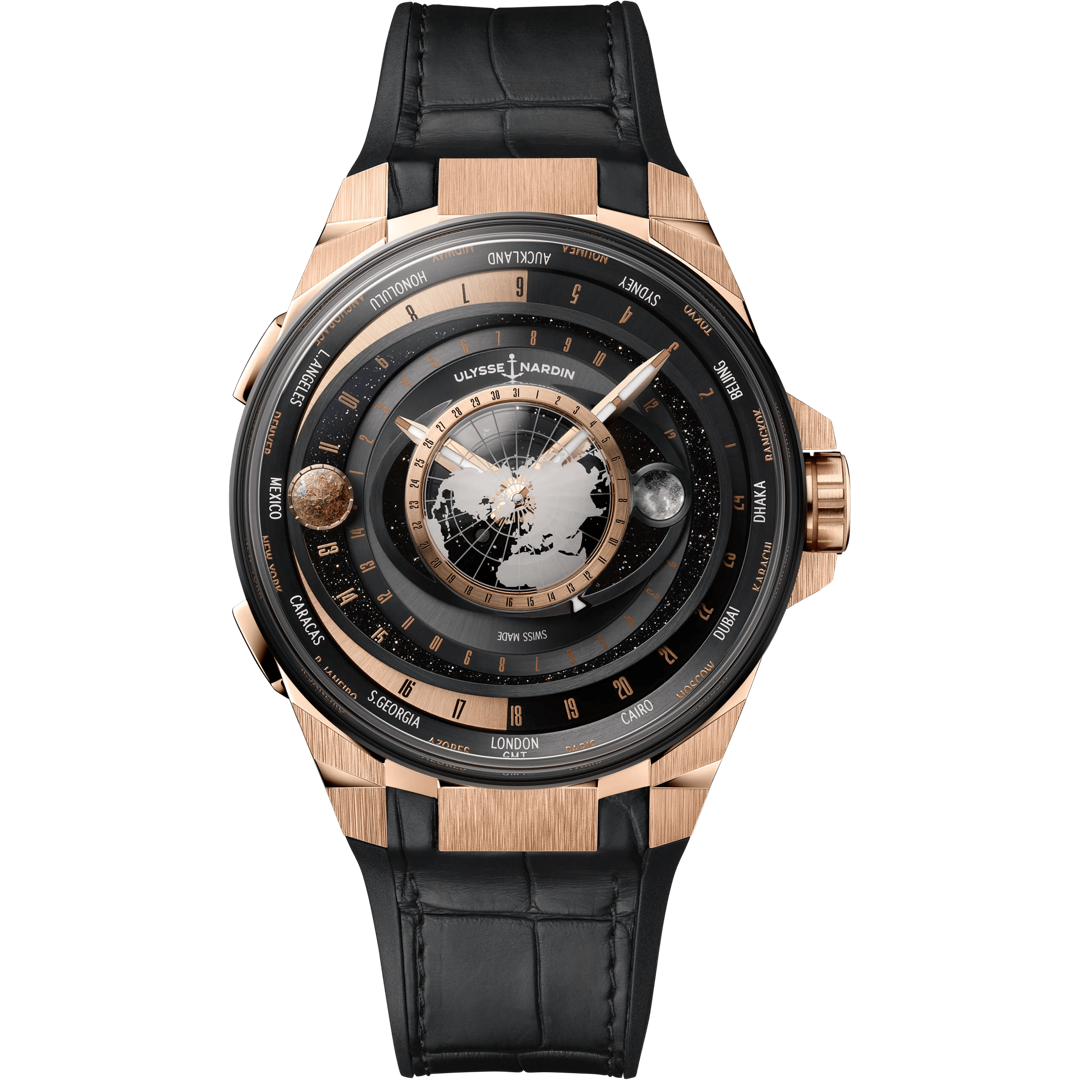
The Blast Moonstruck shows how far the idea can expand. Ulysse Nardin links its contemporary geocentric display to Ludwig Oechslin and the Trilogy of Time. The dial combines the Moon’s rotation, its phases, the apparent path of the Sun, tides and world-time information. It is not a conventional moon aperture made larger; it turns several related cycles into one mechanical map.
For collectors, that history changes the buying test. A classical moonphase can be valuable because it adds a slow visual rhythm to an otherwise simple watch. An astronomical display earns its complexity only if the extra information remains legible and the owner is willing to learn its setting logic.

The collector checklist
Before buying, check five things: the stated moonphase accuracy; the exact correction method; the danger period for adjustments; how long the movement runs off the wrist; and whether the display is still readable at a glance. Then decide whether you want poetry, information, or both. The best moonphase is not the one with the most stars—it is the one whose cycle and ownership ritual you actually understand.


Loading comments...