
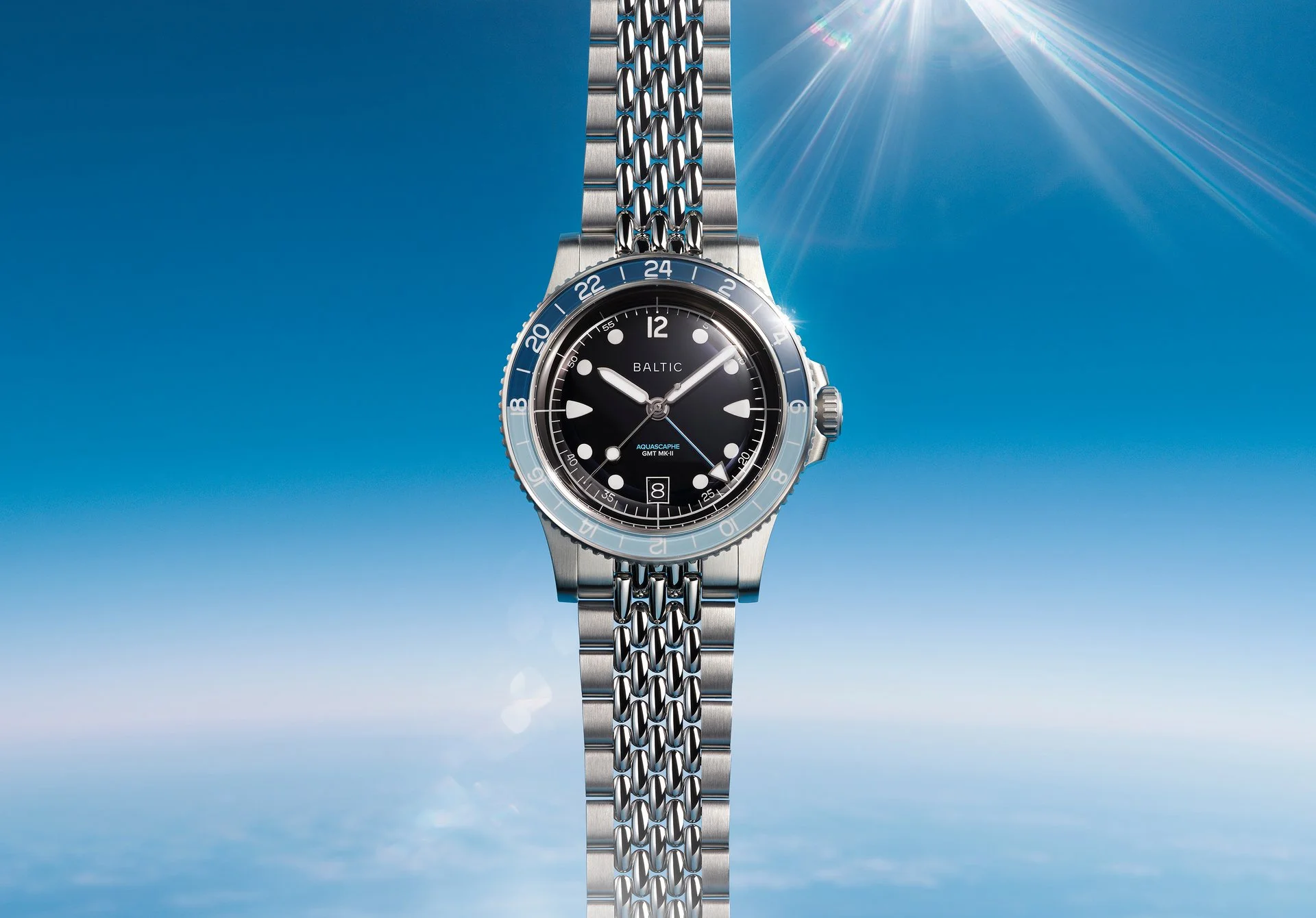
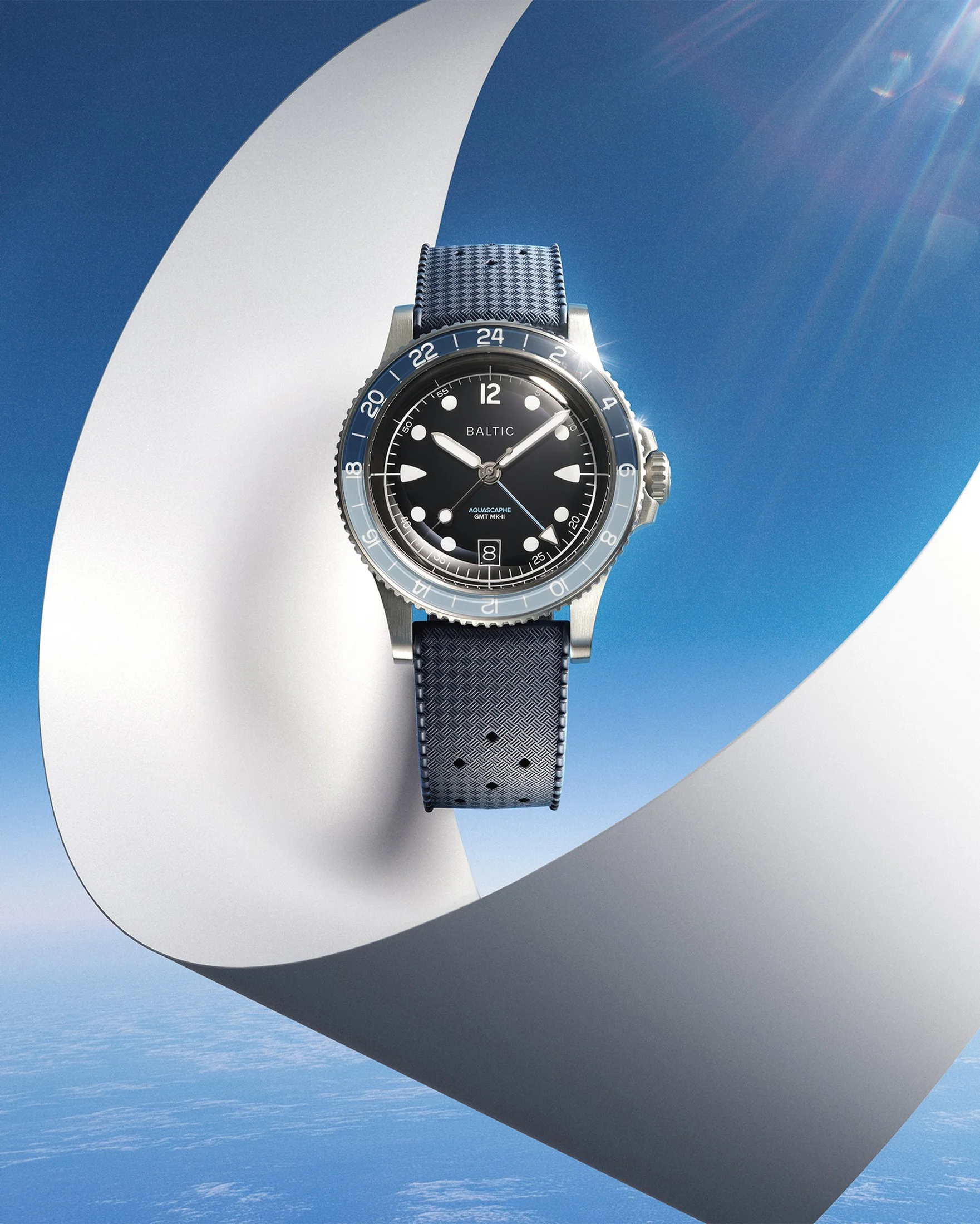
A GMT watch is most useful when its setting logic matches the way you travel. The Baltic Aquascaphe GMT MK-II changes that logic: its Miyota 9075 lets the ordinary hour hand move independently, while the minutes and second time zone stay put. That is the reason to look beyond the blue bezel. The more important upgrade happens at the crown, after you arrive somewhere new.
This guide uses the Blue version to explain what a traveller GMT does, where its convenience ends, and what to check before buying. It is a source-based ownership assessment, not a hands-on review. The official photographs show this model only; they are not evidence of a wear test or a measured performance comparison.
The Short Answer
Choose a traveller GMT when you regularly move between time zones and want the main hands to show local time with minimal disruption. If you mostly stay home and follow someone else's working day, independently adjusting the remote-time hand can be just as useful. “True GMT” describes a setting arrangement, not a universal quality ranking.
Which Hand Should Move When You Land?
Imagine leaving home with the 24-hour hand assigned to home time. At your destination, you want the main dial to tell you when to meet a friend, catch a train or check into a hotel. With the 9075, the local-hour hand moves in one-hour steps without stopping the other hands. You do not have to reset the minutes each time you change the local hour.
That matters because a travel watch should reduce small opportunities for error. Pulling out the crown to reset the entire display can turn a simple time-zone change into another synchronisation exercise. Independent local-hour adjustment preserves the reference you already established. It is an ergonomic benefit rather than a claim that the movement keeps better time.
The reverse pattern suits a different routine. An office, or caller, GMT prioritises changing the remote-time indication. If your own day stays fixed while you monitor colleagues elsewhere, that can be the more natural control. Decide which time zone changes in your life before treating one architecture as an automatic upgrade.
Set A Reference, Then Set Your Day
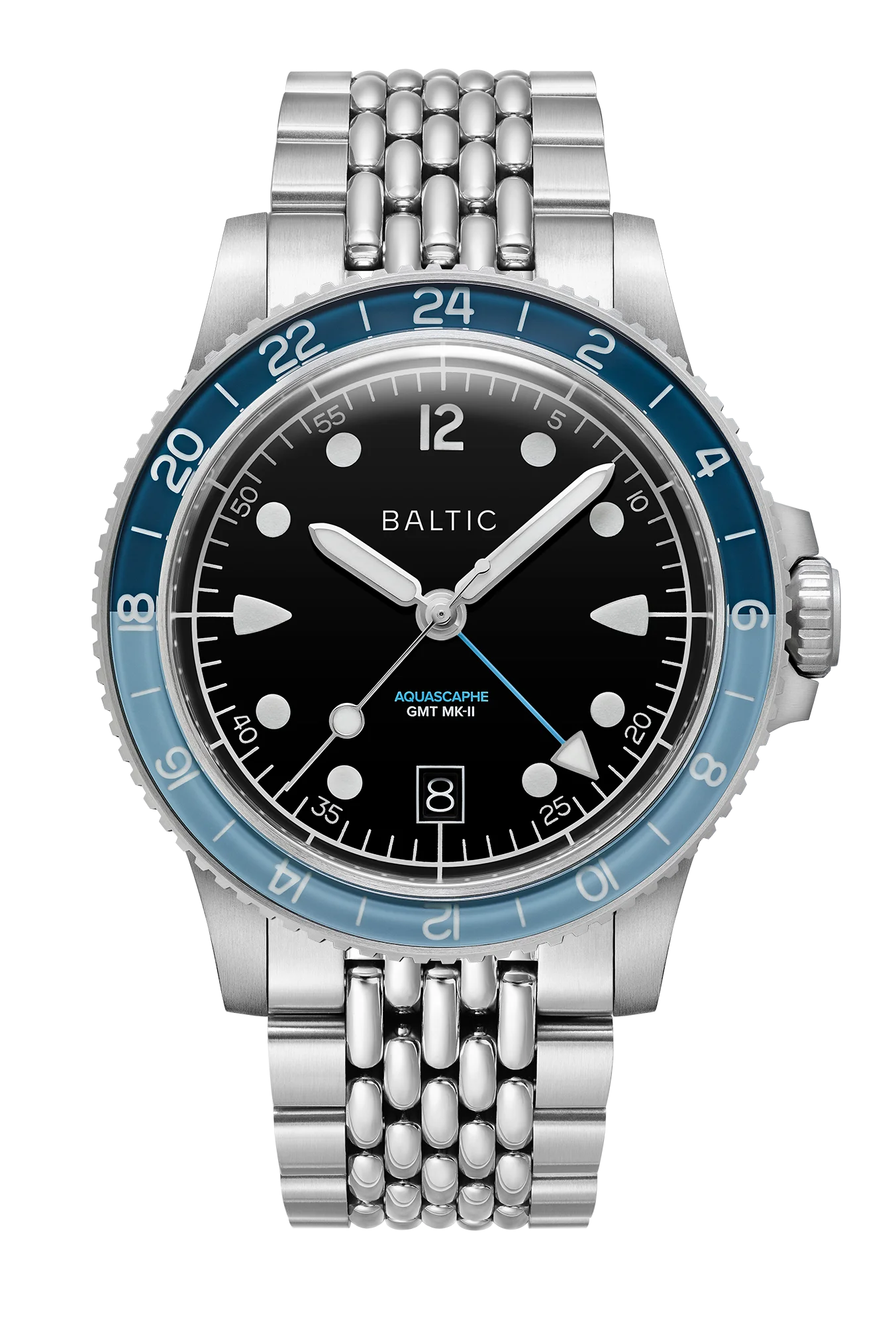
Miyota's 9075 instructions separate initial synchronisation from local-hour adjustment. First establish home time on the 24-hour and minute hands using the time-setting position. Then use the hour-adjustment position to align the ordinary hour hand and date with local time. The date follows the local-hour cycle, so morning and evening need attention even when the displayed hour looks correct.
This is not a shortcut around the supplied manual. The Aquascaphe has a screw-down crown, and the movement diagram describes functional crown positions rather than the entire external crown operation. Use Baltic's instructions for the complete watch and Miyota's diagram to understand the mechanism. Do the exercise somewhere calm before a trip, not while rushing through a departure gate.
A practical check is to read your intended home time aloud in 24-hour form. Then read the local hour, minutes and date separately. A plausible-looking dial can still be twelve hours out. On return, repeat the same check instead of assuming that moving the hour hand back has settled every indication.
The Case Is Part Of The Travel Decision
- Model
- Aquascaphe GMT MK-II Blue
- Case
- 39.5 mm; 47 mm lug-to-lug
- Thickness
- 13.8 mm including crystal; 12 mm without
- Movement
- Automatic Miyota 9075; 42 hours
- Bezel
- 48 clicks, bidirectional; sapphire, 24 hours
- Water resistance
- 200 m / 20 ATM
- Lug width
- 20 mm
- Dial
- Glossy black; BGW9; date at six
Diameter alone does not tell you whether this watch belongs under a cuff. Compare the lug-to-lug span and total thickness with a watch you already know. The difference between a quoted case thickness and one including the crystal is particularly relevant here: you wear the complete object, not the number obtained after subtracting its dome.
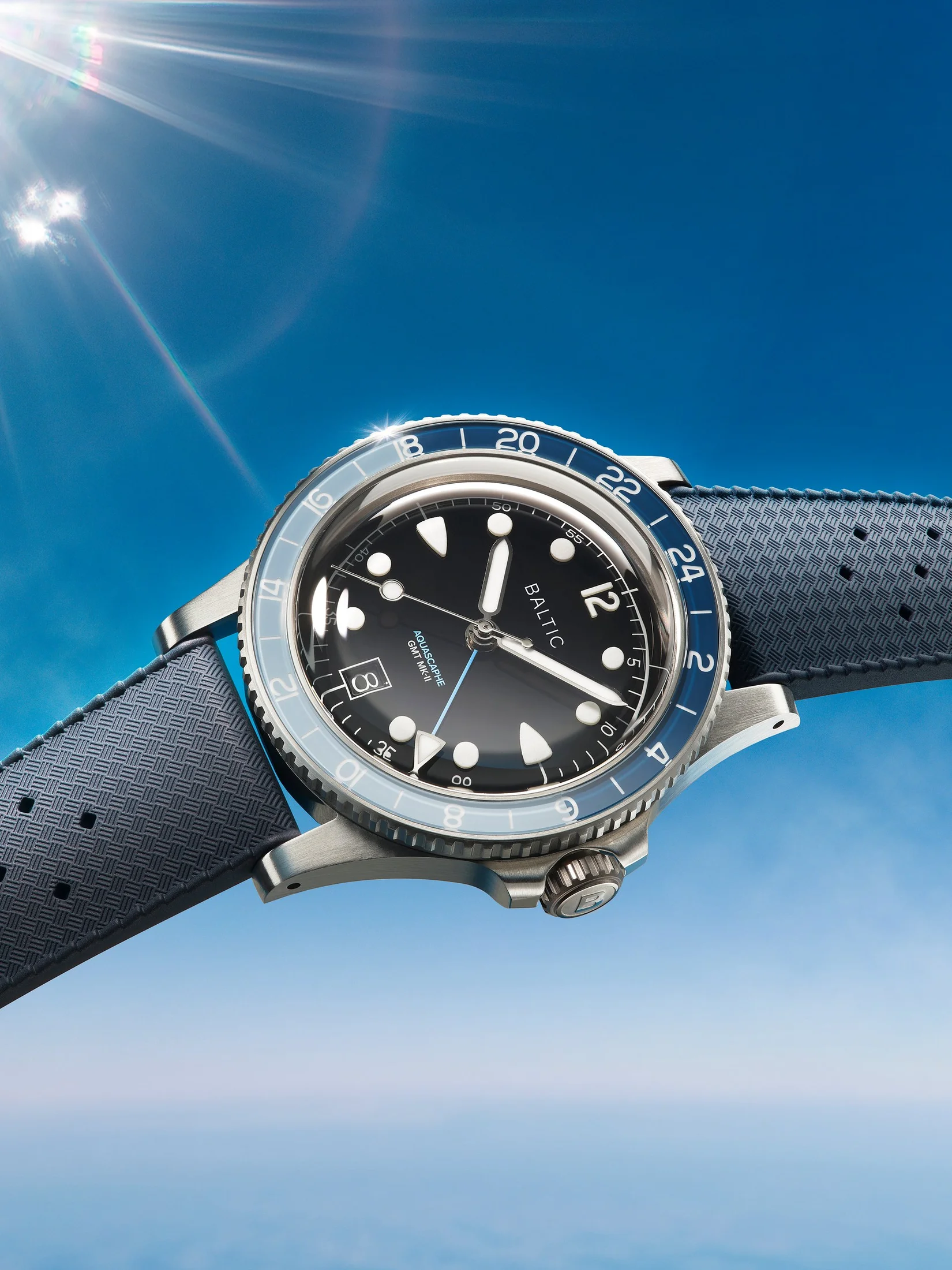
The new crown guards are visible in the official profile image. They change the outline and place metal beside a control that gets used when travelling. That does not prove comfort, impact resistance beyond the stated specification, or that every wrist will accept the shape. Those are reasons to handle the watch, not conclusions available from a photograph.
Likewise, the water-resistance rating is a specification, not permission to adjust the crown underwater. Keep crown operation separate from swimming or wet handling and follow the manufacturer's care advice. A travel watch has to be convenient to operate without encouraging careless operation.
Read The Bezel Without Losing Your Reference
The 24-hour hand and bezel work together. With the bezel in its reference position, the GMT hand gives you the second time zone you assigned. Rotating the bezel changes the scale under that hand; it does not change the movement's time setting. Decide whether you want a stable home reference or a temporary view of another zone, and return the bezel deliberately when that temporary task is finished.
A 24-hour circle divided into 48 detents gives half-hour scale increments. That is useful flexibility, but it does not make the local-hour mechanism jump by half an hour: Miyota specifies one-hour local steps. Nor does a GMT movement know which city has changed its clocks. Seasonal offsets remain the owner's responsibility. For quarter-hour offsets, do not mistake a nearby bezel click for exact alignment.
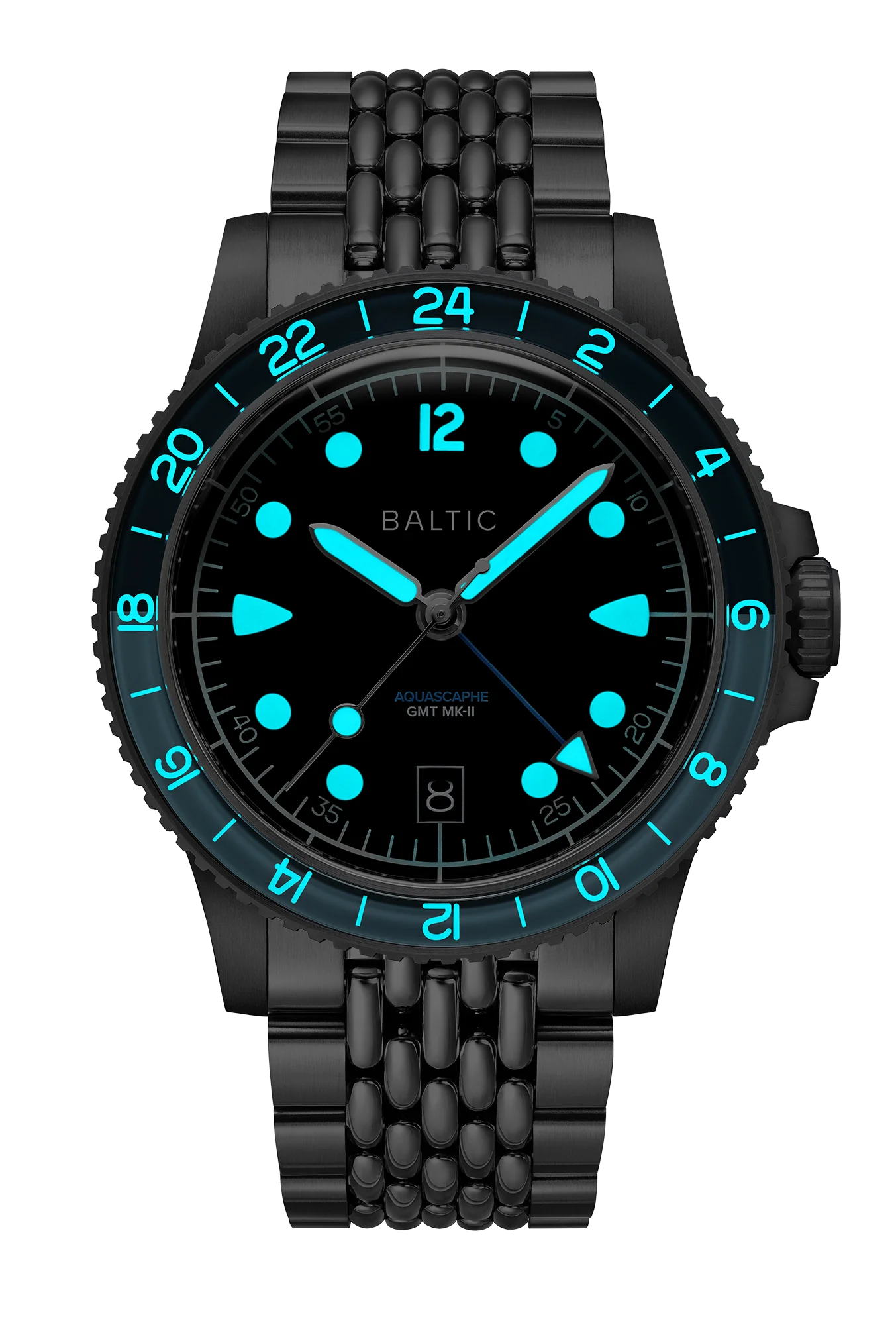
The visual question is equally practical. Can you distinguish the GMT arrow from the ordinary hour hand at a glance? Can you read the scale without letting the bezel colour dominate the information? The official illuminated image is useful for identifying the different elements, but it cannot establish how bright or long-lasting the lume will be in your own conditions.
Buy For Your Routine, Not The Label
The official collection page lists the GMT MK-II from EUR 850 at the time of this check. Treat that as a starting display price, not a delivered-price promise for every strap or market. Baltic says taxes and customs are excluded outside the European Union; confirm the selected configuration and destination total at checkout. We have not verified a Turkish retail price or local stock.
The stated 42-hour reserve also matters more than the marketing category. If the watch stops between outings, you need to re-establish the reference, local time and date. Travellers who rotate watches should decide whether that routine is acceptable. A convenient GMT control does not remove the ordinary maintenance of a mechanical time display.
Before committing, compare three things in person if possible: how easily you can operate the crown, whether the full case sits well on your wrist, and which strap or bracelet suits your day. Rubber and steel can change the character of the same Blue model considerably. No photograph can choose the more comfortable option for you.
The Departure Checklist
- Assign the 24-hour hand a clear job, usually home time.
- Check local hour, AM/PM and date together.
- Confirm your destination's current offset rather than relying on memory.
- Know what rotating the bezel changes, and what it leaves untouched.
- Check the crown is returned to its correct closed position.
The Aquascaphe GMT MK-II is worth considering because it puts the travel adjustment on the hand you read most. Its strongest argument is not that one kind of GMT defeats another. It is that the control you use on arrival matches the problem you actually need to solve.
For the next fitting check, see our watch case-size guide, or explore the GMT archive and Horomag guide desk.
Loading comments...