
A watch case can mislead you in less than a second. The diameter looks familiar, the product page says 39 mm or 40 mm, and the watch starts to feel safe before you have understood how it will actually sit.
The better habit is to read the case as a small system. Diameter matters, but it is only the first number. Lug-to-lug length, thickness, crystal shape, caseback, lugs, strap or bracelet integration, and water-resistance language all change the wearing story.
This is the fast Horomag method: if you can read five clues in 30 seconds, you can avoid many bad fit decisions before the watch ever reaches your wrist.
Quick Answer
Start with diameter, then immediately check lug-to-lug and thickness. Diameter tells you the broad face size. Lug-to-lug tells you how much wrist the case may occupy from top to bottom. Thickness tells you how much height the watch carries, but only after you look at the crystal, bezel, caseback, and mid-case shape.
Then read the lugs and strap. Long straight lugs can make a modest watch feel larger. A bracelet or strap that drops cleanly can make the same watch feel easier. Finally, treat water resistance as practical case language, not a badge of toughness. The right case is not always the smallest one. It is the one whose numbers and shape agree with how you plan to wear it.
The 30-Second Case Check
Diameter Is The Doorway, Not The Decision
Diameter is still useful because it gives you the basic width of a round watch. A 36 mm field watch, a 39 mm diver, and a 41 mm Spring Drive watch are not starting from the same visual footprint. But diameter becomes dangerous when it is treated as the whole answer.
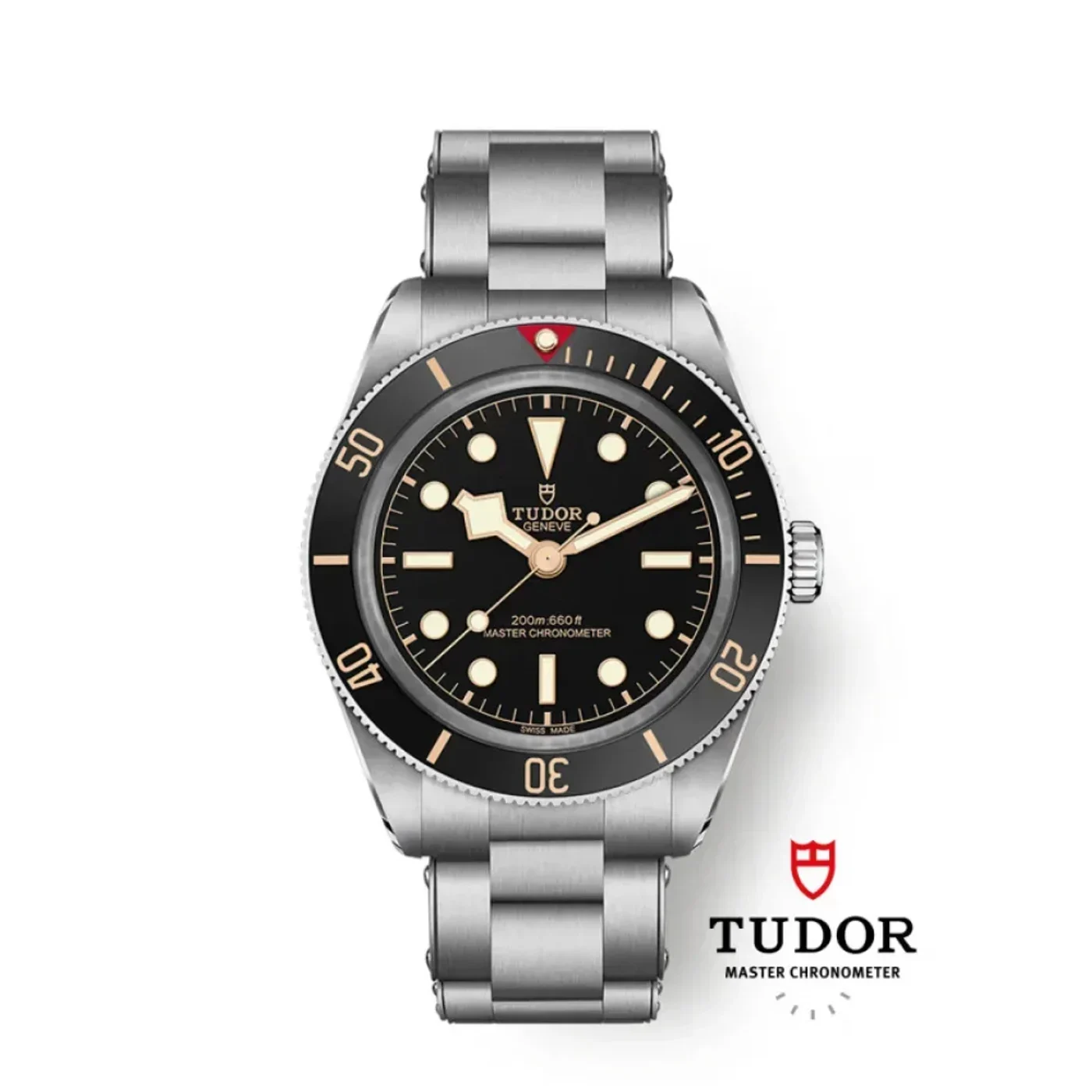
A 39 mm Tudor Black Bay 58 and a 39 mm Black Bay 58 GMT do not carry exactly the same case story. Tudor lists the newer Black Bay 58 steel reference at 39 mm with 11.7 mm case thickness, while the Black Bay 58 GMT keeps the 39 mm diameter but rises to 12.8 mm. The diameter looks stable. The case architecture changes the read.
This is why a buyer should ask a second question immediately: what is the case doing beyond diameter? A rotating bezel can shrink or strengthen the visual dial opening. A domed crystal can add height. A flat rectangular watch can wear differently from a round one with the same width number. Diameter opens the file; it does not close it.
Why Lug-To-Lug Changes The Story
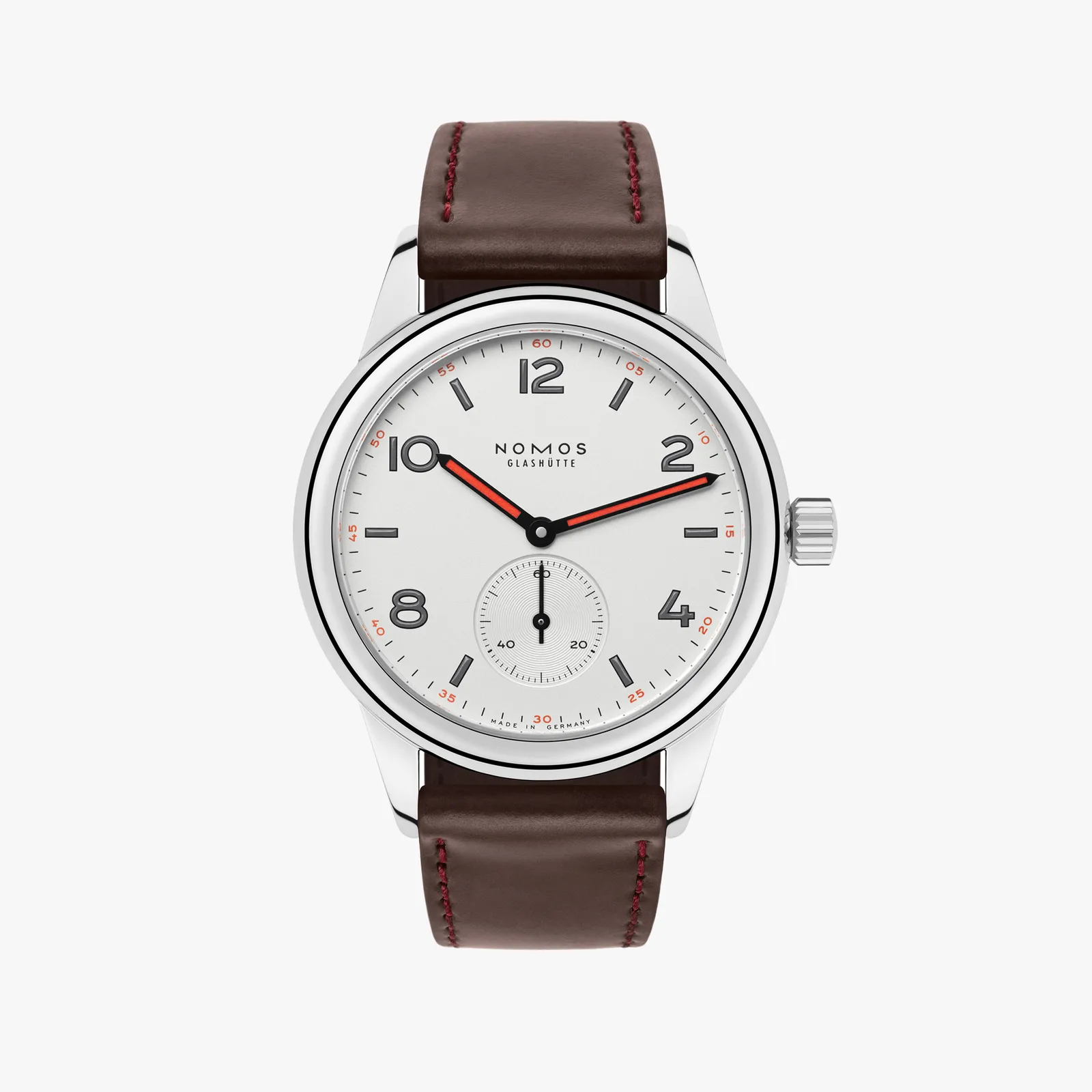
Lug-to-lug is the measurement from the outer end of one set of lugs to the outer end of the other. NOMOS distinguishes it from lug width, which is the distance between the lugs where the strap fits. That distinction matters. Lug width helps you buy the right strap. Lug-to-lug helps you understand the case footprint.
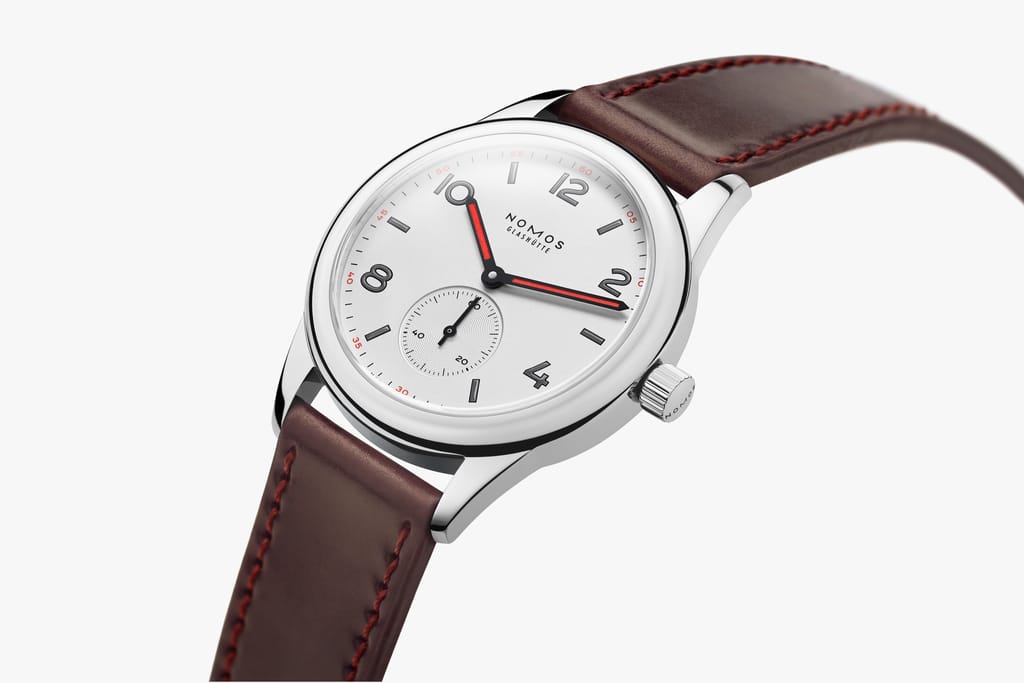
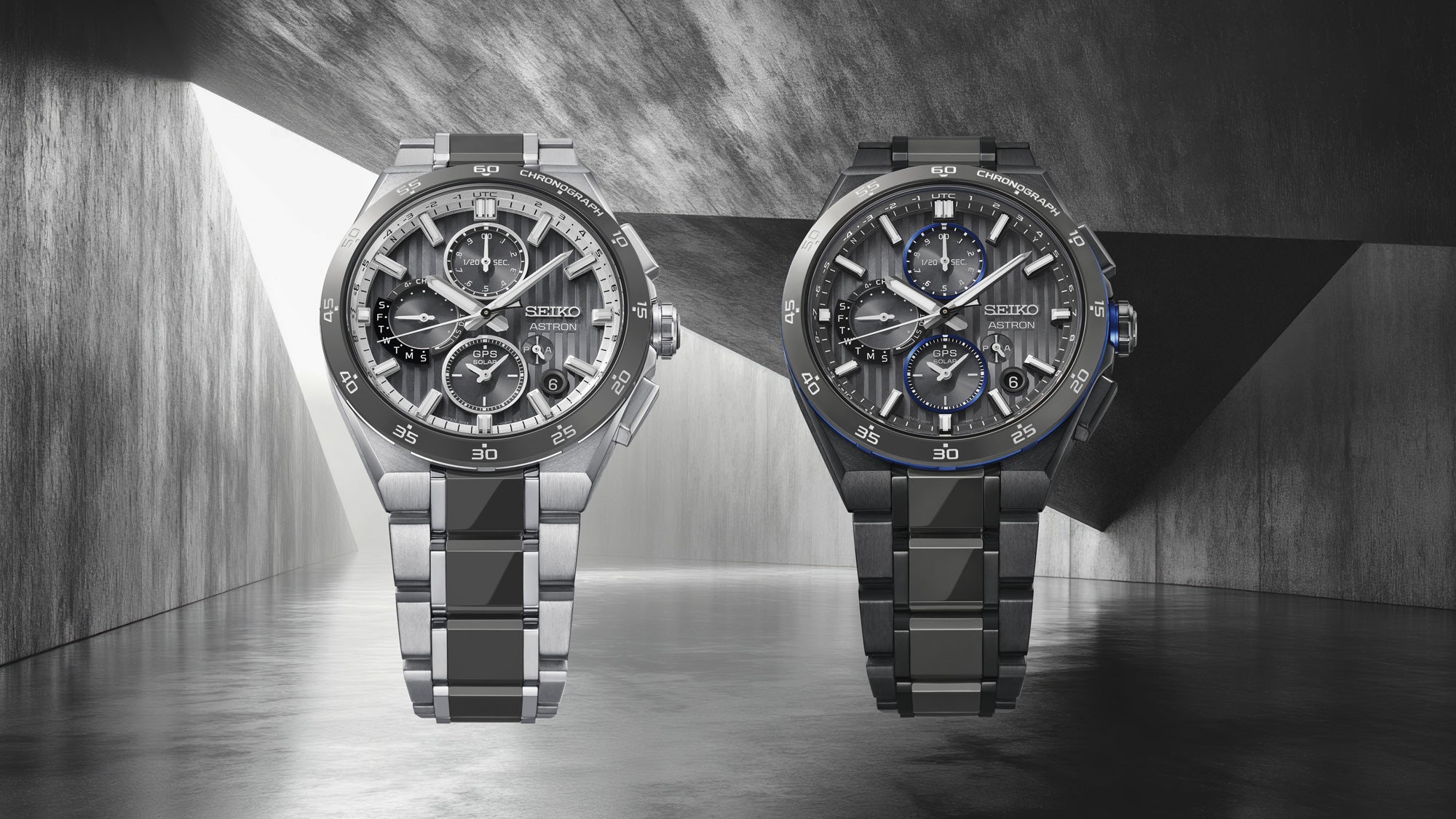
The difference becomes clear when brands publish full measurements. NOMOS lists the Club Campus 38 with a 38.5 mm diameter, 8.5 mm height, and 46.7 mm lug-to-lug length. Grand Seiko lists the SBGA413 at 40.0 mm diameter, 47.0 mm lug-to-lug, and 12.8 mm thickness. Seiko lists the Prospex SPB453 at 40.0 mm diameter, 46.4 mm lug-to-lug, and 13.0 mm thickness.
Those examples do not tell you which watch will fit every wrist. They tell you what to read. A compact diameter can still have long reach. A larger diameter can sometimes be controlled by short lugs. A watch becomes easier to judge when the diameter and lug-to-lug are read together.
Thickness Needs Context
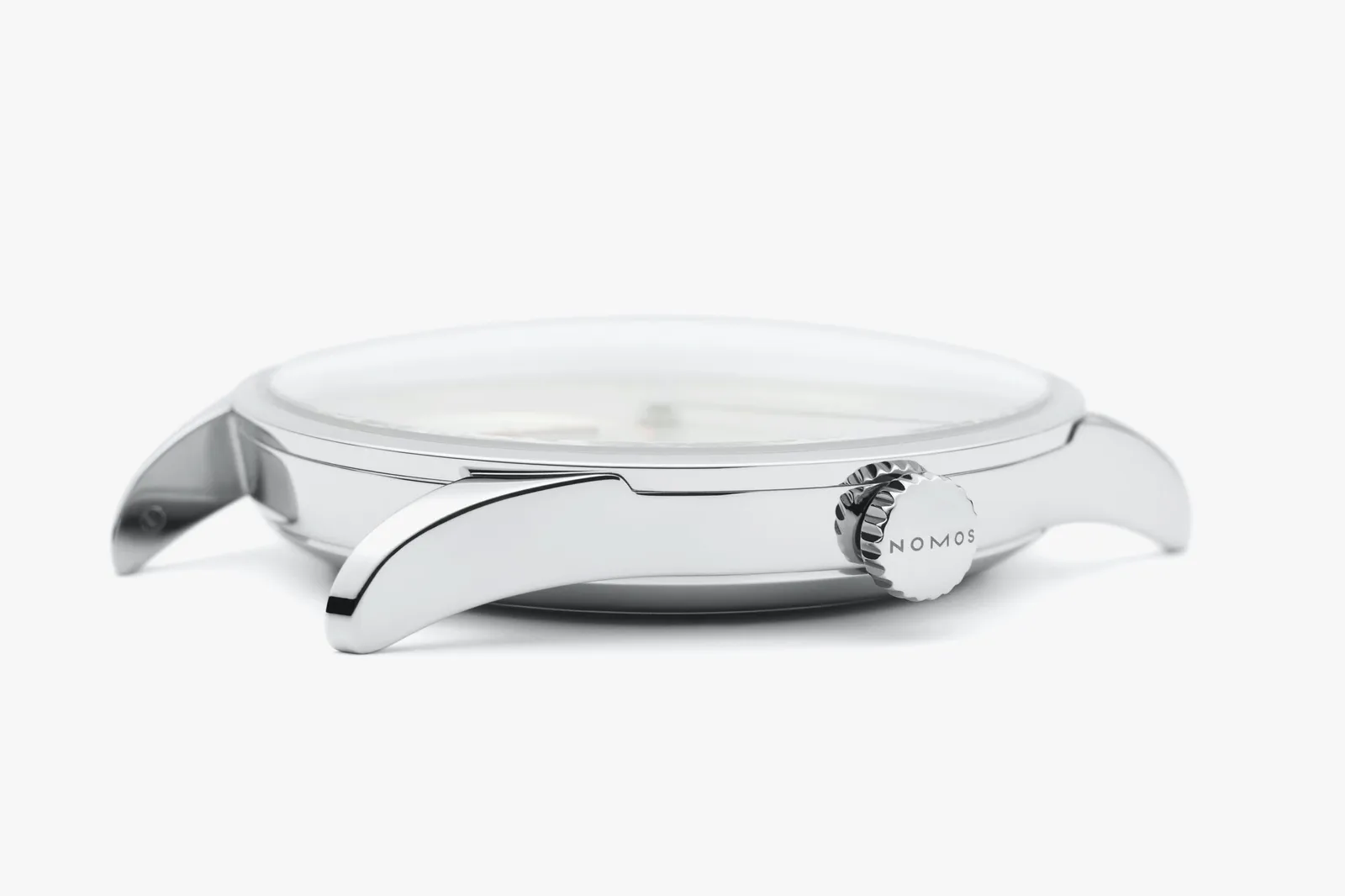
Thickness is not just a number printed beside diameter. A watch with a box-shaped crystal, a tall bezel, a thick automatic movement, or a raised caseback can feel taller than the raw measurement suggests. Another watch can hide height with a sloped case side or a caseback that settles into the wrist.
This is where the side profile matters. Tudor's Black Bay 58 steel reference is listed at 11.7 mm thick, while the Black Bay 58 GMT is listed at 12.8 mm. Grand Seiko's SLGB003 is listed at 37.0 mm diameter, 44.3 mm lug-to-lug, and 11.4 mm thickness. These are not just spec-sheet facts. They are clues about how much mass the case carries above the wrist.
Do not decide by thickness alone either. A 12.8 mm watch with a well-shaped case can wear cleaner than a thinner watch with awkward lugs. The useful question is simple: where is the height? If the height sits in a crystal, bezel, or display back, it may read differently from a slab-sided case.
Shape And Lugs Matter
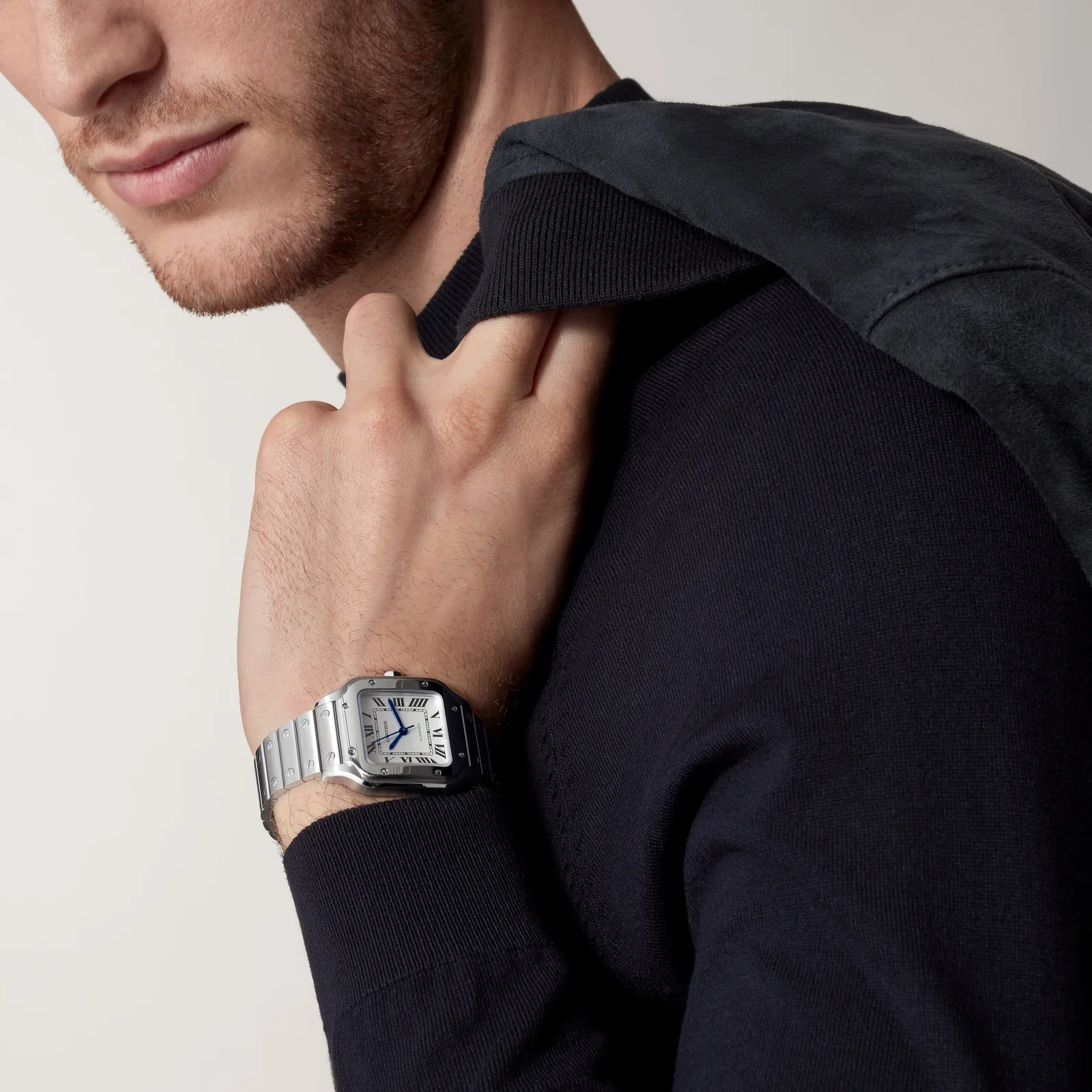
Round watches invite diameter thinking. Rectangular watches punish it. Cartier lists the small Tank Must with 29.5 x 22 mm case dimensions and 6.6 mm thickness, not a round diameter. The medium Santos de Cartier is listed by case width and thickness. Those watches need to be read through shape, proportion, and flatness, not through diver-watch diameter habits.
Lugs are part of that shape. Short lugs can make a watch feel contained. Long straight lugs can stretch it. Twisted, downturned, or sharply integrated lugs change how the strap leaves the case. A bracelet with stiff end links can make the effective footprint feel longer than a soft strap that drops immediately.
This is why product photos matter, even before a wrist shot. Look at the side of the case. Look at where the spring bars sit. Look at whether the bracelet drops or projects. The case is not only the metal circle around the dial. It is the way the watch meets the wrist.
Water Resistance Is Case Language
Water resistance should be read as use-case language. Seiko's customer-service guidance tells owners to check the marking on the back of the case and also notes that water resistance is not permanently guaranteed, because gasket aging or deformation from accidental shock can affect it.
That is a useful reminder for buyers. A dress watch with 3 bar water resistance, a 10 bar everyday watch, and a 200 m or 300 m diver are not making the same promise. The rating belongs to the case construction, crown, seals, and intended use. It should help you decide whether the watch fits your life, not whether the spec sounds impressive.
Read the language carefully. A diver's rating, a screw-down crown, and a rotating bezel tell a different story from a thin rectangular case with low water resistance. Neither is automatically better. They are built for different lives.
Mistakes To Avoid
Do not buy by diameter alone
A 40 mm watch can be compact or broad depending on lug-to-lug, bezel, dial opening, and case shape.
Do not confuse lug width with lug-to-lug
Lug width helps you fit a strap. Lug-to-lug helps you read the case's wrist footprint.
Do not ignore thickness
Height can change cuff fit, visual weight, and daily comfort, but it has to be read with the case profile.
Do not treat water resistance as permanent
Use the official rating as guidance, then remember that seals and case condition matter over time.
Next Reads
If you want to see case reading inside a real buying decision, the Hamilton Khaki Navy Scuba Auto vs Mido Ocean Star 200 guide shows how thickness, water resistance, and diver identity can change the recommendation. The Citizen TSUYOSA Shore vs The CITIZEN comparison shows the other side of case reading: two 40 mm watches can still tell very different ownership stories through material, movement, dial craft, and case execution.
Final Checklist: Read The Case Before The Brand
Recommendation label: Essential buyer habit.
Buy if
The diameter, lug-to-lug, thickness, lugs, strap drop, and water-resistance rating all support how you will actually wear the watch.
Pause if
You only know the diameter, or if the product page gives you no source-backed reason to trust the fit.
Remember
The right case is not the one with the safest number. It is the one whose proportions, profile, and purpose make sense together.

Loading comments...