
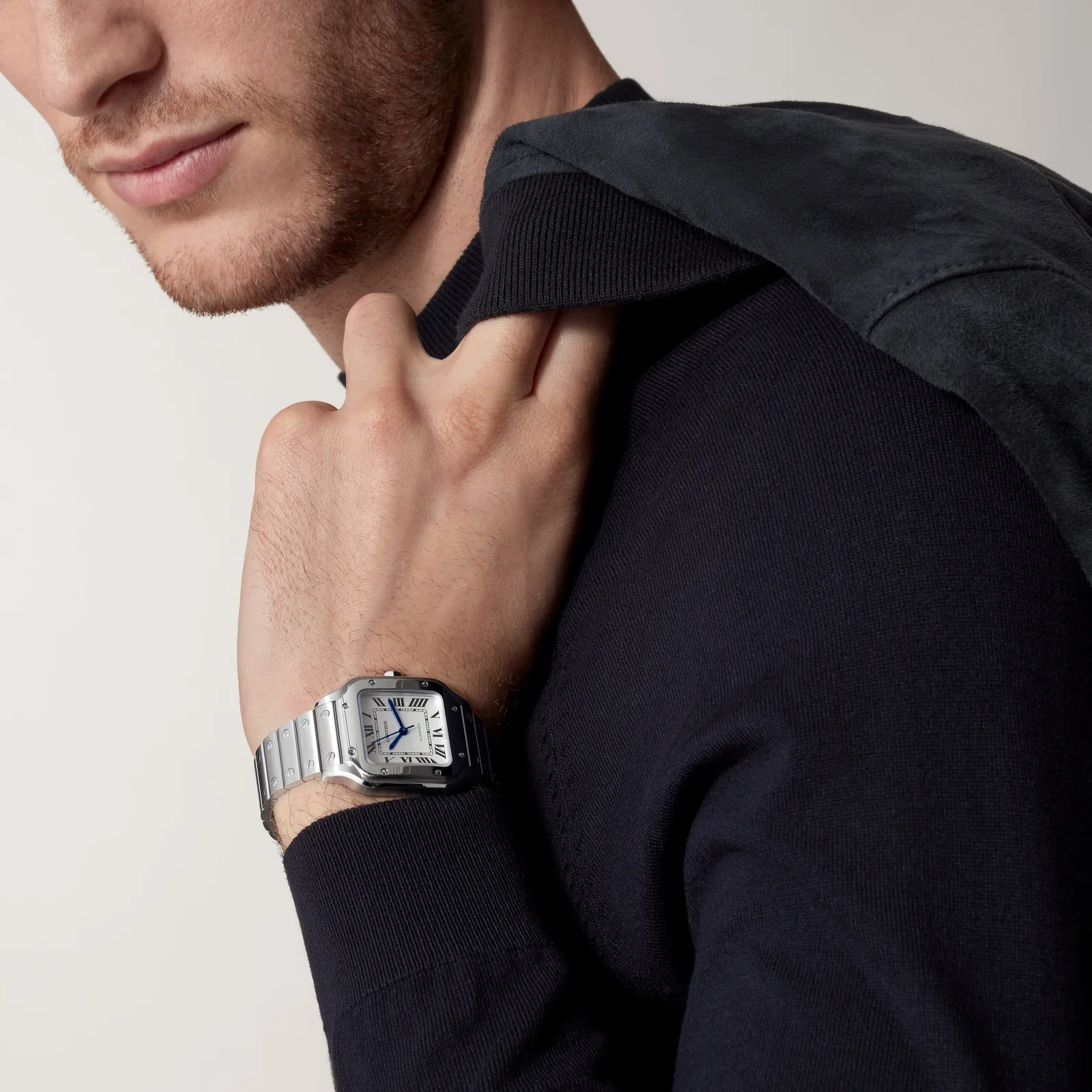
In 1904, Louis Cartier answered Alberto Santos-Dumont’s practical problem: the aviator wanted to read the time in flight without releasing the controls to reach for a pocket watch. Cartier describes the result as the first modern watch designed specifically for the wrist. That origin matters because the Santos began as an interface decision, not as retro styling.
The square that made the mechanism visible
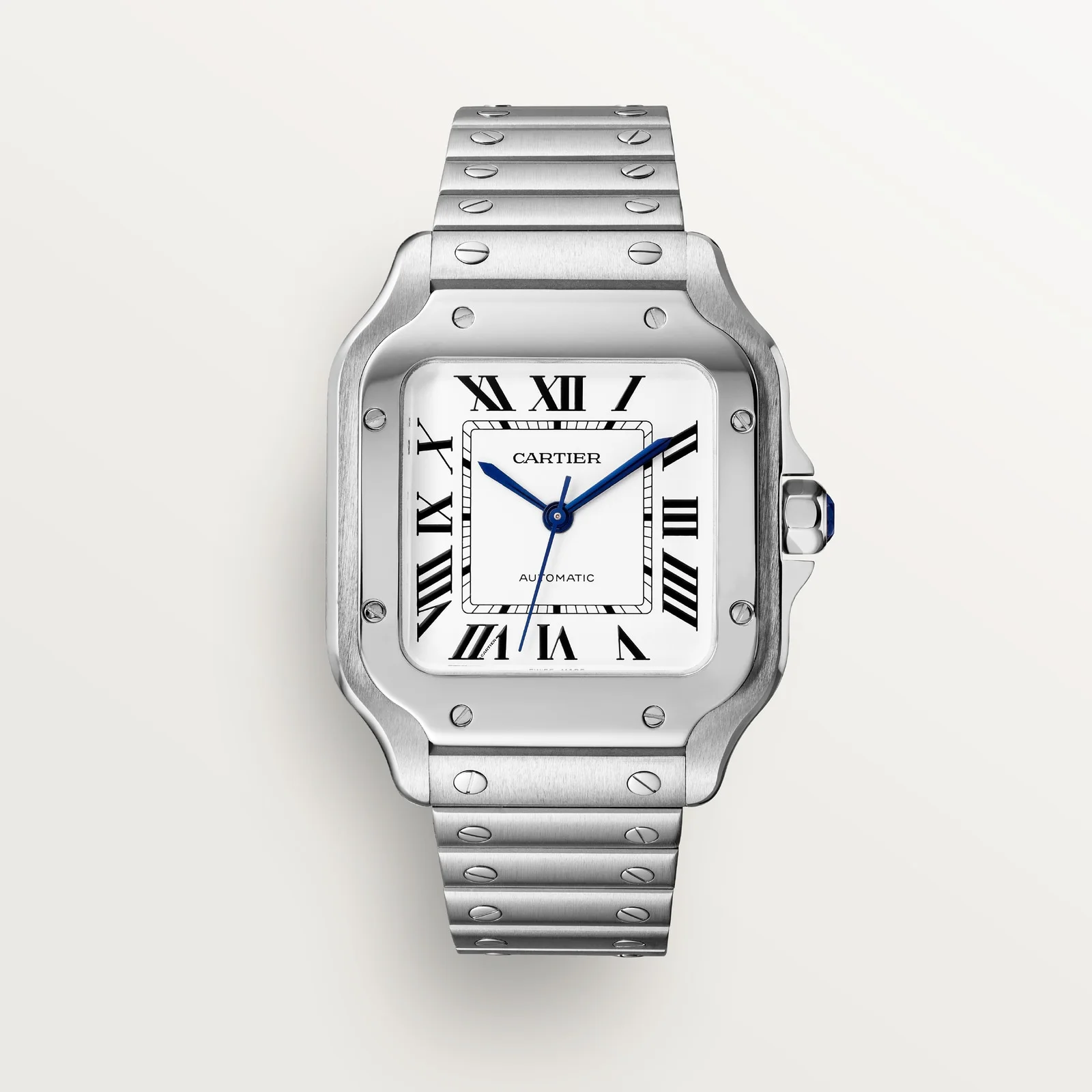
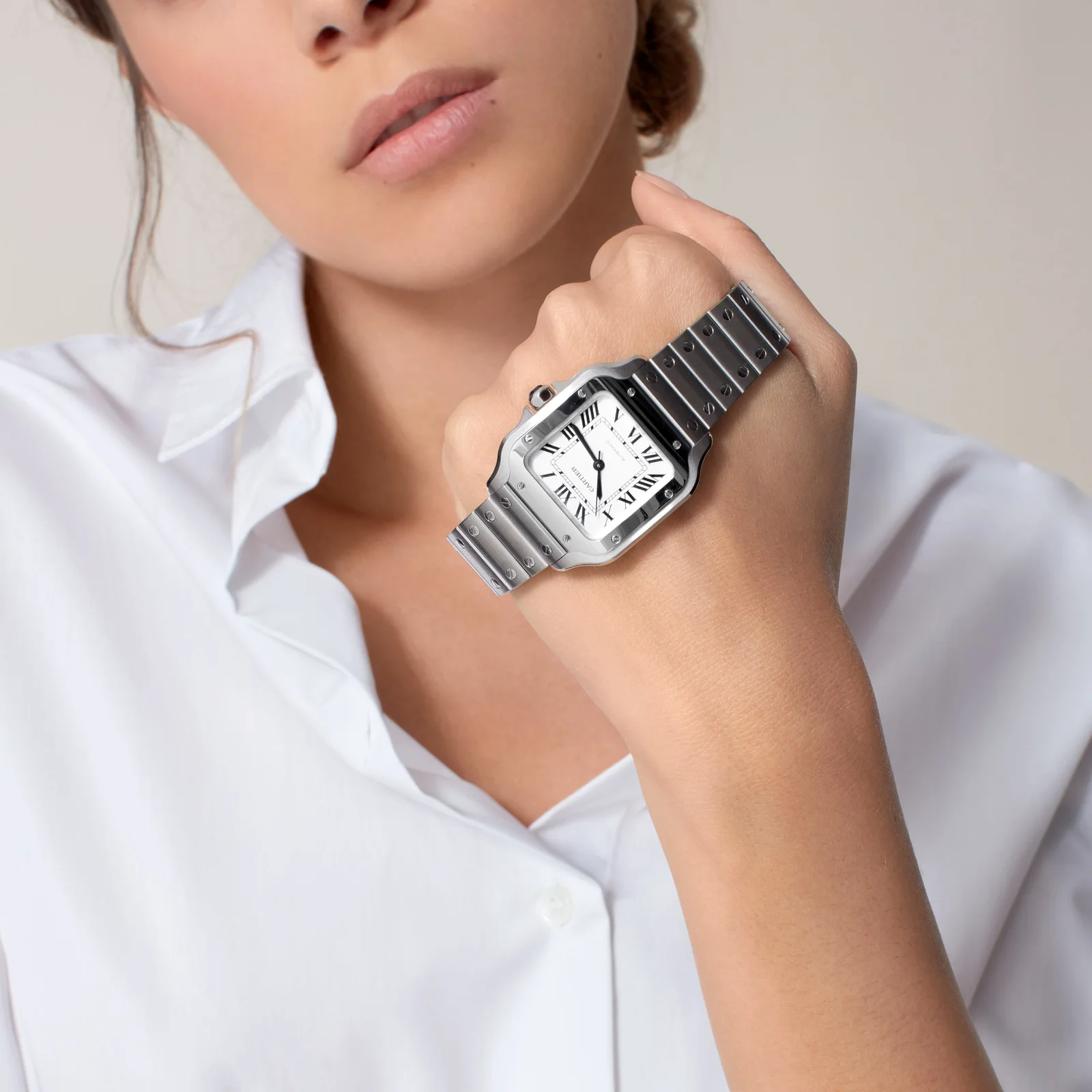
Cartier placed a square watch in a world dominated by round cases and made screws visible on the bezel instead of concealing them. Rounded corners, symmetrical bevels and curving lugs softened the geometry. The watch therefore reads as both machine and drawing: strict enough to be recognizable, fluid enough to avoid looking industrially crude.
Why the proportions survive
A durable watch design needs more than one memorable detail. Cartier identifies purity of line, accuracy of shape, precision of proportion and precious detail as its core design principles. The Santos carries all four. Roman numerals and sword hands provide familiar Cartier formality; the bezel and screws keep that formality from becoming delicate or anonymous.
Evolution without disguise
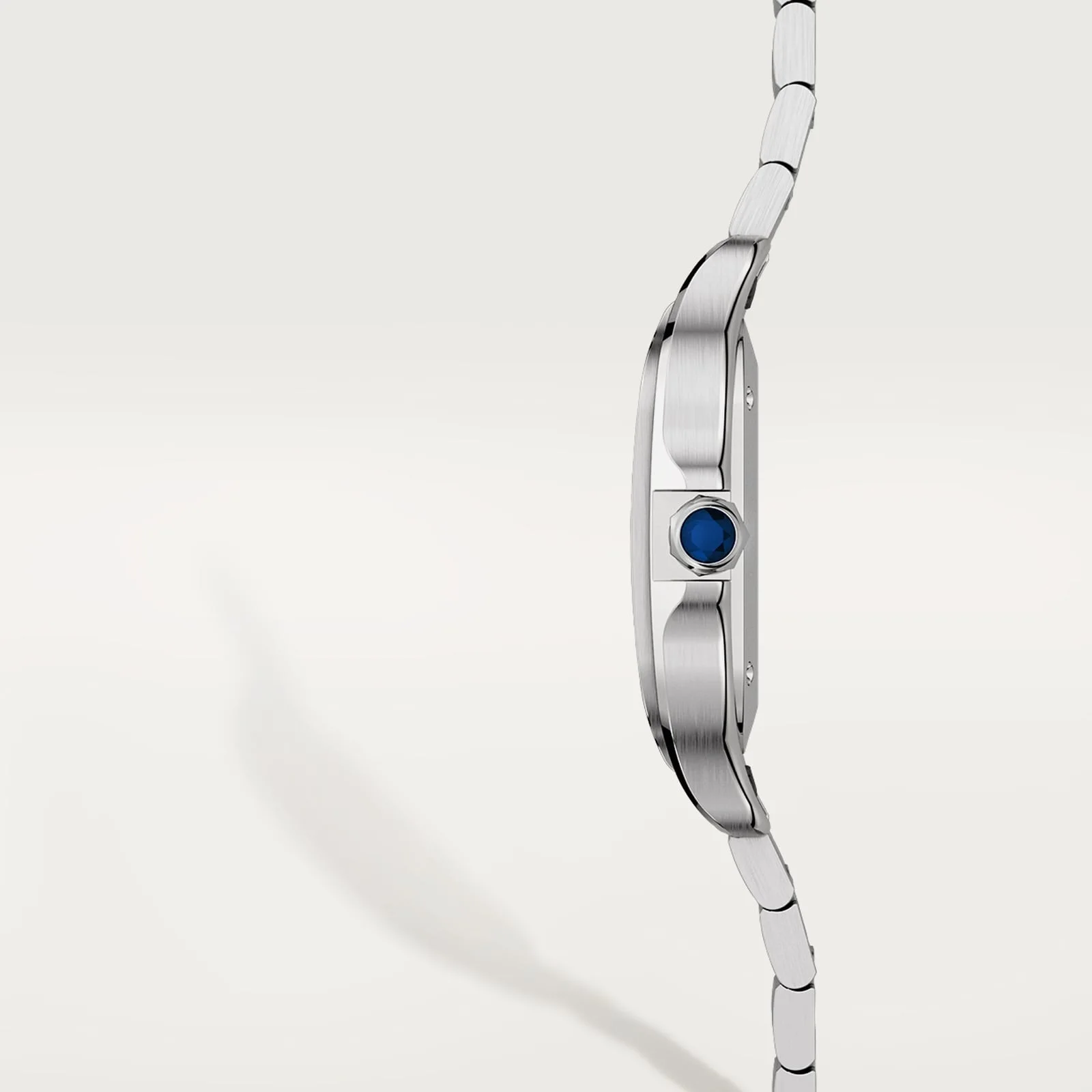
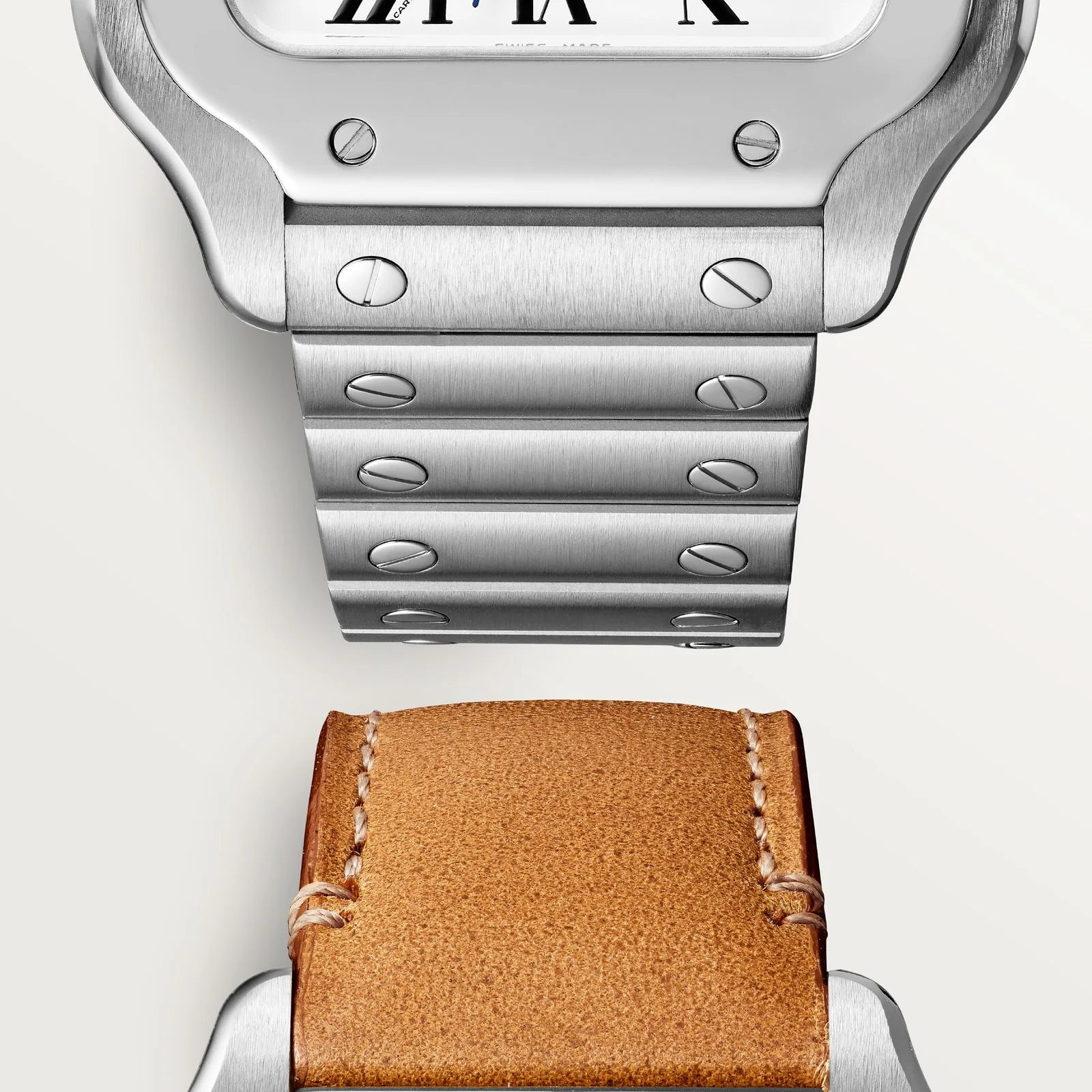
The current Santos de Cartier does not imitate an untouched 1904 object. Its bracelet meets the case more continuously, modern versions add practical interchangeability, and the collection uses contemporary automatic movements and everyday resistance. Yet the square, screws and curved transition into the bracelet remain legible. Modernization changes the ownership experience without erasing the visual argument.
What collectors should notice
The most important Santos references are not automatically the rarest or most complicated. Look at how confidently each version preserves the relationship between dial, bezel, screws and bracelet. A strong Santos should still feel designed from the outside inward. If one element overwhelms the others, the object loses the balance that made the original radical.
A design that still explains itself
The Santos still looks modern because its decoration began as structure. The square solved legibility, the wrist format solved use, the screws acknowledged construction, and the curves made the object wearable. More than a century later, those decisions remain visible without needing a history lesson. That is a stronger form of longevity than nostalgia.

Loading comments...