
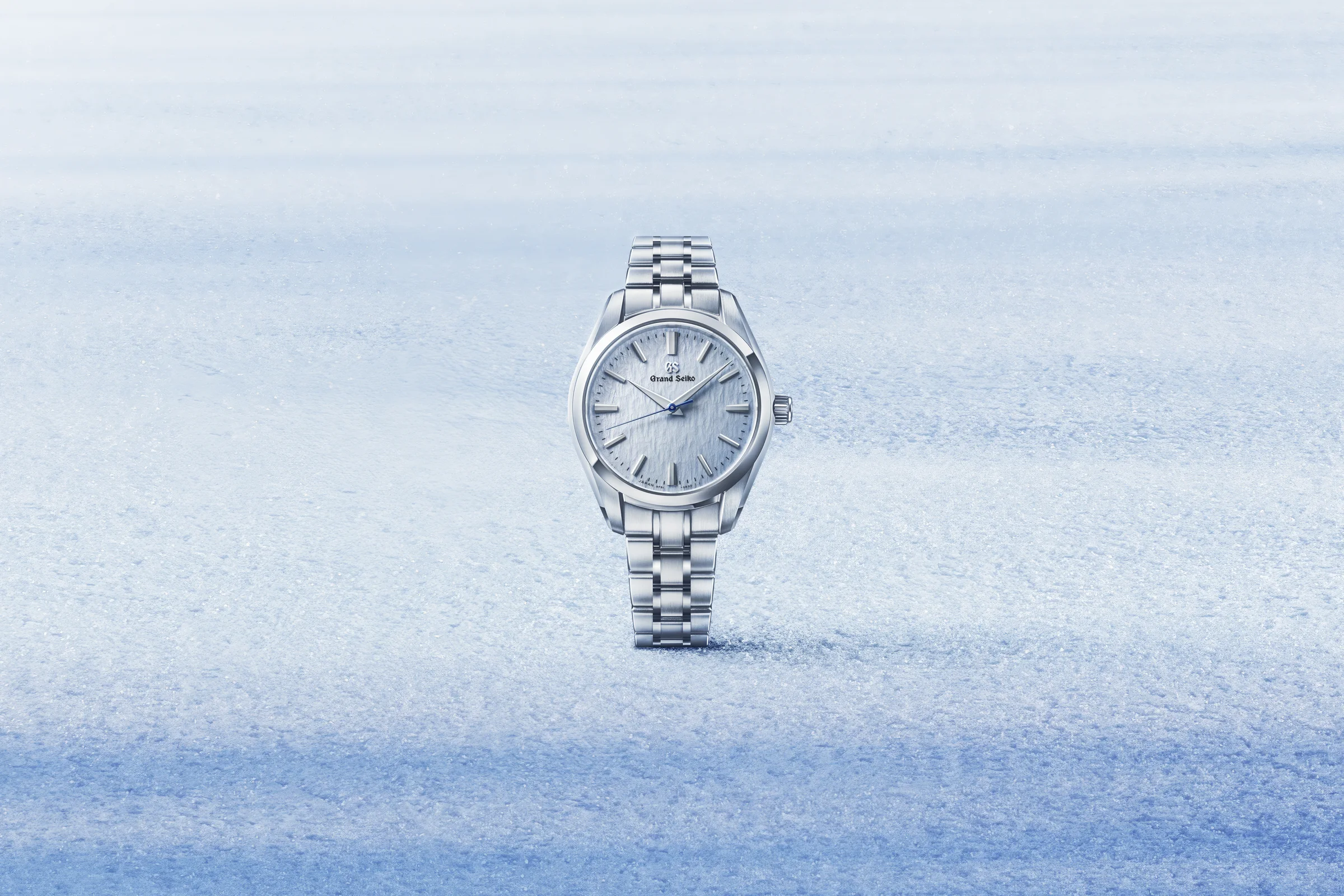
Grand Seiko’s SBGX359 and SBGX361 ask a more interesting question than whether quartz can be luxurious. Both place the new Calibre 9F51 inside a 33 mm steel case that is 9.1 mm thick and 39.7 mm lug to lug. That compactness changes the argument. These are not cheaper substitutes for the brand’s mechanical watches; they are precise, deliberately small watches built around a movement whose strongest qualities are easy ownership, hand assembly and the ability to drive Grand Seiko’s substantial hands without visible shudder.
The Shared Specification
The Collector Question Is No Longer “Why Quartz?”
Quartz is often discussed as though convenience and craft cancel each other out. Calibre 9F has spent more than three decades challenging that assumption. Grand Seiko introduced the 9F83 in 1993 after its first quartz Grand Seiko, the 95GS, had already reached annual accuracy of ten seconds in 1988. The 9F project added a Twin Pulse Control Motor for heavier hands, an anti-backlash mechanism to make the seconds hand land cleanly, an instantaneous calendar and a sealed structure designed to protect the movement during servicing.
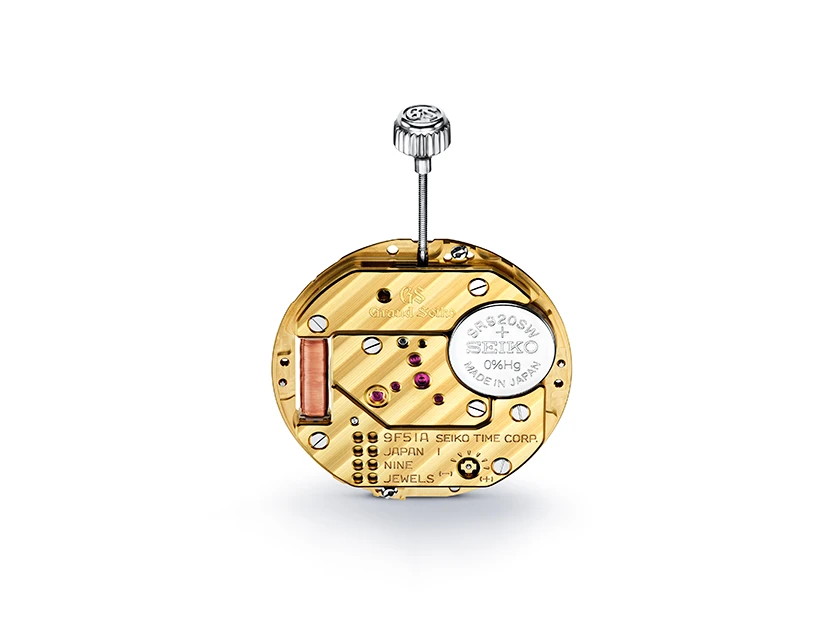
9F51 removes the date but keeps the central philosophy. Grand Seiko states that each movement uses an individually selected quartz crystal aged for three months and a temperature-compensated integrated circuit. The movement is assembled by hand at the Shinshu Watch Studio. Those facts do not make it mechanical, nor should they. They make it a high-accuracy quartz movement treated as a permanent watchmaking product rather than a disposable electronic module.
Thirty-Three Millimetres Is The Point
The new calibre is 0.6 mm smaller in diameter than the long-running no-date 9F61. That reduction allows SBGX359 and SBGX361 to become the smallest and thinnest 9F Grand Seiko watches of their generation. A 33 mm diameter will sound conservative to buyers trained by modern sports watches, but the 39.7 mm lug-to-lug figure is the more useful number: it makes the pair credible for genuinely small wrists while remaining a deliberate classic proportion on larger ones.
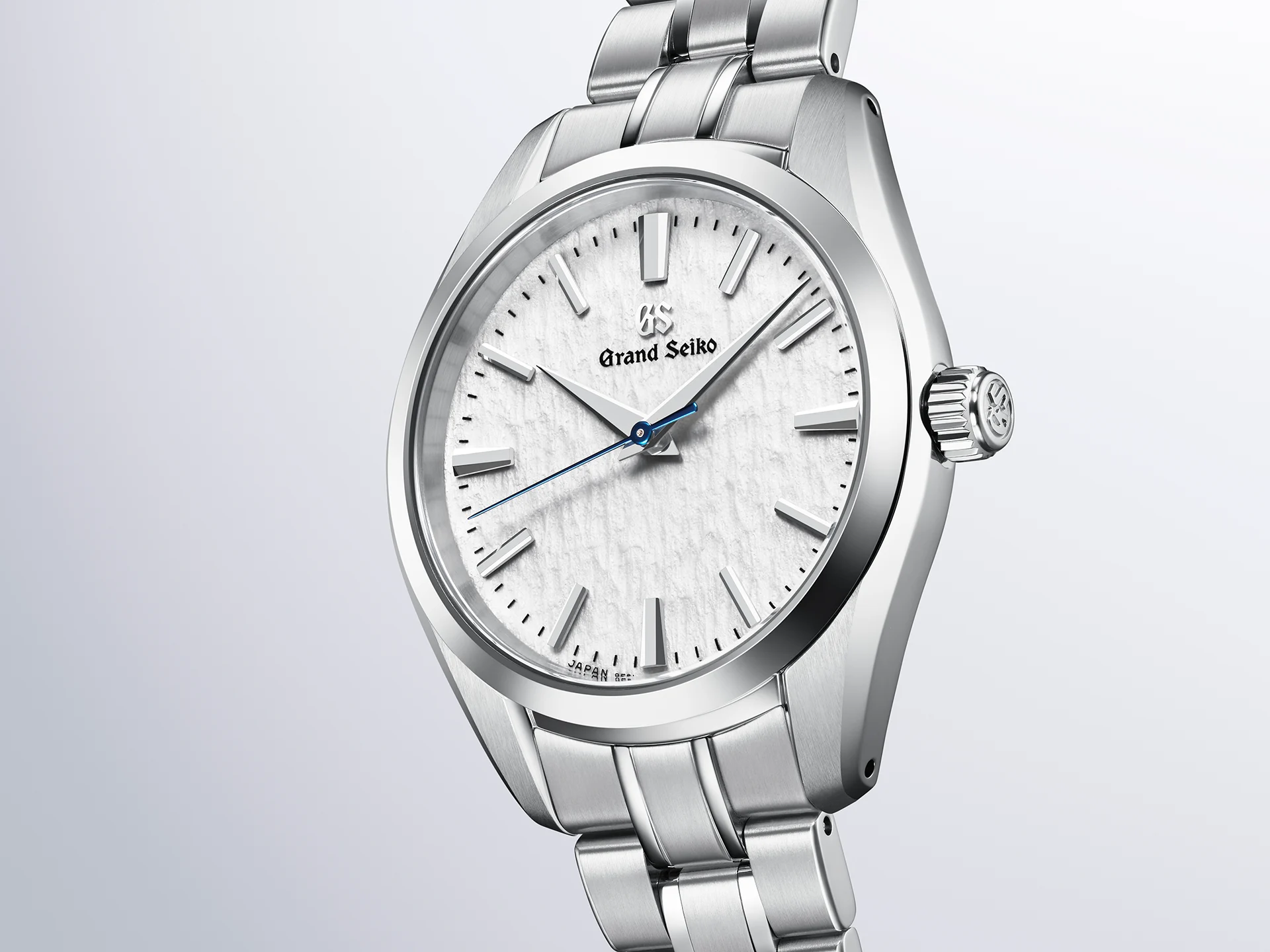
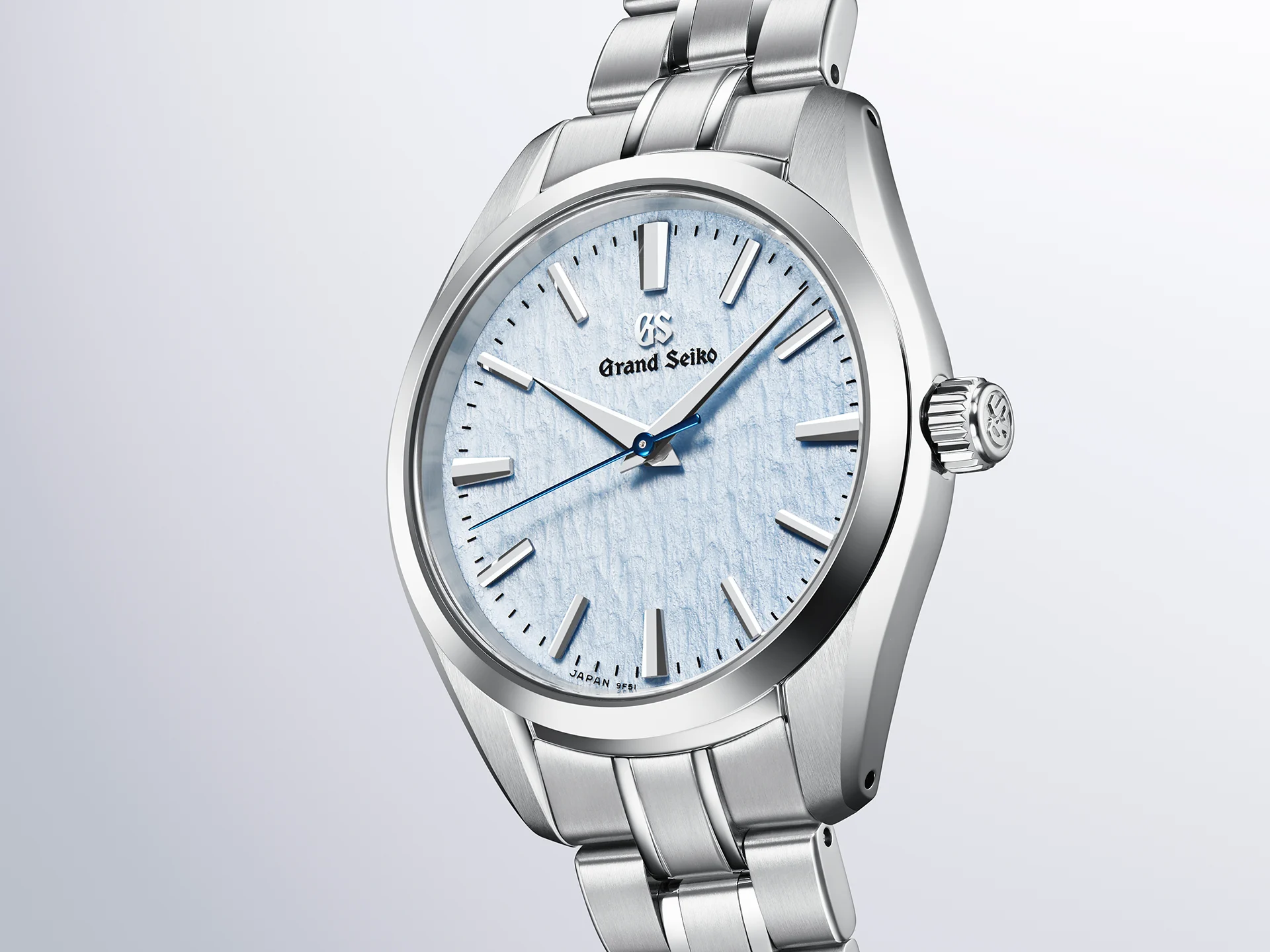
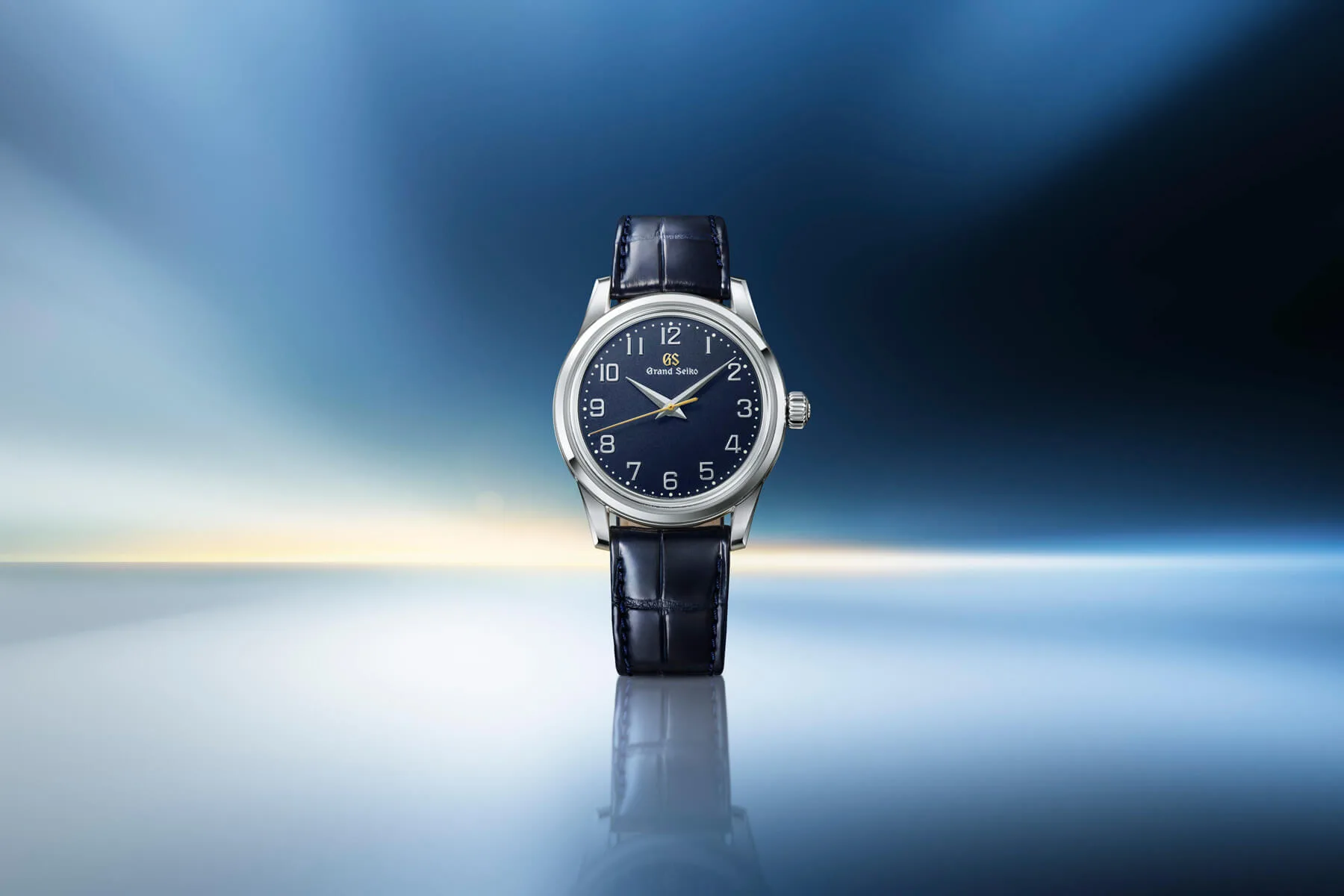
Small does not mean visually timid here. Grand Seiko’s applied indexes, broad faceted hands and mixed case finishing concentrate a great deal of reflection into a compact area. The absence of a date window also helps. Nothing interrupts the vertical dial texture, and the blue seconds hand has enough space to act as the single sharp accent.
SBGX359 Or SBGX361?
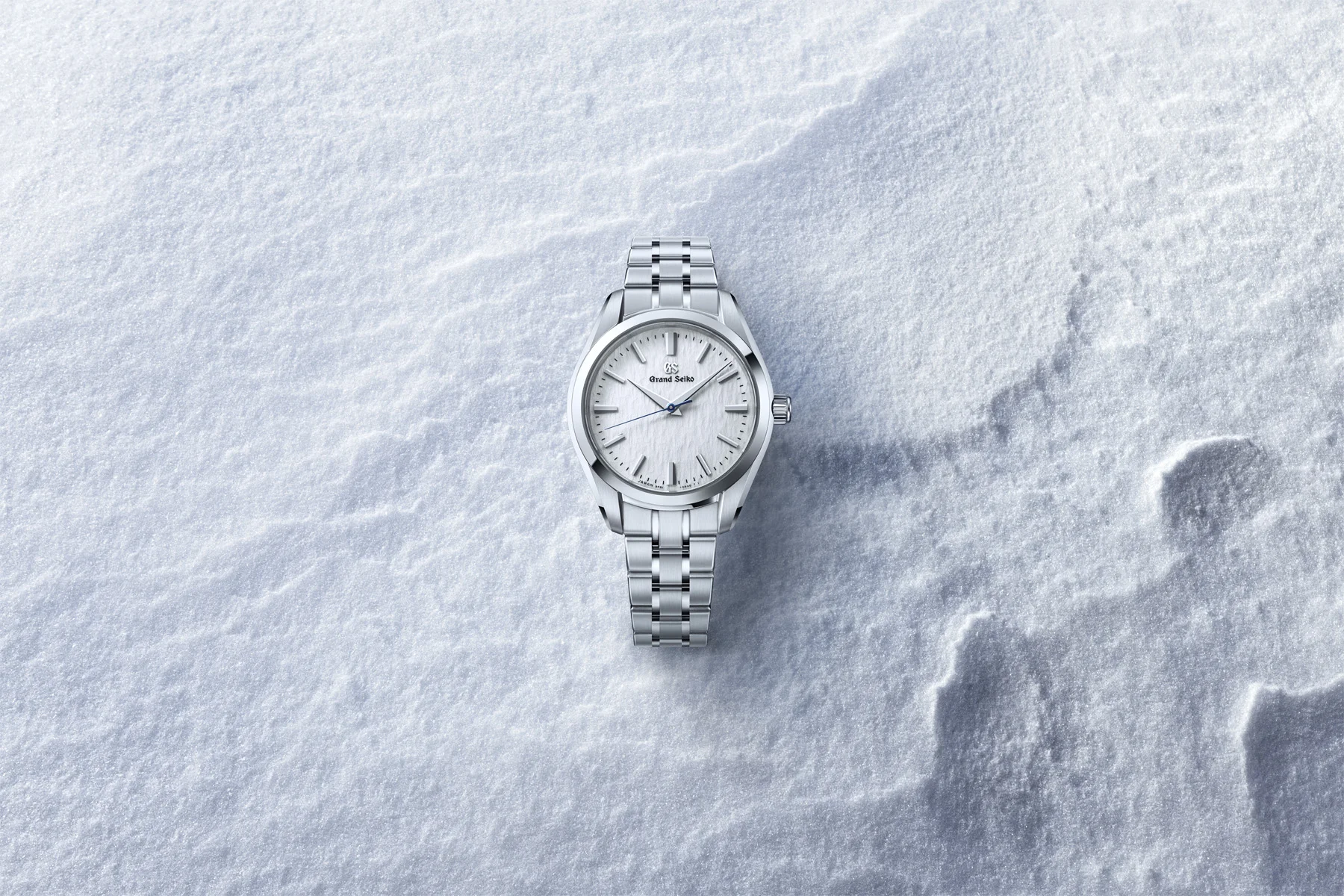
Mechanically and dimensionally, the decision is simple because the watches are identical. SBGX359 is the quieter choice. Its white dial is inspired by wind-shaped snow around the Hotaka mountain range visible from the Shinshu studio. Grand Seiko says the finish uses silver plating, clear coating and controlled finishing rather than white paint. The result is pale without being flat, and the blue seconds hand carries most of the colour.
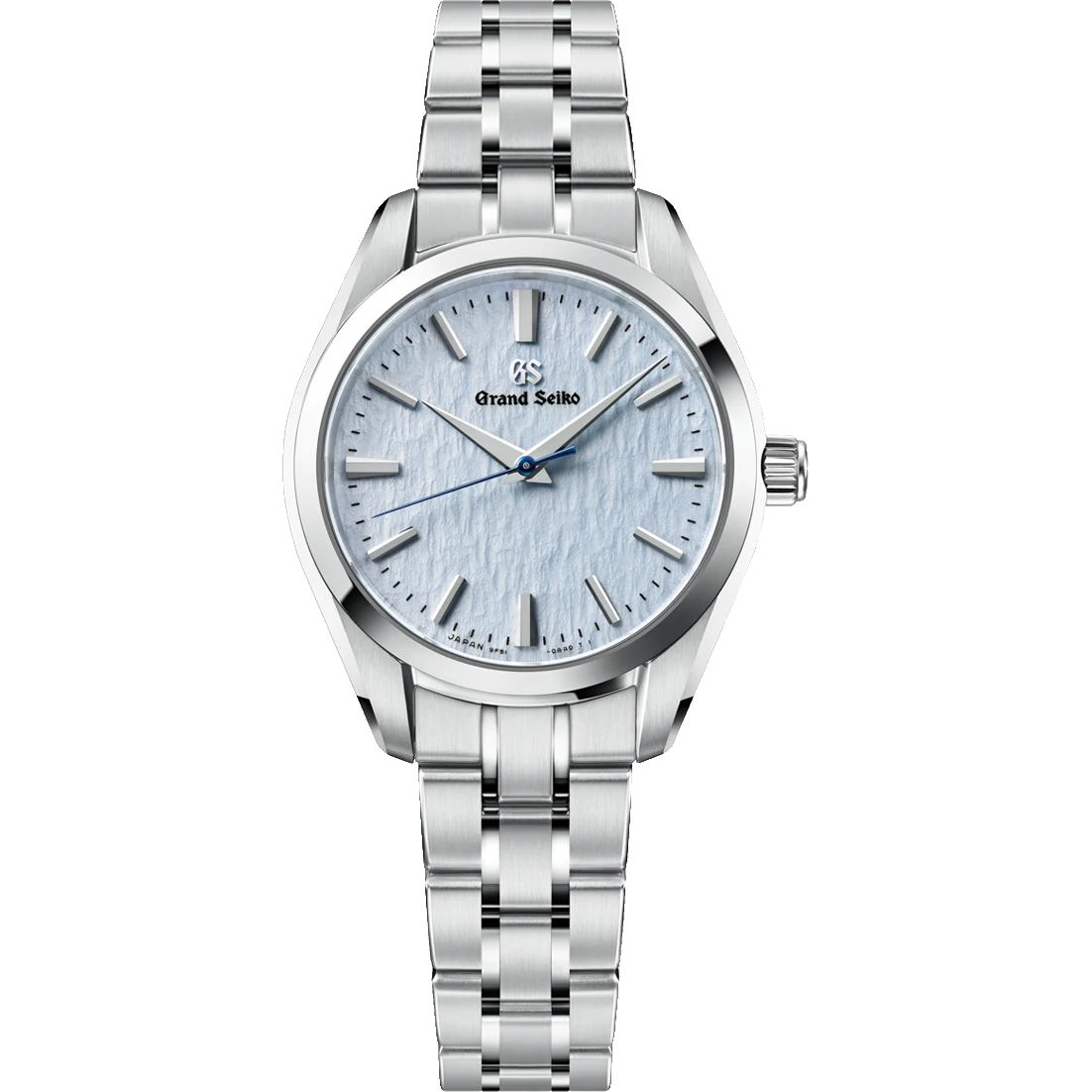
SBGX361 uses the same wind-swept texture in light blue, linking the surface to snow reflecting a clear winter sky. It is still restrained, but it announces itself earlier. For someone who wants one compact Grand Seiko to move between formal clothing and ordinary daily wear, SBGX359 is the easier answer. For a collector who already owns neutral dials, SBGX361 gives the same technical proposition a clearer identity.
What The Closed Caseback Means
Collectors accustomed to mechanical display backs may find the solid screw back emotionally austere. Yet it fits the ownership logic. The 10-bar water-resistance rating, 4,800 A/m magnetic-resistance specification and approximately three-year battery life frame these watches as dependable daily objects. The movement also includes a regulation switch that allows fine adjustment during servicing rather than treating rate drift as a reason to replace the entire calibre.
The trade-off is real: none of the hand assembly, finishing or compact engineering is visible while the watch is worn. Buyers must value the result more than the spectacle. That makes 9F51 a revealing collector test. If a movement matters only when gears can be watched through sapphire, these watches may feel too quiet. If precision, serviceability and clean hand alignment are themselves forms of craft, the closed back is less of a loss.
The Ownership Case Is Stronger Than The Status Case
The SBGX pair will not replace the tactile ritual of winding a mechanical watch or the fluid seconds hand of Spring Drive. Their appeal is different. They can sit unused, return to the wrist without resetting, tolerate a wet commute and remain within a stated ten seconds per year. That removes maintenance from the daily relationship without removing finishing, proportion or a specific manufacturing story.
This is especially persuasive for a small collection. A mechanically complicated watch can provide theatre; a 9F Grand Seiko can provide the reference point. It is the watch that tells the owner whether the others are still close, the watch that travels without a winding routine and the watch whose compact size does not demand an oversized occasion.
The Quiet Argument For Owning One
SBGX359 and SBGX361 work because the 33 mm case is not a concession added after the movement was designed. Calibre 9F51 was made smaller so the watch could become smaller. That alignment between engineering and proportion is the real collector value. Choose the white SBGX359 for maximum versatility or the blue SBGX361 for stronger dial character. In either case, the reason to buy is not that quartz imitates mechanical prestige. It is that Grand Seiko has used quartz to build a watch mechanical architecture would struggle to match at this size, accuracy and ease of ownership.
Loading comments...