
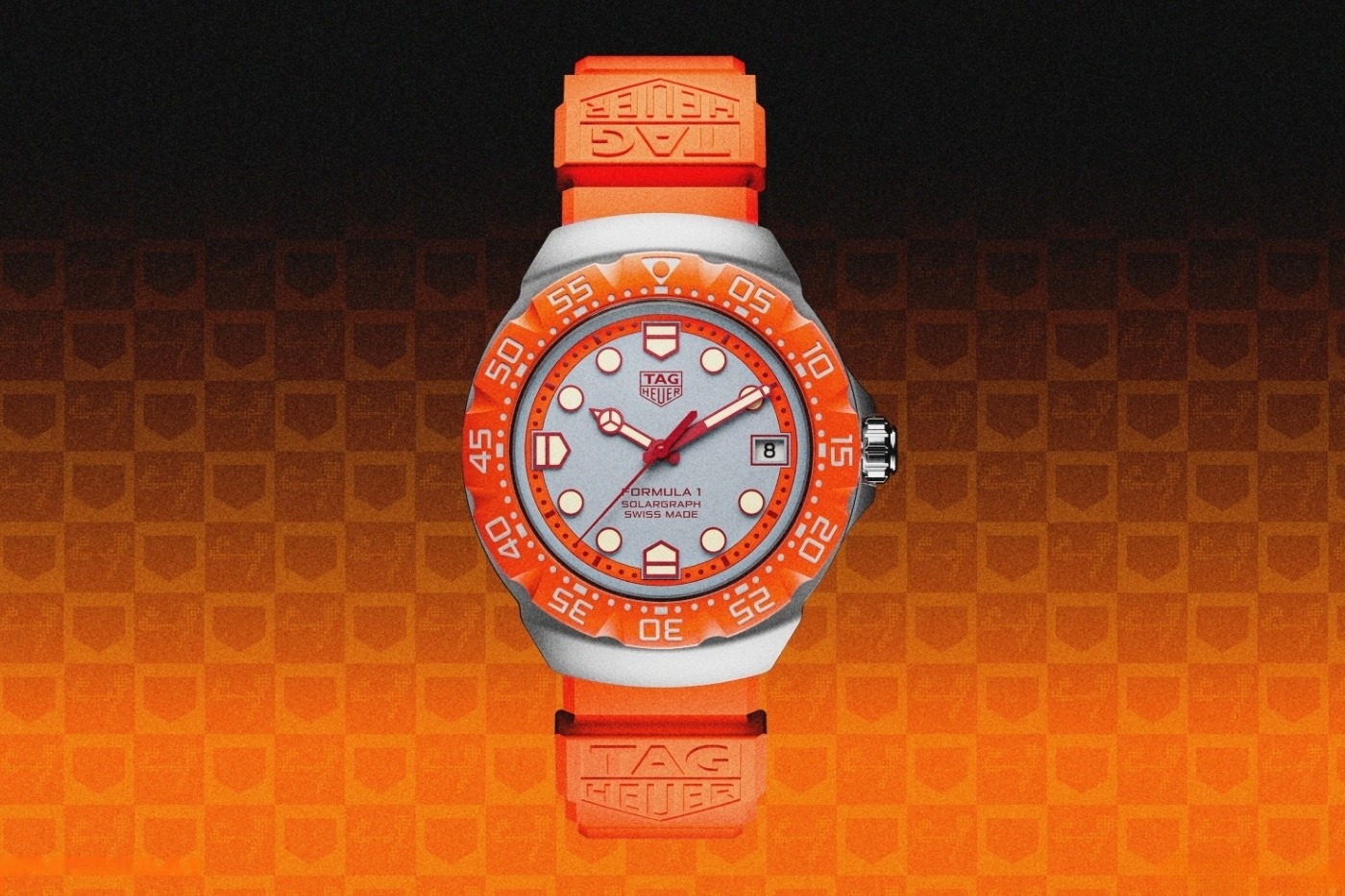
TAG Heuer has turned Zandvoort’s final scheduled Dutch Grand Prix into a pair of orange Formula 1 Solargraph limited editions. The move could have been a simple national-color exercise. Instead, it lands in a more specific place: a 38 mm Formula 1 with a real race-weekend timestamp, a light-powered movement, and two production runs split clearly between enthusiast spectacle and everyday wearability.
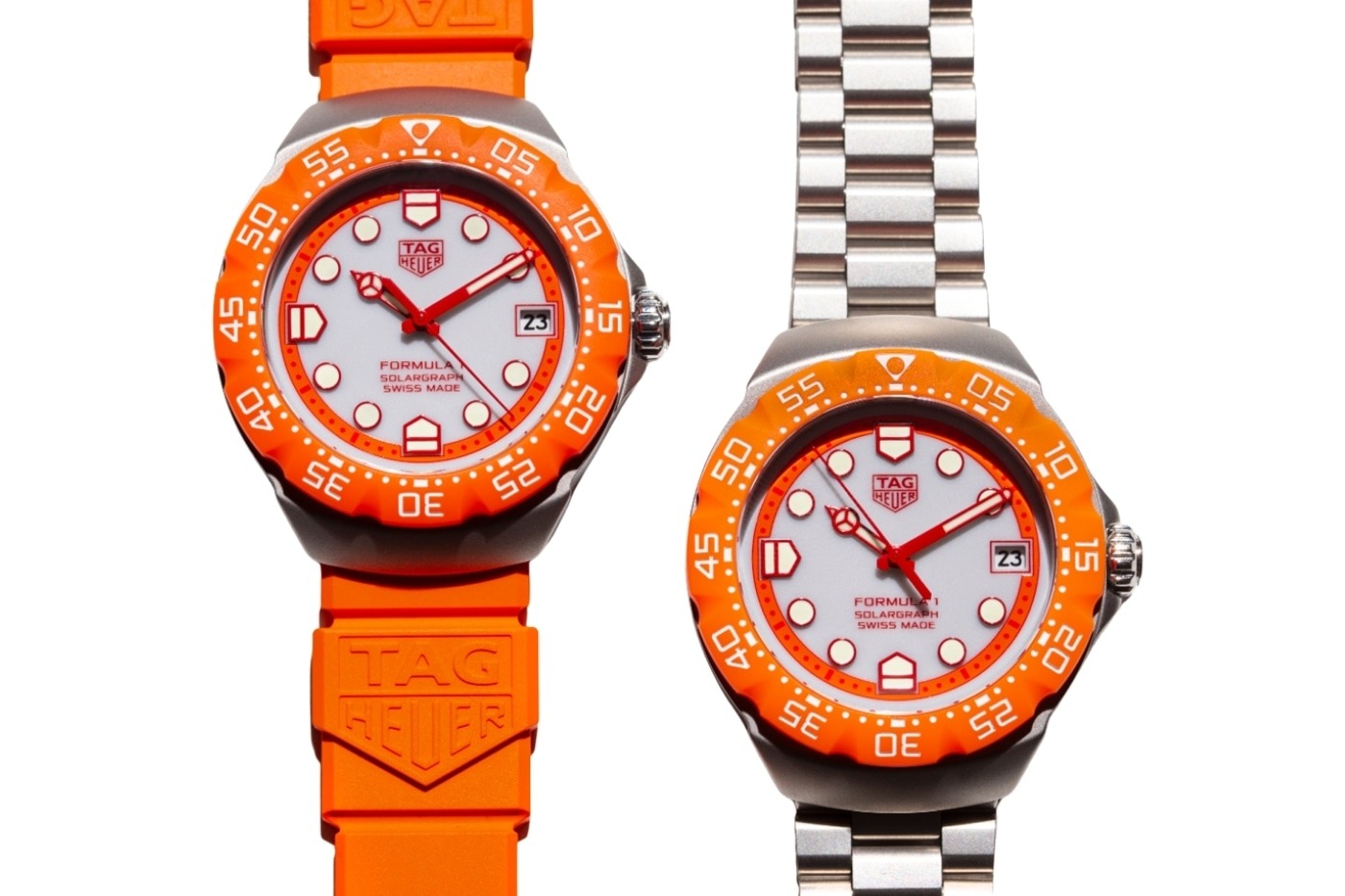
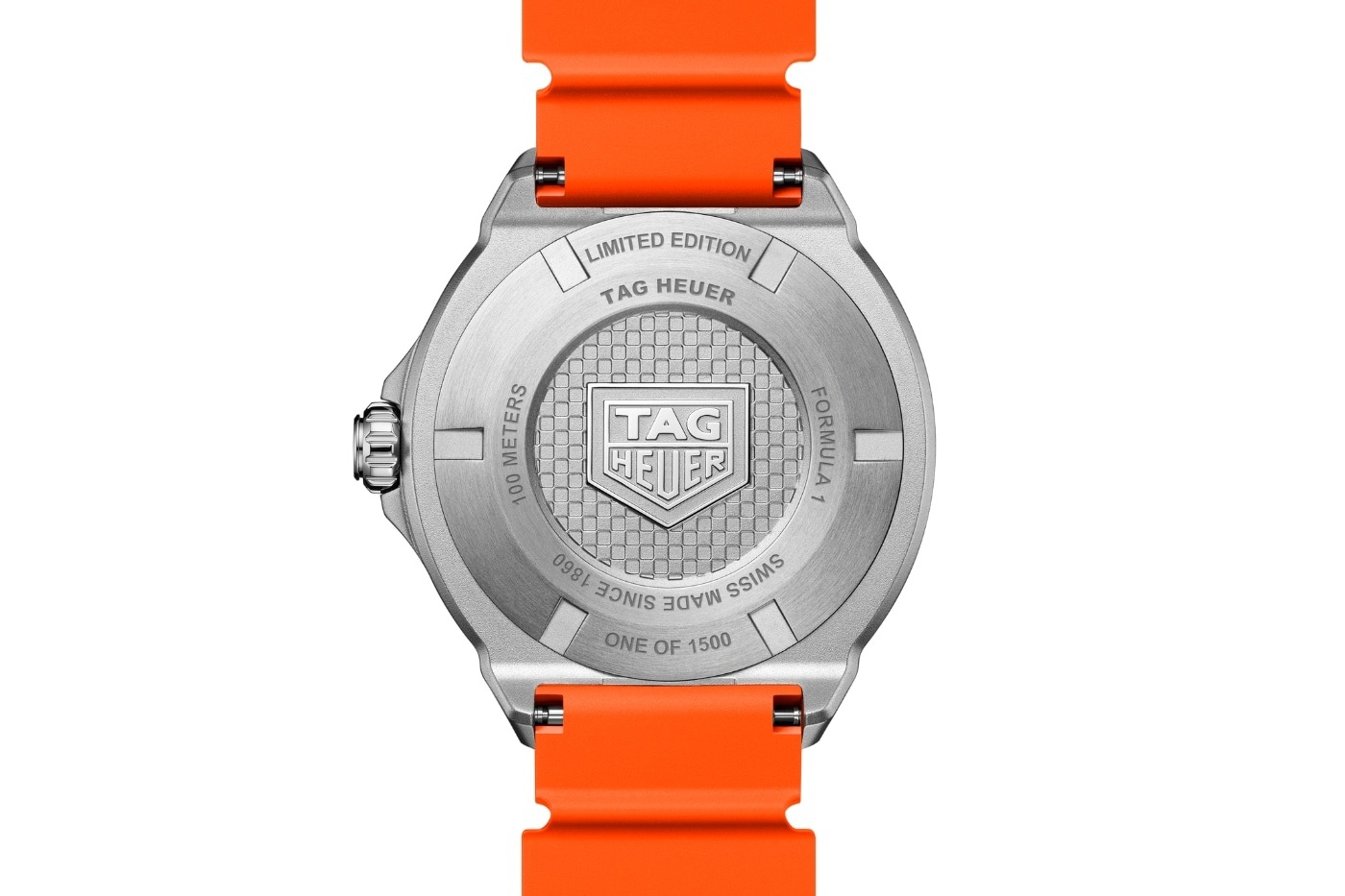
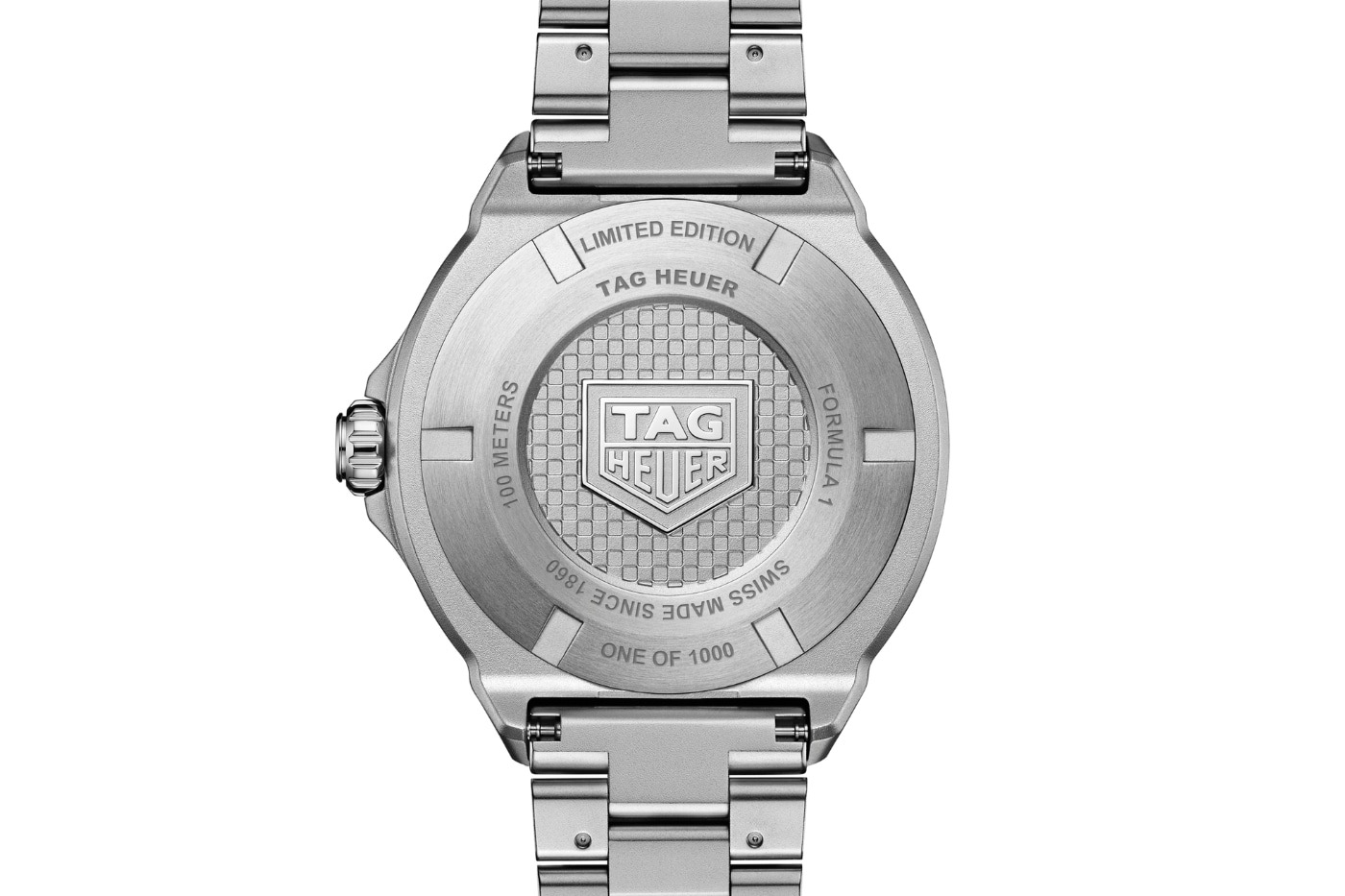
The watches are the rubber-strap TAG Heuer Formula 1 Solargraph WBY111H.FT8128, limited to 1,500 pieces, and the bracelet WBY111L.BA0042, limited to 1,000 pieces. Both use the same compact steel case and the same orange visual language, but they do not speak to exactly the same buyer.
What Launched
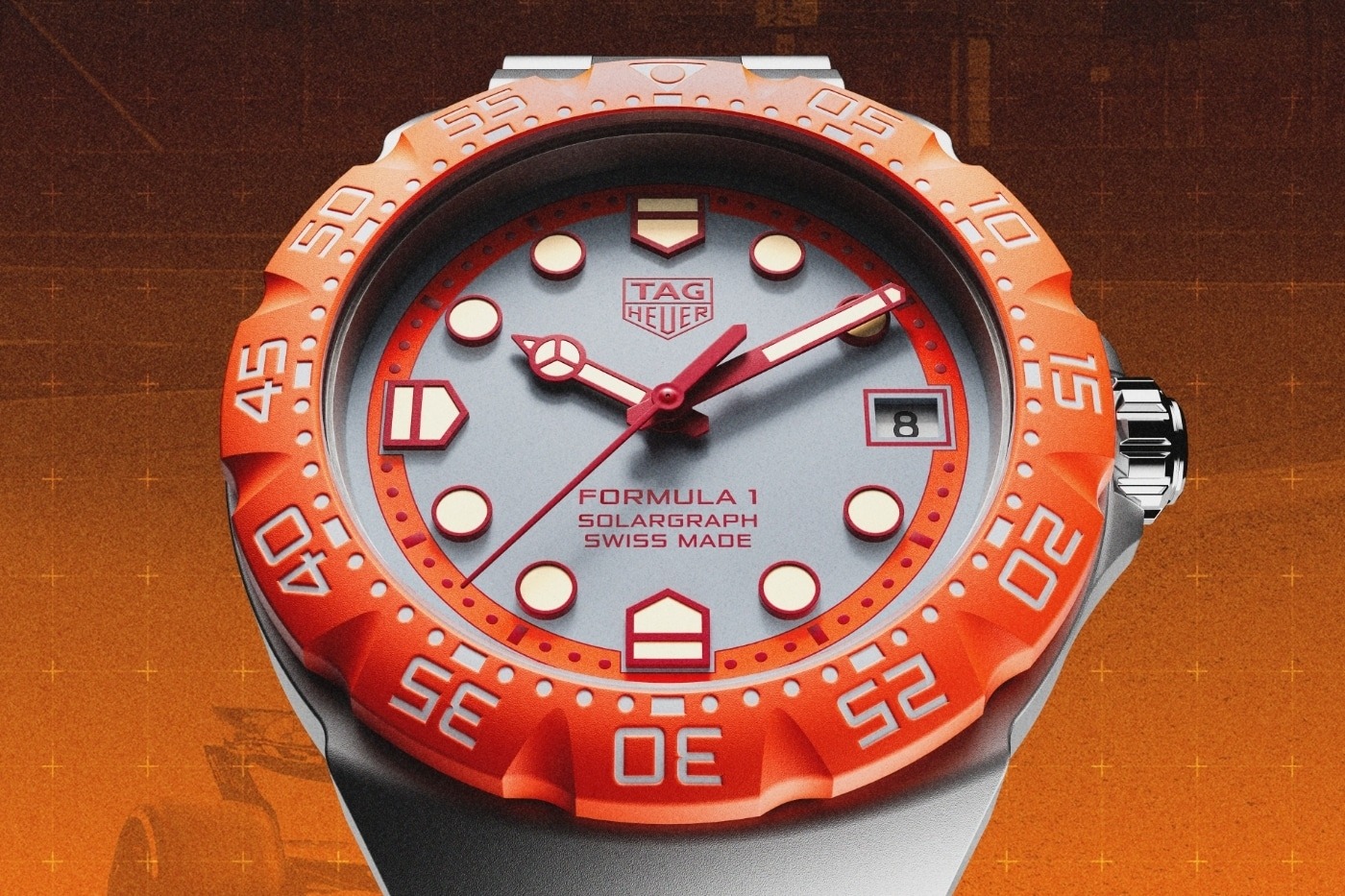
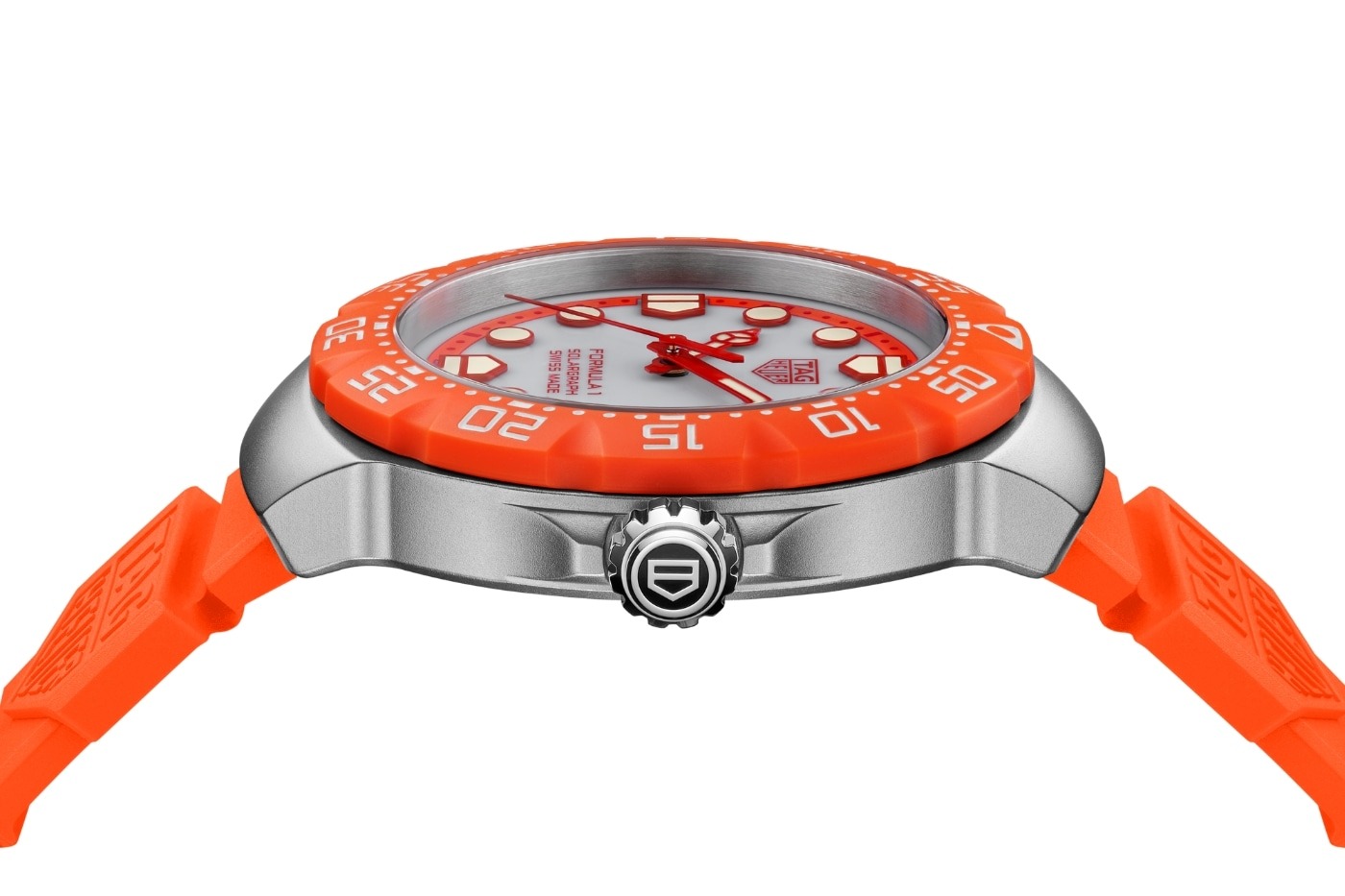
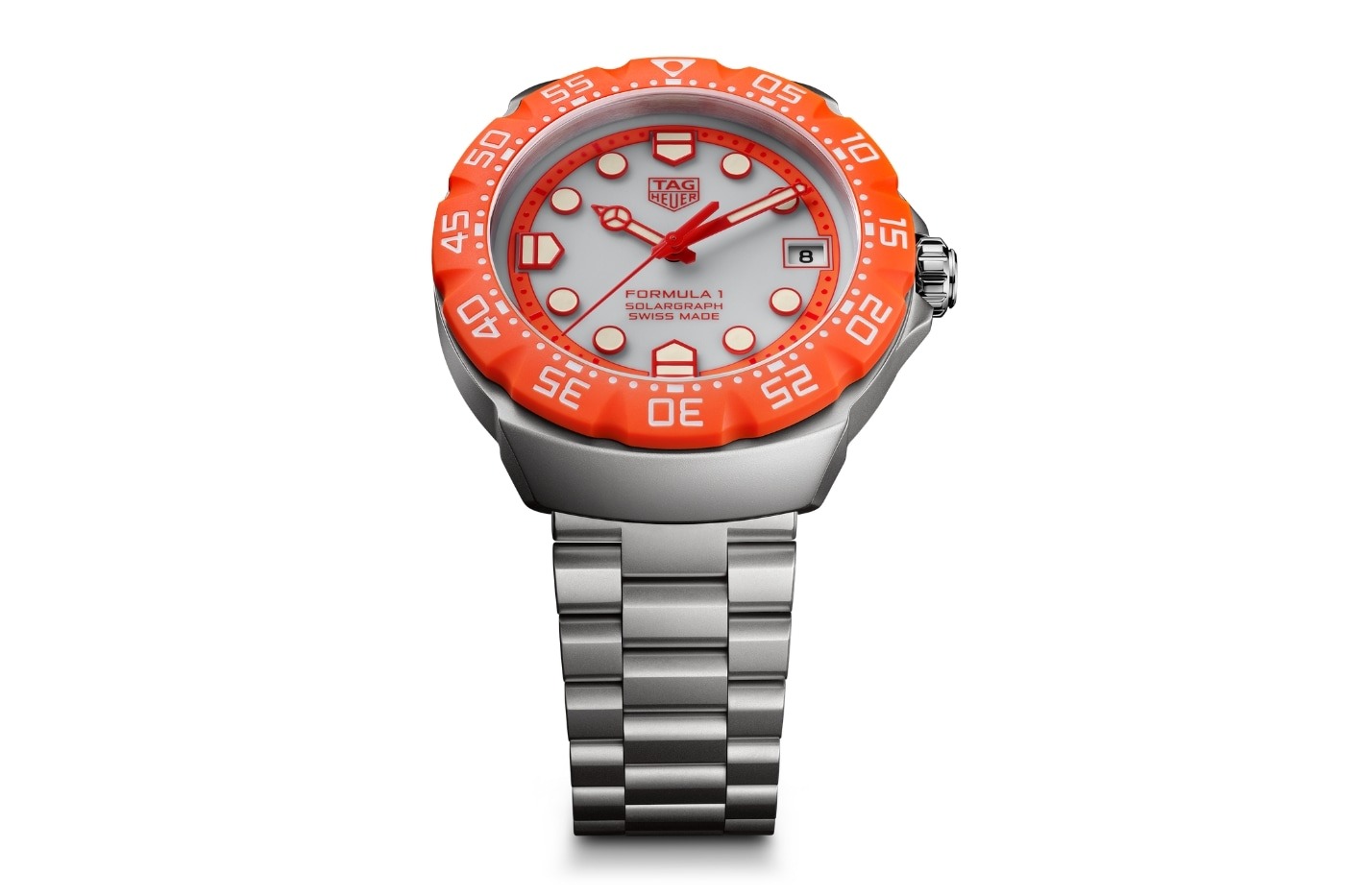
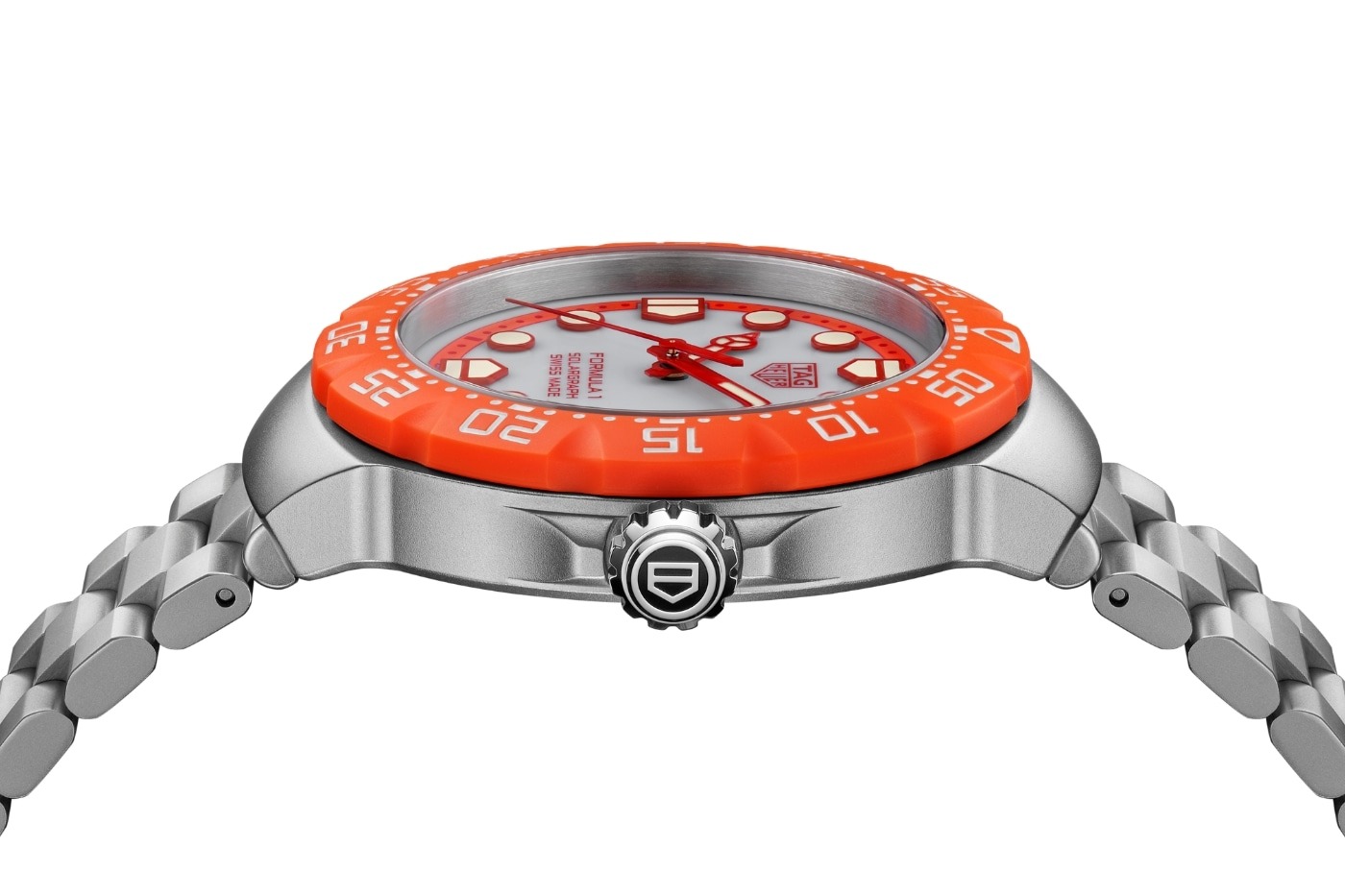
Both Zandvoort editions are built around a 38 mm sandblasted stainless-steel case, a 9.9 mm profile, 100 meters of water resistance, and TAG Heuer’s Calibre TH50-00 Solargraph. The dial is grey opalin, the flange runs orange-red, and the hands and indexes use red lacquer with eggshell Super-LumiNova. The date sits at 3 o’clock, while the bidirectional bezel is made from orange TH-Polylight.
The rubber-strap reference is priced at $2,150 in the U.S. and carries the stronger “orange army” signal. The bracelet reference is listed at $2,250 and is the smaller run, with 1,000 pieces. That makes it the more restrained watch visually, but also the tighter collector object on paper.
Why Zandvoort Matters
The important detail is not only the orange bezel. TAG Heuer is tying the release to Circuit Zandvoort and to the final Dutch Grand Prix weekend on the current Formula 1 calendar. A watch linked to a race that keeps returning every year can feel like merchandise. A watch tied to a closing chapter has a sharper hook.
That is why the release has more editorial weight than a generic motorsport colorway. TAG Heuer’s Formula 1 collection dates back to 1986, and the modern Solargraph revival already trades on that accessible, plastic-bezel, racing-adjacent memory. Zandvoort adds a time and place. For collectors, that matters because the story is externally anchored rather than invented inside the product department.
The Solargraph Argument
The Calibre TH50-00 is not here to impress mechanical purists. It is here because it fits the Formula 1 brief. TAG Heuer says a full charge can deliver up to 10 months of autonomy, while brief direct-light exposure can power the watch for a day. The stated battery lifespan of up to 15 years also reinforces the low-maintenance pitch.
That is a sensible match. The Formula 1 line has never needed to behave like a precious mechanical chronometer to make sense. Its appeal has always been color, sport, casual durability, and price-relative brand access. Solargraph keeps that spirit alive in a more modern way.
Rubber Or Bracelet?
The rubber model is the emotional one. It is louder, more obviously Zandvoort, and closer to the crowd imagery that made the Dutch Grand Prix such a recognizable Formula 1 stop. If the point is to own the race-weekend memory, WBY111H.FT8128 says it more clearly.
The bracelet version is easier to wear after the weekend ends. It is also the more limited run, which will matter to buyers who want the Zandvoort story without committing to a fully orange strap. The tradeoff is obvious: the bracelet watch is less theatrical, but probably more flexible.
Horomag Take
This is still an expensive solar quartz watch, and that should not be glossed over. The value case depends on whether the buyer cares about TAG Heuer’s Formula 1 history, Zandvoort’s final-lap narrative, and the compact 38 mm format. If those pieces do not matter, the specs alone will not close the argument.
But as a Formula 1 Solargraph release, the idea is coherent. It has a real event, two clear reference choices, strong visual identity, and enough limitation discipline to avoid feeling endless. The rubber watch is the better souvenir. The bracelet watch is the smarter long-term wearer. Together, they make Zandvoort’s orange farewell feel like more than a color update.
Loading comments...