
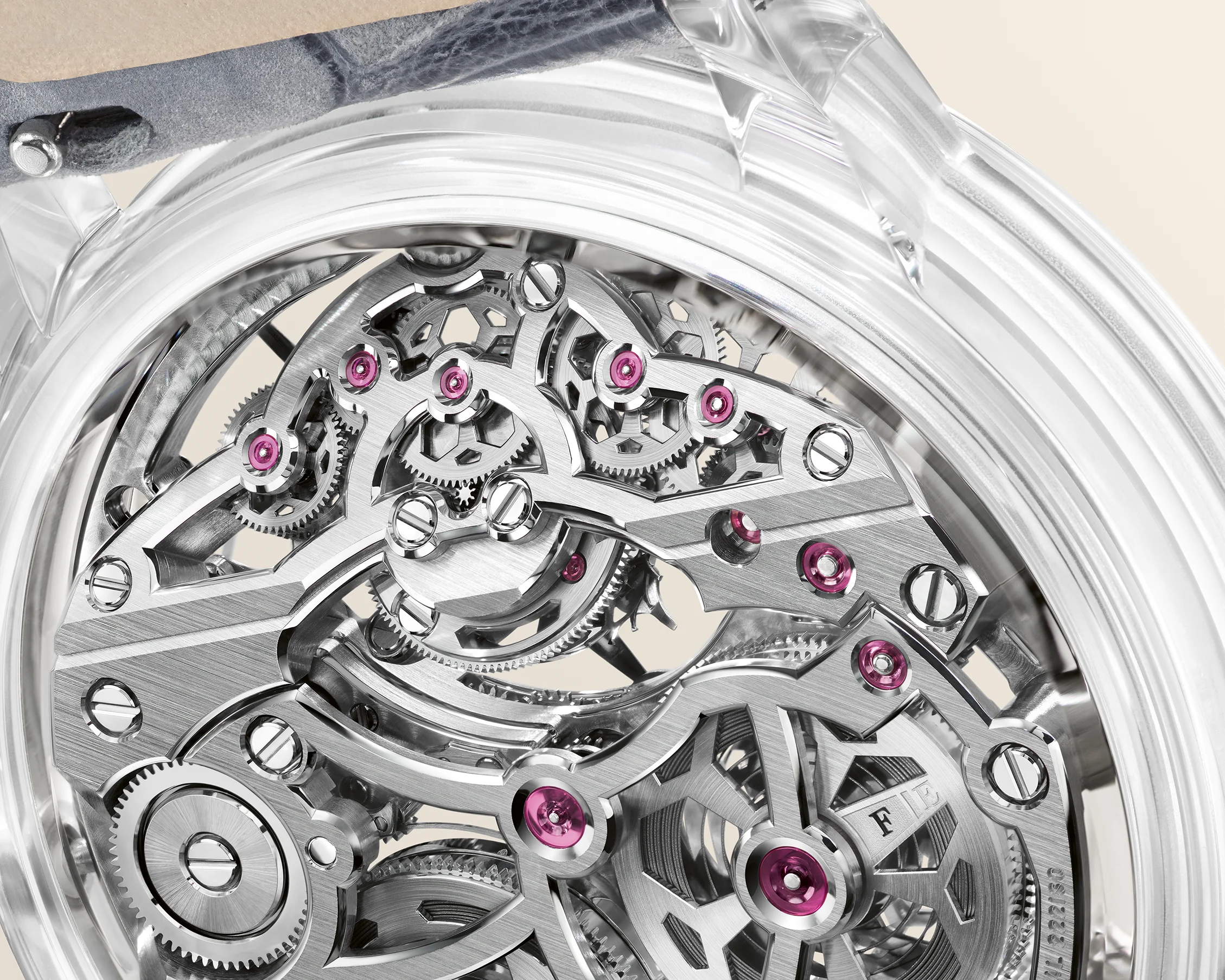
A tourbillon or a carrousel rotates a watch’s balance and escapement so that gravity’s pull on them is spread over many positions instead of acting in one. In a wristwatch that helps while the watch is upright. Lay it flat on a bedside table and the regulator turns in a horizontal plane, where the rotation has nothing left to average. On 24 November 2026 Blancpain announced the Villeret Carrousel Incliné, Ref. 66222S, which mounts a one-minute flying carrousel at 30 degrees to the main plate. Dial up or dial down, the balance now keeps moving through different angles to gravity.
A carrousel, and why Blancpain keeps building them
The carrousel was invented in 1892 by Bahne Bonniksen. Blancpain says it presented the first carrousel wristwatch in 2008 and has since built a family of calibres around the idea. The company’s own definition draws the line with the tourbillon: a carrousel uses two gear trains, one feeding the escapement and one turning the carriage. “Flying” means there is no upper bridge over the cage.
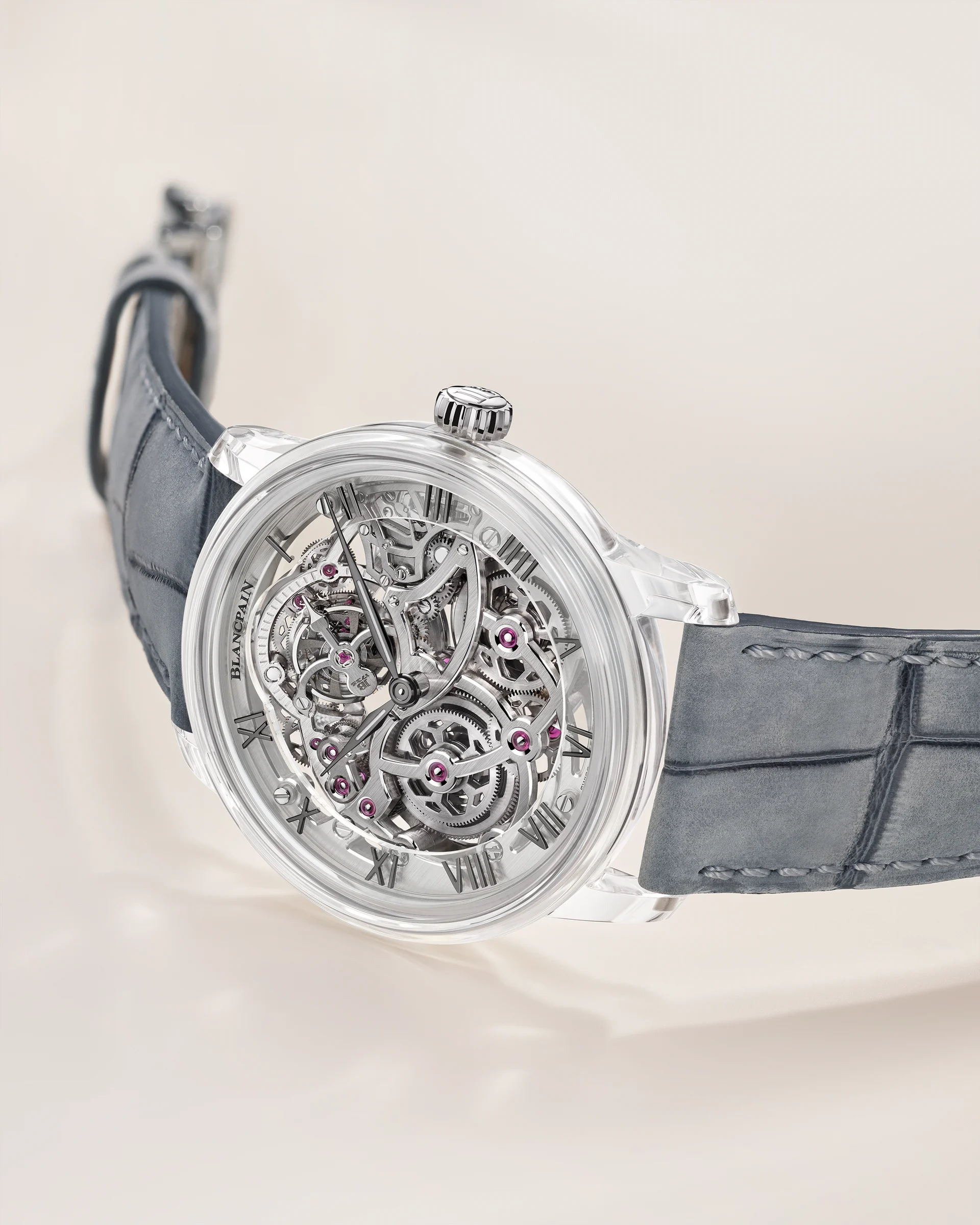
Calibre 222ISQ is a new hand-wound movement, 35.20 mm across and 5.30 mm thick, rising to 6.98 mm where the cage stands above the plate. It runs at 4 Hz with a silicon hairspring, has 37 jewels and 224 components, and stores 100 hours in two barrels connected in series. Blancpain describes the inclined flying carrousel as a world first.
How the angle was chosen
According to the press kit, the project began as a carrousel whose angle the wearer could adjust. That idea was dropped once the question became what the tilt would add to timekeeping. Blancpain then built test movements from existing calibres and measured rate, amplitude and the largest variation across the six standard positions at every five degrees from 0 to 35. The spread between positions narrowed markedly between 15 and 20 degrees. At 30 degrees the results fell within 0 to +2 seconds per day, and the movement could still be kept slim. Development took four years.
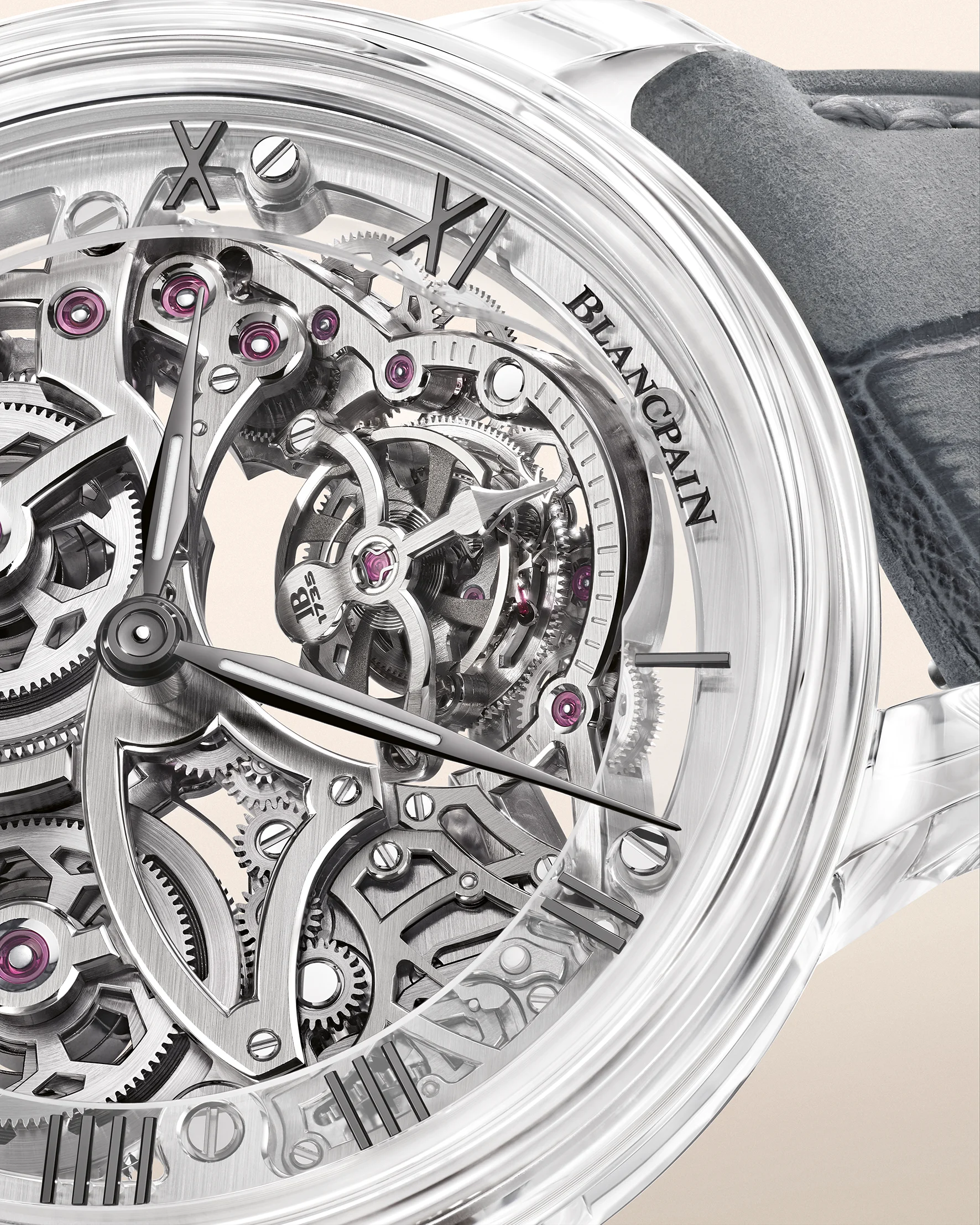
Driving a tilted assembly is its own problem. Rather than turn the gear train through 30 degrees at one meshing point, the calibre splits the change across two engagements, of 22 and 8 degrees, placed before the train divides into the carrousel’s two drives. The cage was redesigned as well. It is 8.5 per cent lighter with 30 per cent less rotational inertia, and it carries a larger 8 mm balance. A double ball-bearing support, for which Blancpain says a patent application is pending, lowers the cage and removes the bridges that used to hide the drive.
A sapphire case with no hidden side
This is the first Blancpain with a case made entirely of sapphire. It has two main parts, a combined case middle and back and a combined bezel and crystal, and each takes about 100 hours to machine and polish. The case is 40.30 mm wide, 11.30 mm thick and 46.45 mm from lug to lug. Water resistance is 3 bar.
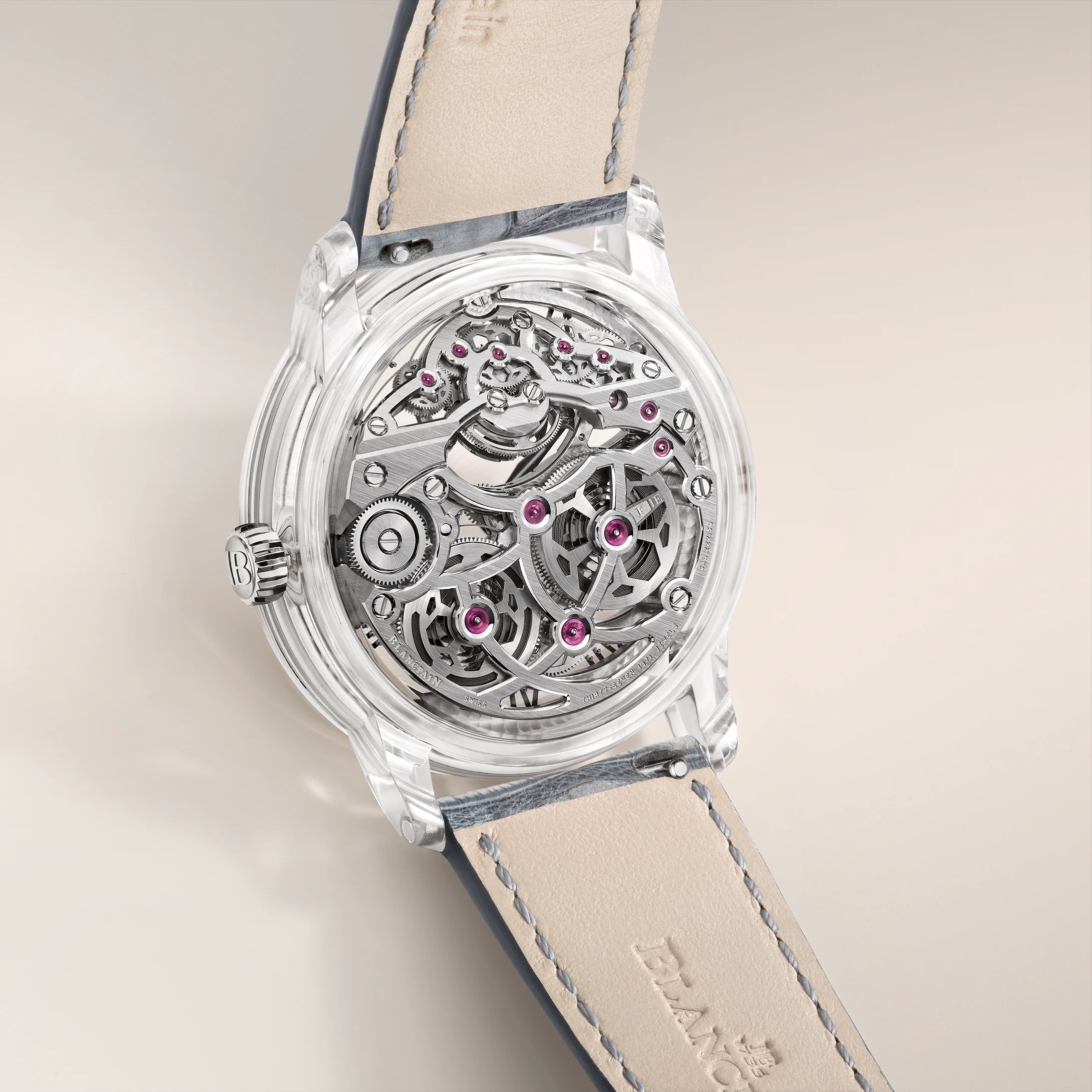
Transparency raises the finishing bill. With the movement on view from both sides, the openworked plate and bridges are bevelled on their upper and lower faces. Blancpain counts 253 sharp inward angles, each shaped and polished by hand, within 210 hours of finishing per movement. The openings also show things that are normally covered: the mainsprings in their barrels, the winding click, and a small F and E scale on one barrel that serves as the power-reserve display.
Two references, one price
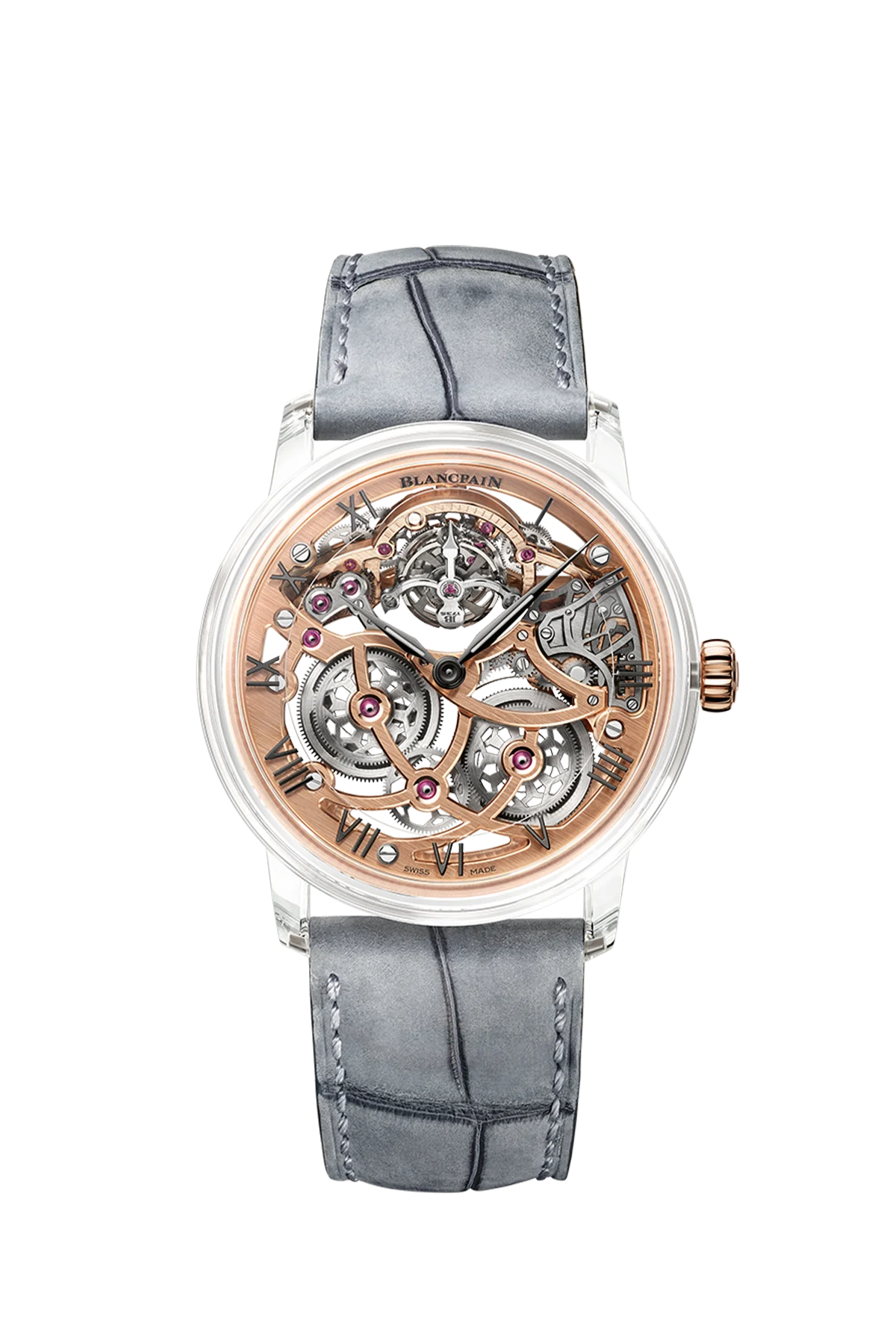
The movement is made of 18-carat gold in both versions. Ref. 66222S 0000 55B has it rhodium-plated, and Ref. 66222S A 0000 55B leaves it in 5N red gold. Both come on a blue-grey alligator strap with a gold folding clasp. The press kit gives a price of CHF 380,000 and states that the watch is not a limited edition.
The page that comes in the box
Every Carrousel Incliné is delivered with a Blancpain chronometry certificate. It promises an average daily rate between 0 and +2 seconds and records that watch’s rate in all six positions, measured repeatedly over the whole 100-hour reserve. The certificate is Blancpain’s own, and the press kit names no outside testing body. It is still an unusually specific commitment for a regulating complication, a category usually sold on how it looks in motion. The 30-degree angle is easy to see through the sapphire. What it achieves is on that sheet, in the lines for dial up and dial down, where a carrousel turning in the plane of the movement had nothing to average.


Loading comments...