
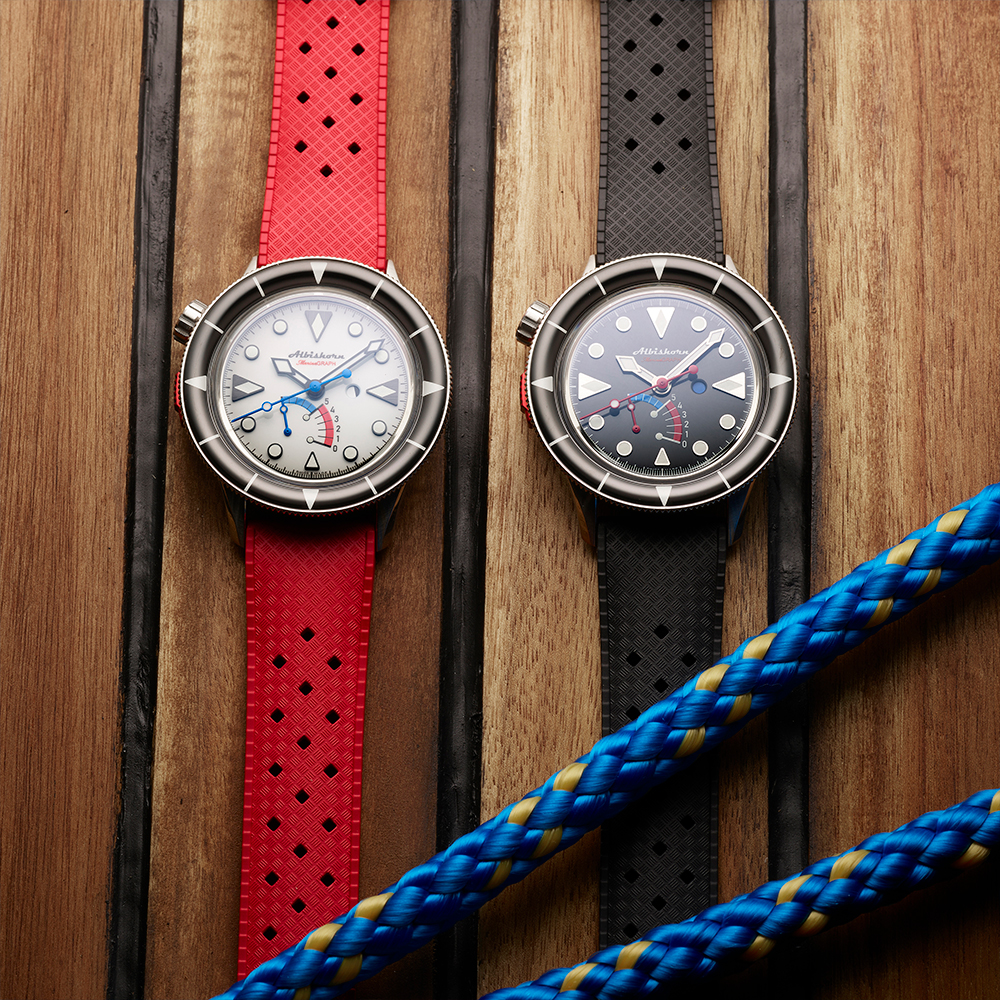
Albishorn’s new Marinagraph Classic and Marinagraph Classic Fumé are not trying to make the regatta chronograph mainstream. That is partly why they are interesting. Each colourway is limited to 99 pieces, sales open on 14 August 2026, and the watches keep Albishorn’s strange but persuasive idea intact: building “imaginary vintage” instruments around complications that most modern watch buyers rarely use.
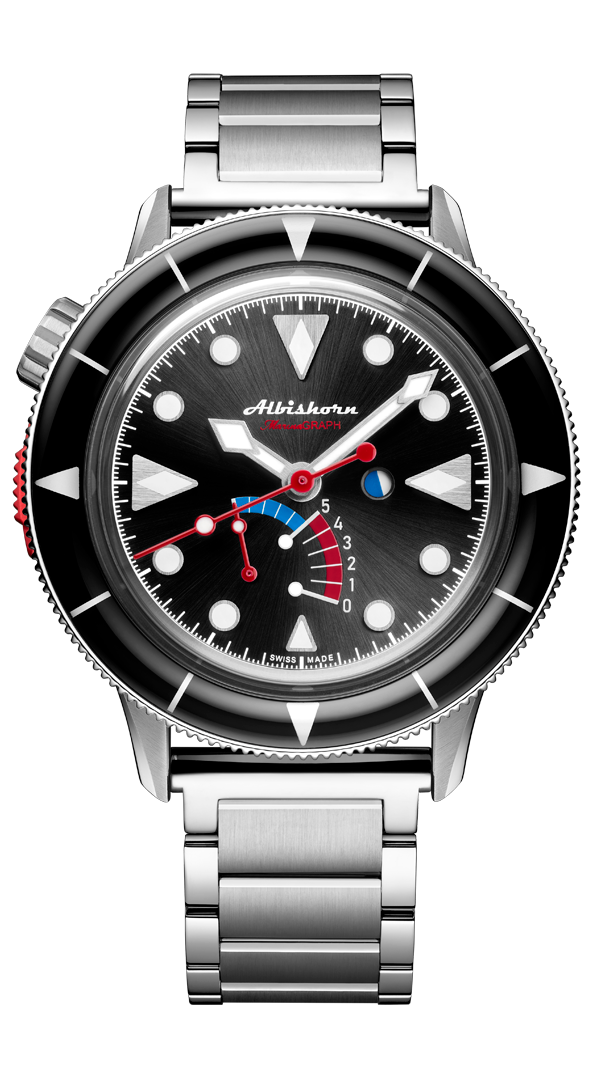
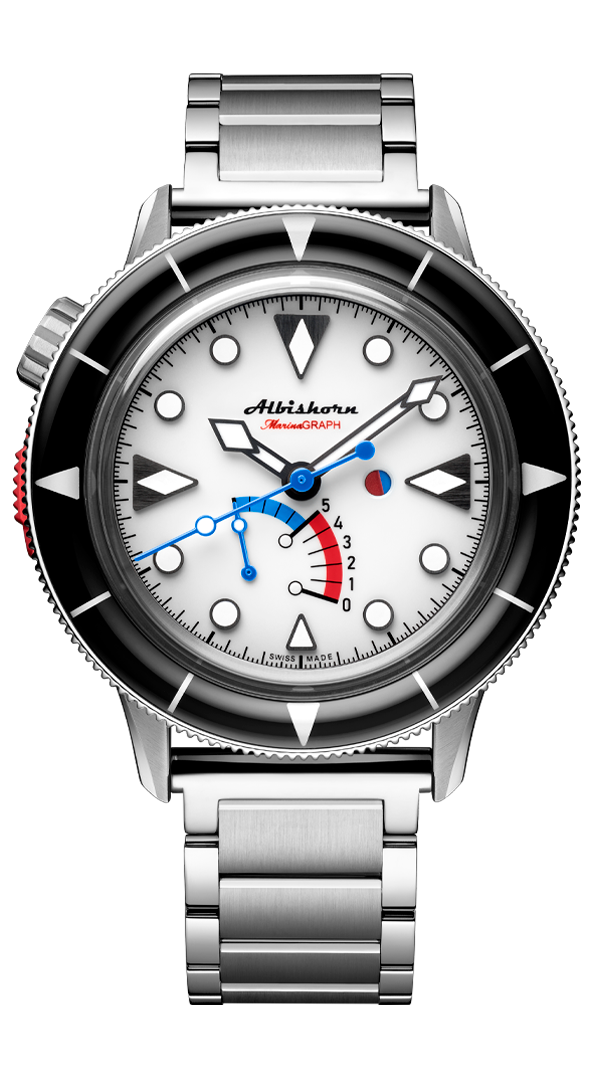
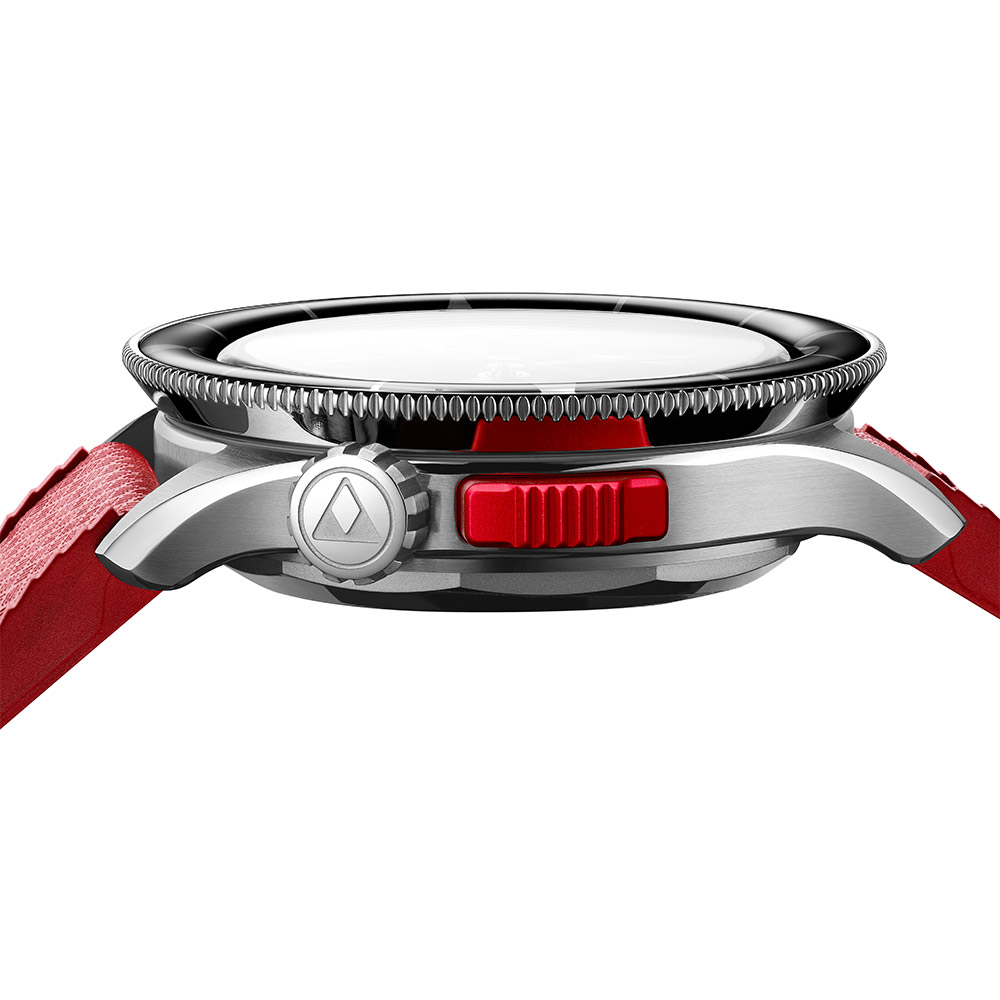
The collector point is not simply scarcity. It is that Albishorn has taken the bolder Marinagraph platform and made it easier to read as a watch first. The Classic uses a sunburst black dial with red accents; the Classic Fumé uses a white lacquered gradient dial with blue and red accents. Both keep the same 39 mm stainless-steel case, oversized sapphire-insert bezel, left-side red aluminium monopusher and patented 10-minute retrograde regatta countdown.
The calmer Marinagraph
Albishorn’s earlier Marinagraph references leaned hard into the nautical instrument fantasy. These Classic versions feel more restrained. The bezel is still large, the pusher is still visually loud, and the dial still has a countdown display at 7 o’clock, but the overall design reads less like a concept object and more like something a collector could wear outside the marina setting.
That matters because regatta timers occupy a difficult place in watch collecting. They are mechanically charming and historically specific, yet almost nobody needs one in daily life. Albishorn’s answer is to make the complication part of the watch’s character rather than its only reason to exist. The markers remain uncut, the central chronograph hand is easy to read, and the running indicator at 3 o’clock keeps the dial animated without turning it into a dashboard.
What the specs say
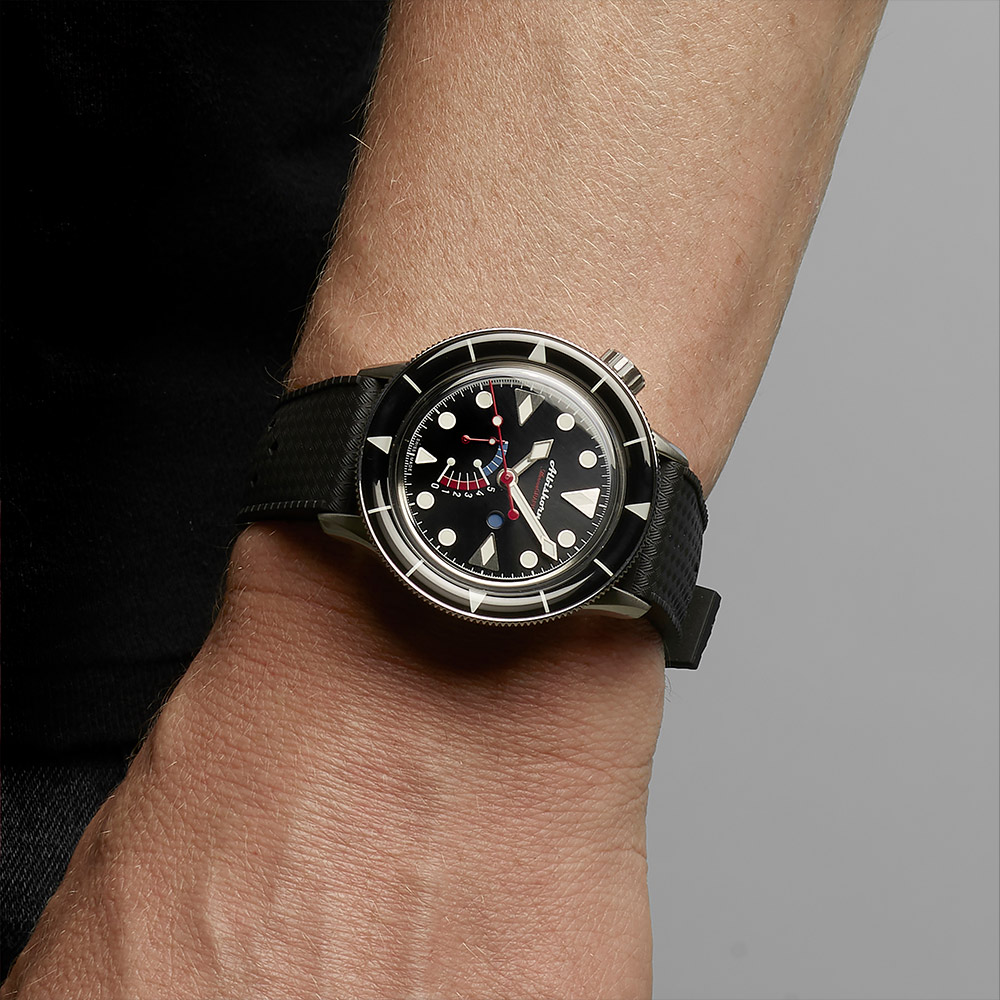
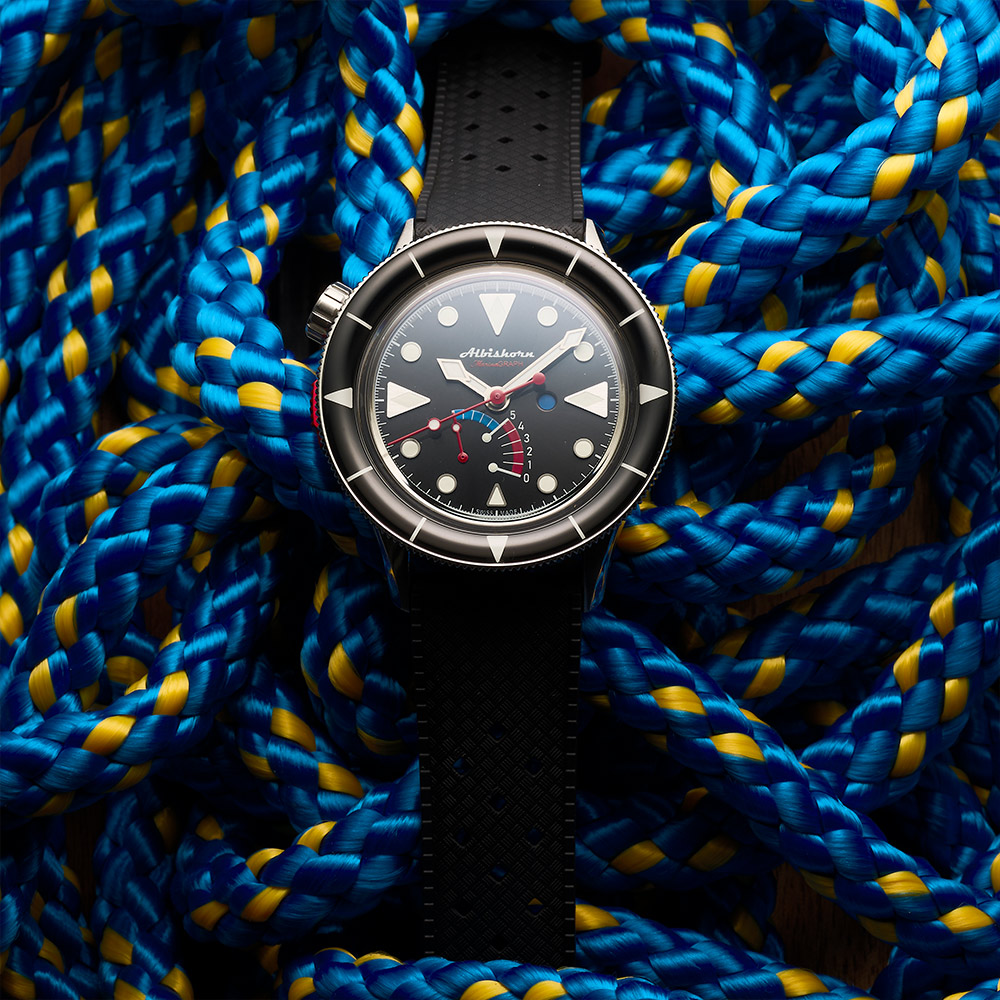
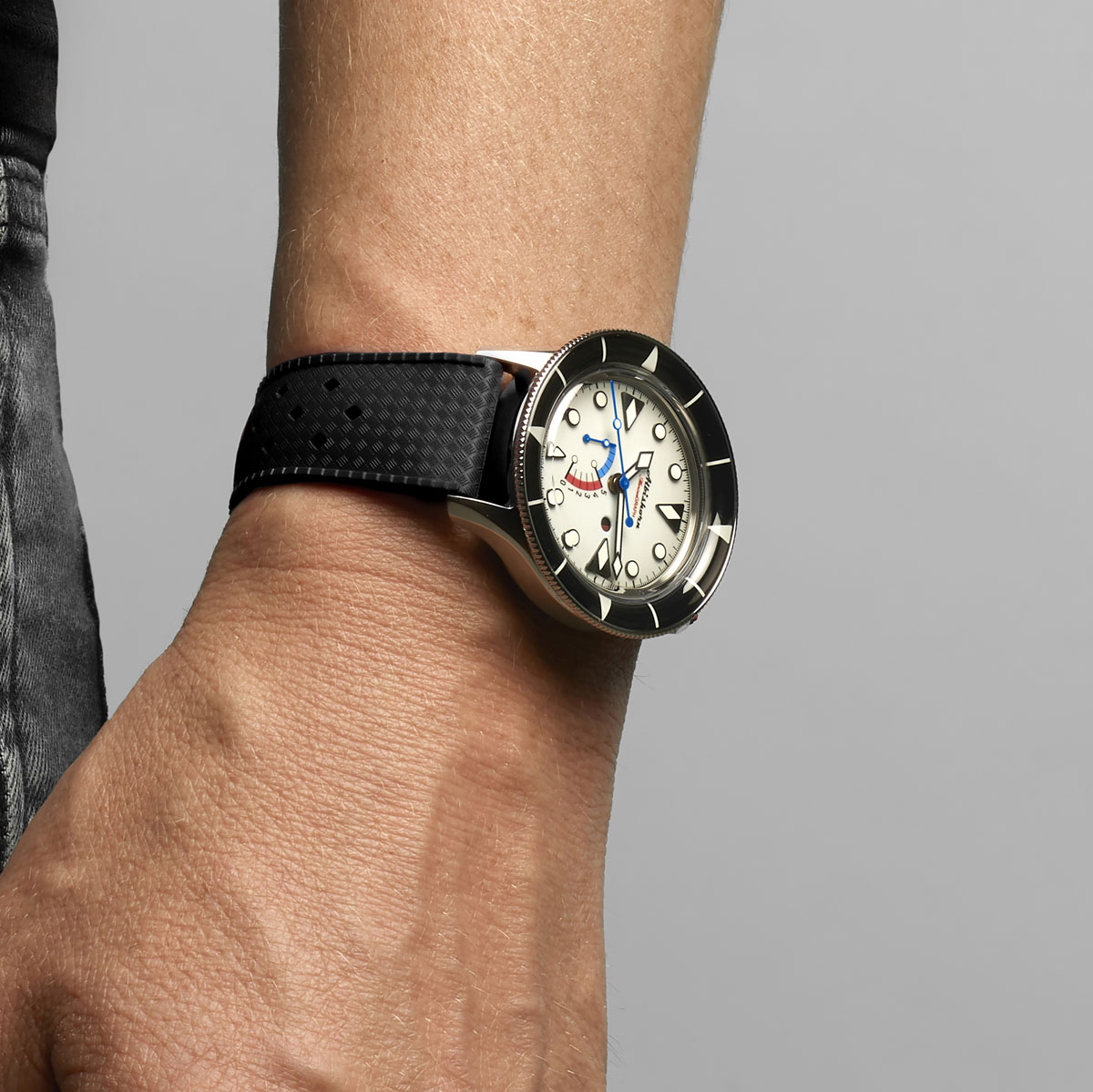
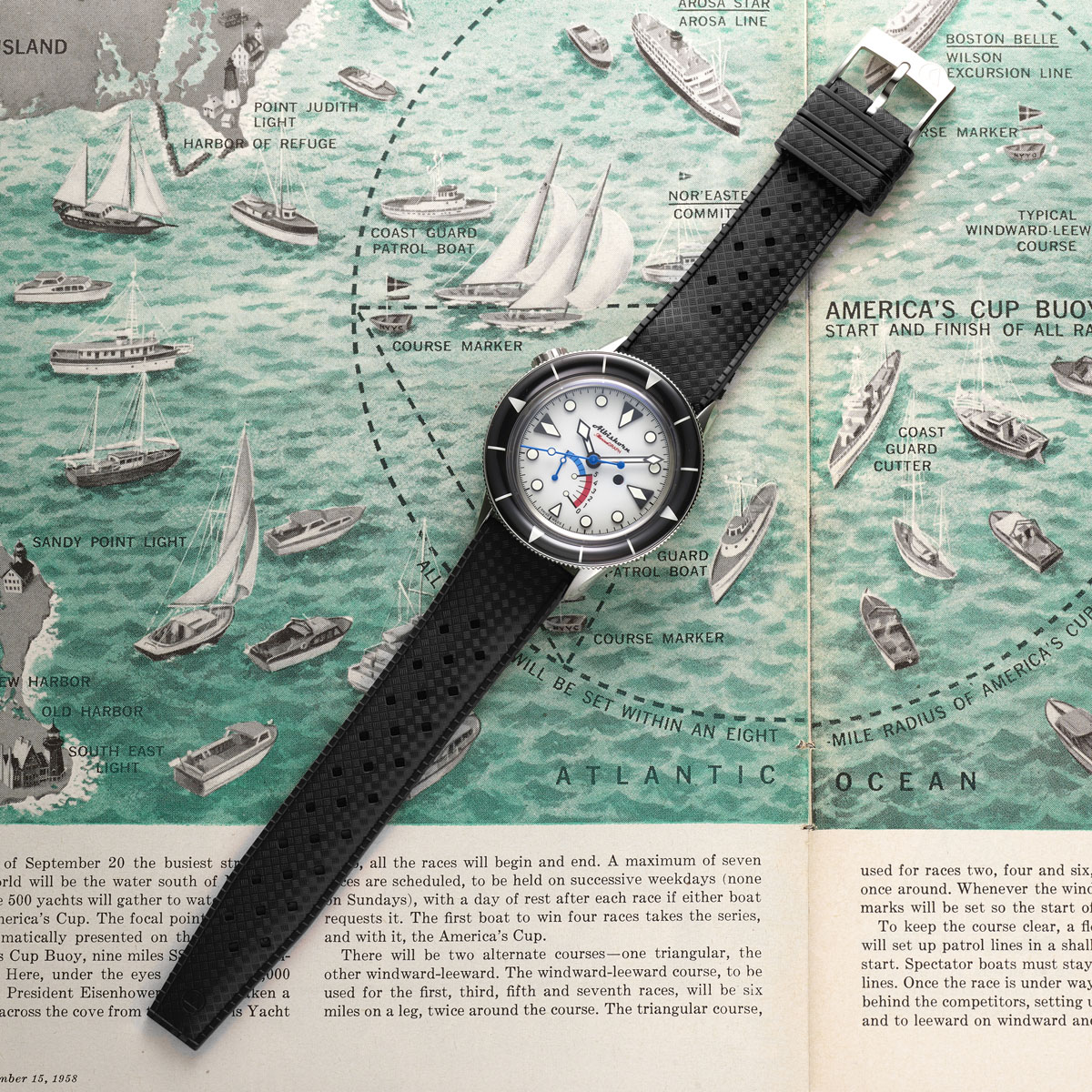
The case measures 39 mm across, or 42.7 mm including the bezel, with a 47.7 mm lug-to-lug and 13 mm thickness including the box sapphire crystal. Water resistance is 100 metres. Albishorn pairs the black dial with black and red rubber straps, while the Fumé version comes with white and black rubber straps. A steel bracelet option raises the price but still includes the two rubber straps.
Inside is the patented proprietary ALB01 A automatic monopusher chronograph calibre. Albishorn lists a 6.60 mm movement height, 30.00 mm diameter, 25 jewels, 28,800 vibrations per hour and a typical 64-hour power reserve. The movement handles hours, minutes, a central 60-second counter, running indicator, hacking seconds and the retrograde 10-minute regatta function.
Black or Fumé?
The black Classic is the more coherent instrument watch. Its red accents make the pusher, countdown and chronograph logic feel connected, and the darker dial hides some of the layout’s eccentricity. The Classic Fumé is more expressive. Its white dial makes the blue and red regatta scale pop, and the gradient finish gives the watch a cleaner summer-reading character.
For buyers, the question is less about which one is more useful and more about which version makes the unusual complication feel wearable. The black watch is the safer long-term object. The Fumé is the one that explains the launch faster in a photograph. Both are limited to 99 pieces, so neither is trying to become a mainstream alternative to a normal chronograph.
The independent-watch angle
Pricing starts at CHF 3,950 excluding tax on rubber straps and rises to CHF 4,400 excluding tax with the steel bracelet. In independent-watch terms, that is the part that gives the Marinagraph its edge. The buyer is not just paying for colour or a microbrand case design; the watch carries a proprietary and patented complication that gives the brand a recognizable mechanical idea.
That does not make the Marinagraph an obvious everyday choice. It is still an intentionally odd nautical chronograph from a young independent brand. But that is also the point. The Classic and Classic Fumé versions make Albishorn’s most specific complication easier to approach without sanding away the weirdness that makes the brand worth watching.
Loading comments...