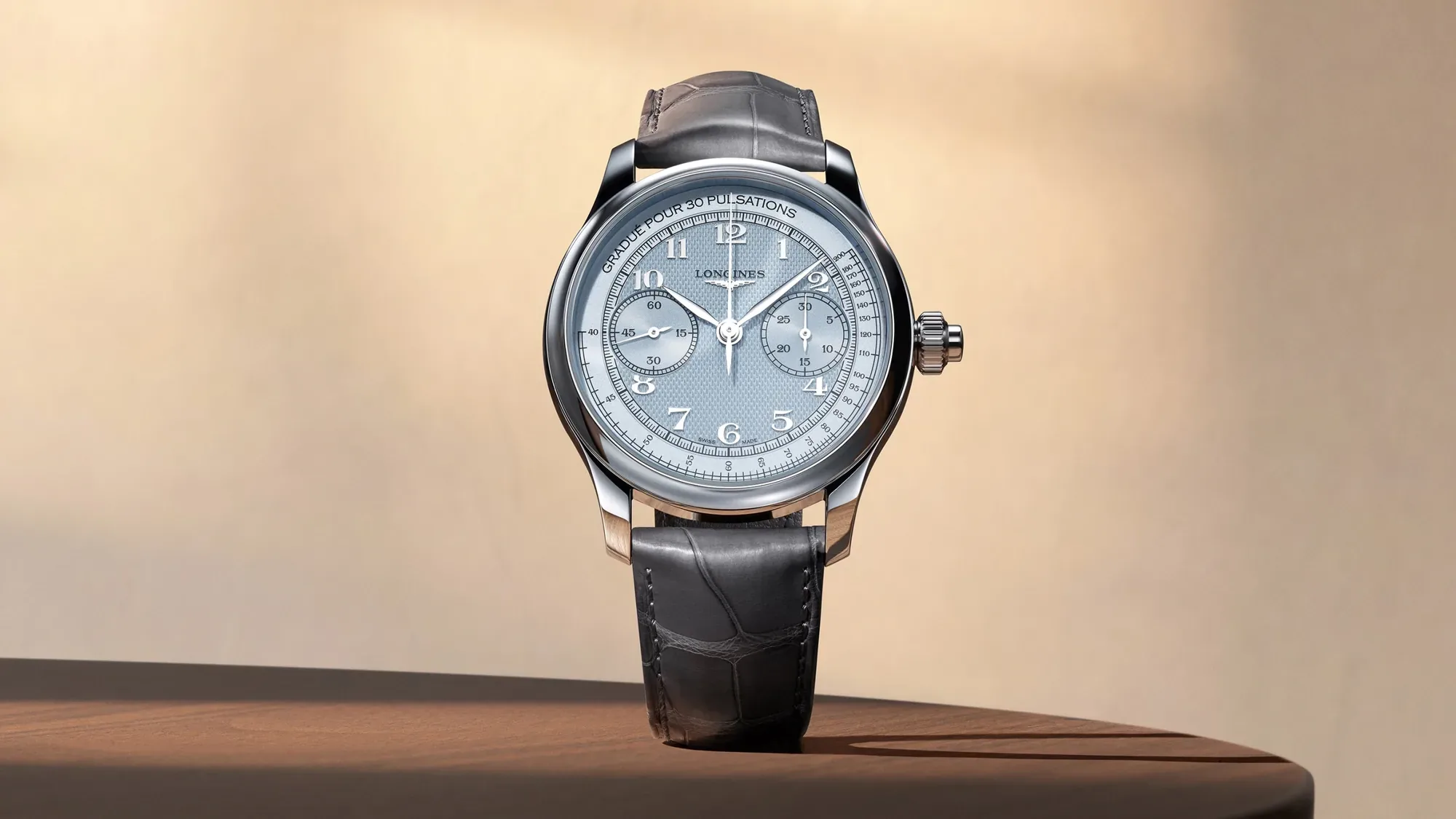
Longines has placed two new Master Collection chronographs only CHF 300 apart. That sounds like an easy specification comparison: the automatic calendar moonphase delivers more functions for CHF 3,500, while the hand-wound monopusher costs CHF 3,200. On the wrist, however, the decision is less about quantity than the kind of relationship a collector wants with the watch.
Both families use a 41 mm steel case, measure 48.6 mm from lug to lug and take a 21 mm strap or bracelet. The monopusher is 12.6 mm thick; the calendar moonphase is 13.8 mm. That shared footprint makes the 1.2 mm difference, the winding method and the amount of information on the dial more useful than diameter alone.
The Short Decision
What CHF 300 Actually Changes
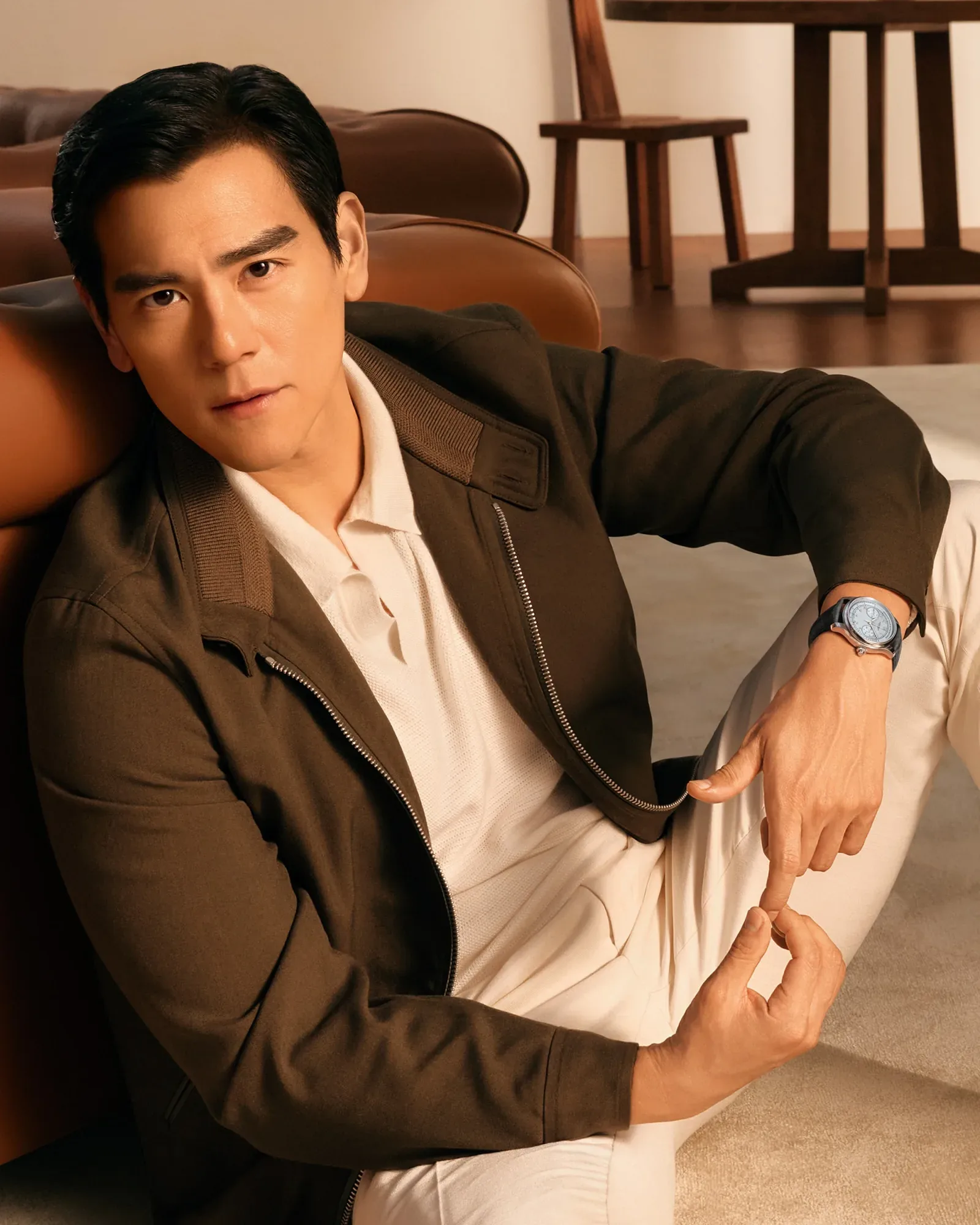
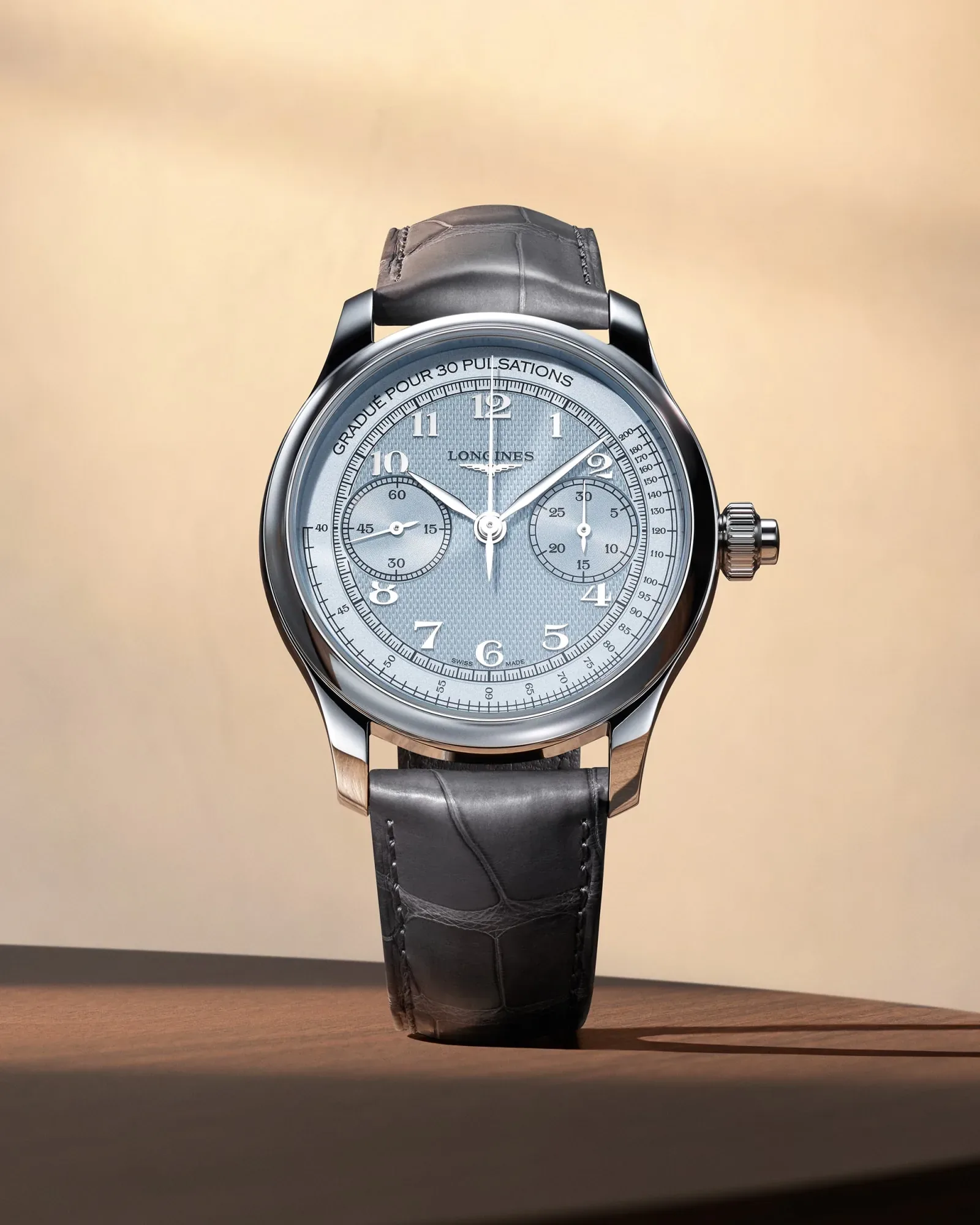
The blue L2.960.4.93.2 is a two-register chronograph with small seconds, a 30-minute counter and a pulsometer scale. Its single crown-integrated pusher starts, stops and resets the chronograph. There are no separate pushers breaking up the case profile, and there is no automatic rotor between the wearer and the act of winding it.
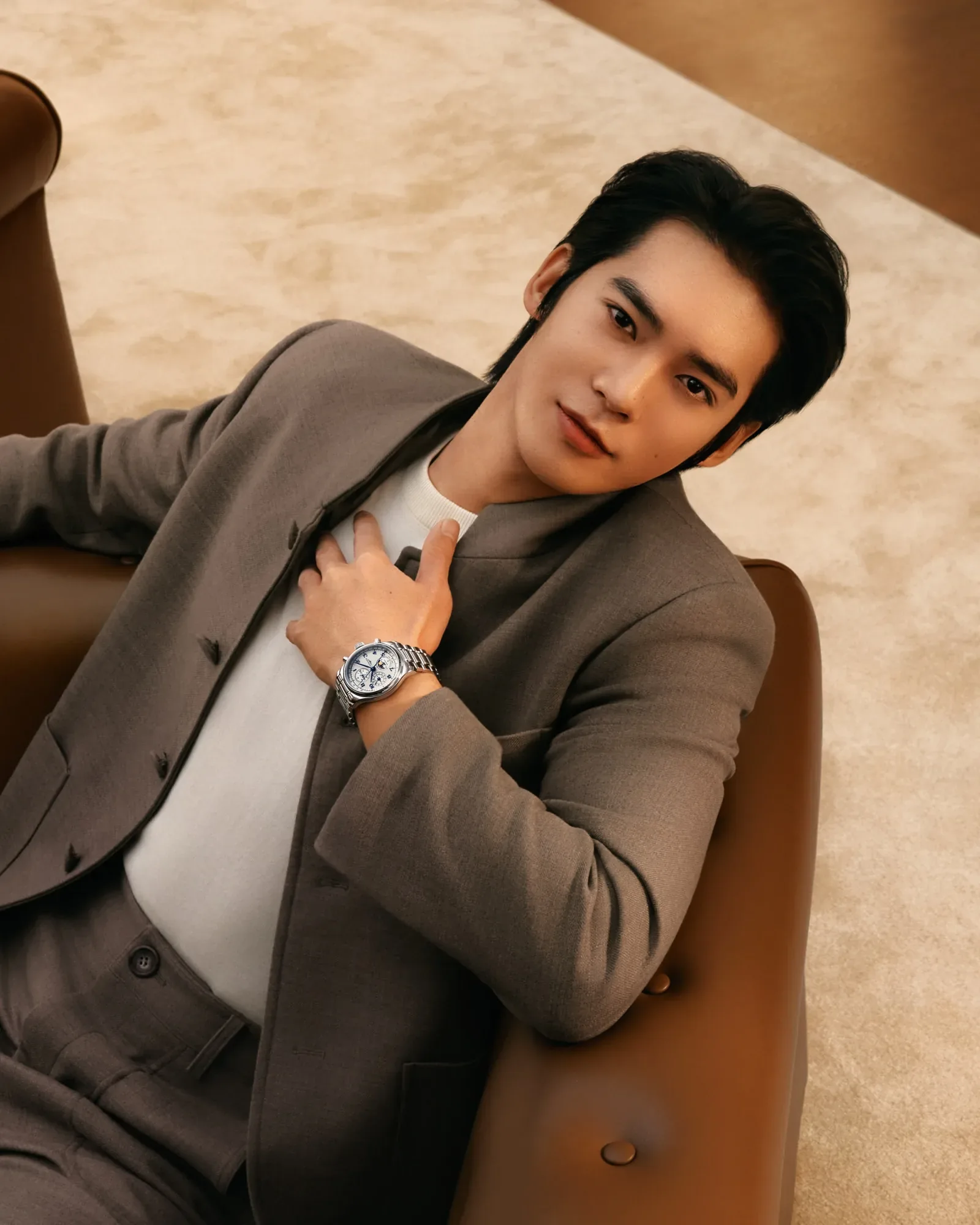
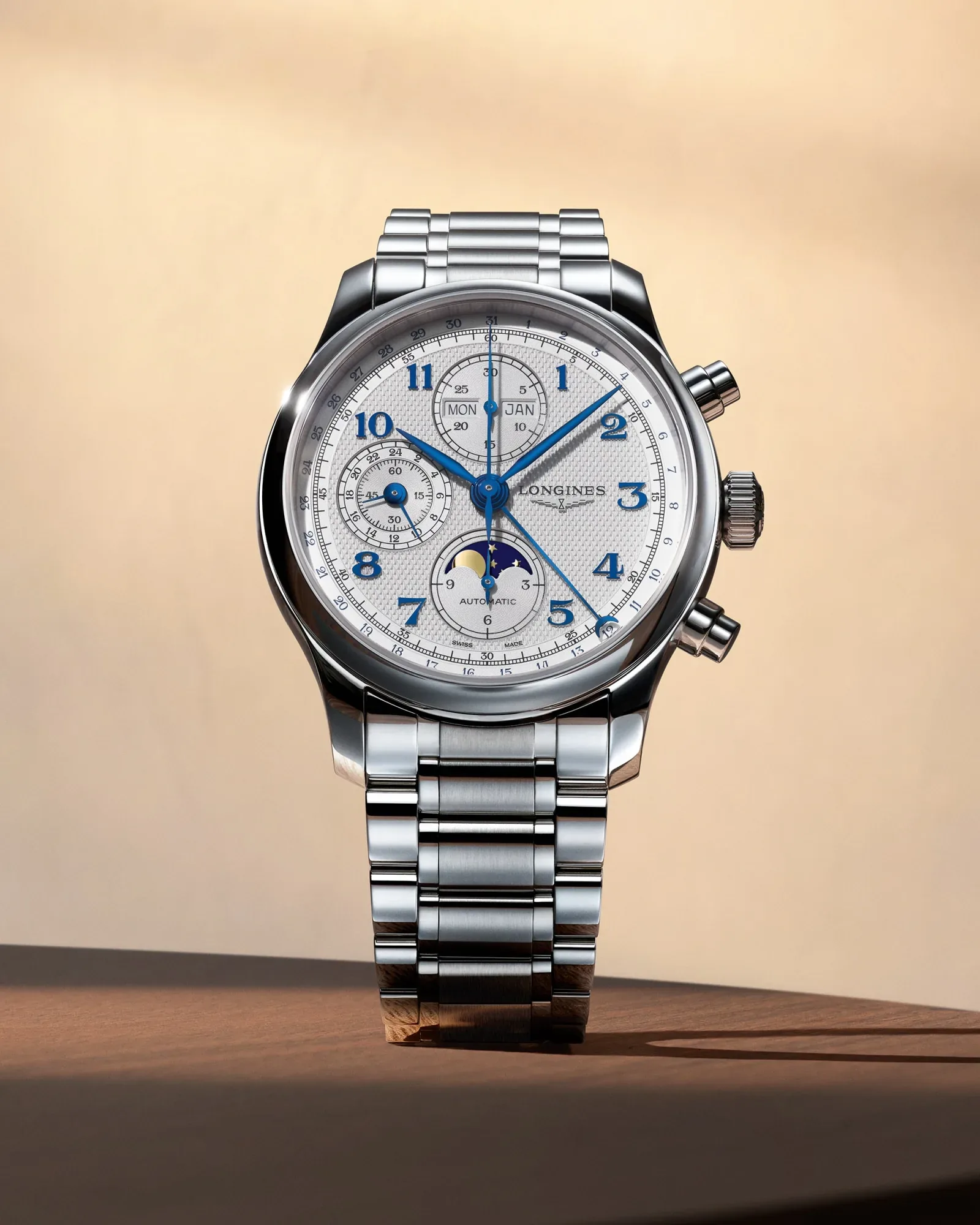
The silver L2.962.4.73.6 adds day and month at 12 o'clock, a central date hand, moonphase and 12-hour chronograph counter at 6, plus a 24-hour display and small seconds at 9. It is automatic and shown here on a steel bracelet. The extra CHF 300 therefore buys a considerable amount of information, but it also asks the owner to read and set more information.
The Monopusher Is The More Deliberate Watch
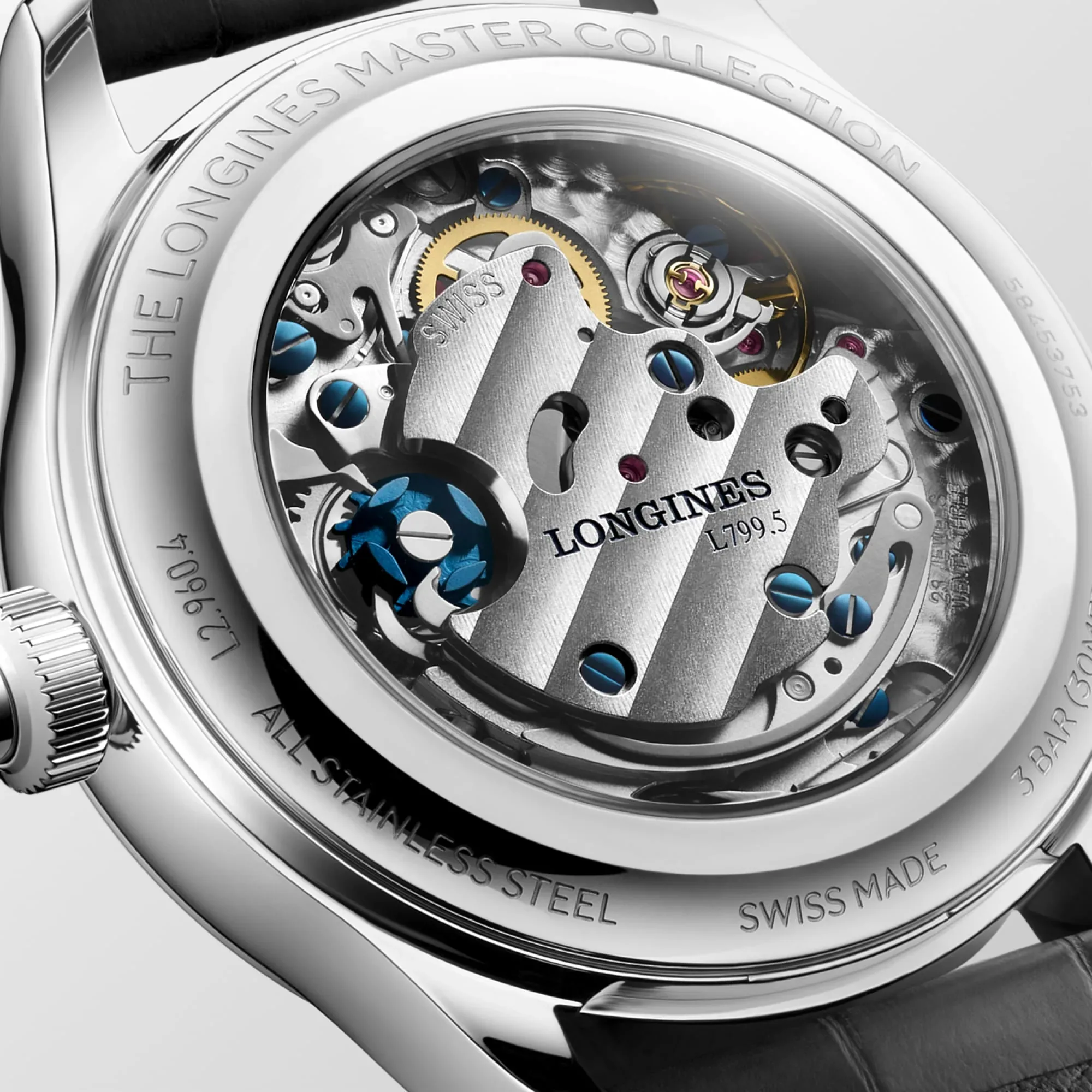
Longines describes the L799.5 as a manual-wind column-wheel calibre running at 28,800 vibrations per hour with a 68-hour power reserve and silicon balance spring. The practical effect is not merely the absence of automatic winding. A hand-wound watch asks for a repeated action, while the crown pusher turns timing into one linear sequence.
That simplicity has limits. The chronograph records 30 minutes rather than 12 hours, and the 3 bar water-resistance rating does not make this a sports watch in the contemporary sense. Its appeal is the concentration of one complication into a relatively restrained dress-watch layout.
The Moonphase Is The More Capable Watch
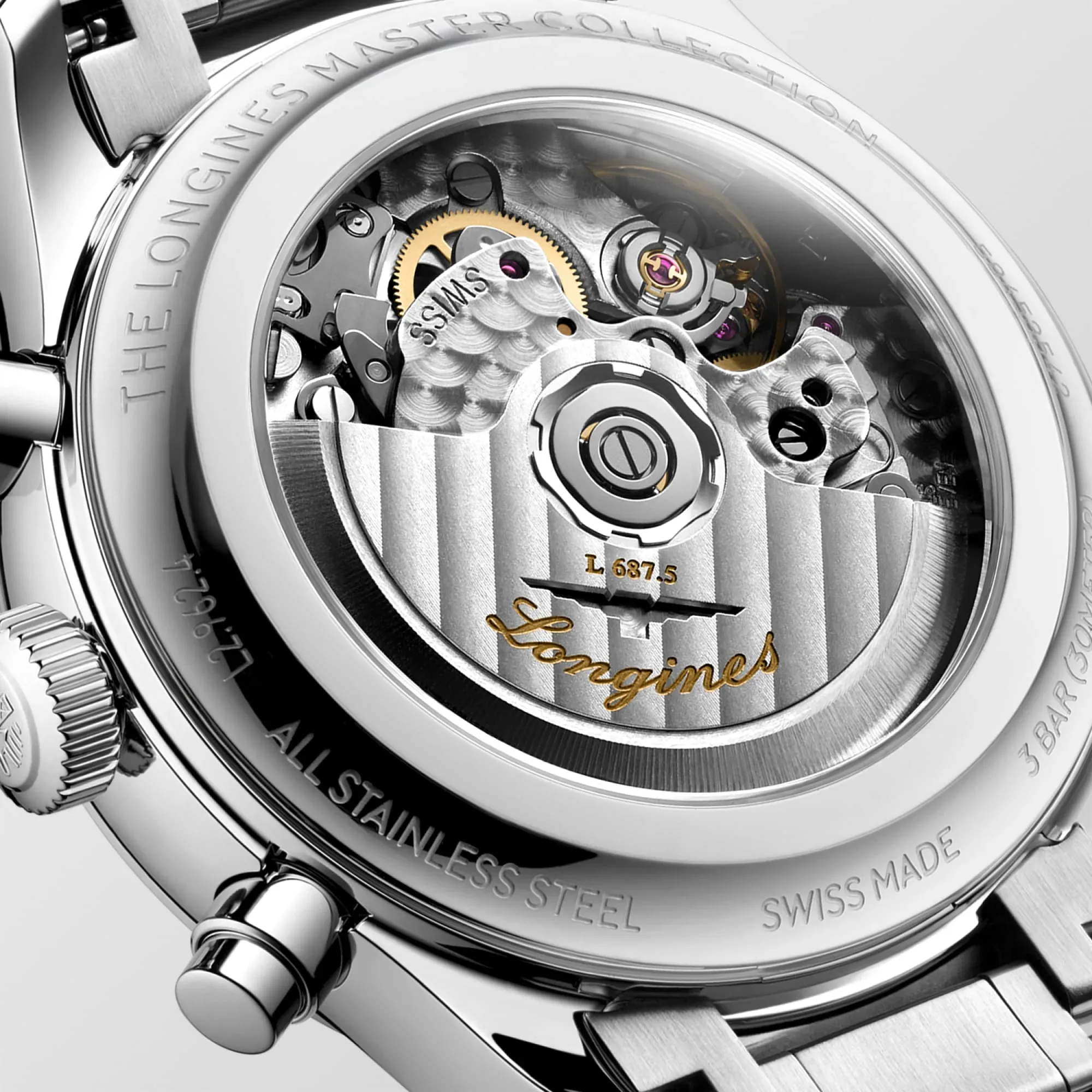
The L687.5 is an automatic column-wheel calibre with a silicon balance spring, 28,800-vph frequency and 66-hour power reserve. Its attraction is consolidation: chronograph, calendar and moonphase live in one familiar Master Collection design. For an owner who regularly uses calendar information, the CHF 300 gap is unusually small relative to the added functions.
Capability brings ownership friction. A calendar display rewards a watch that stays running; if it stops, the owner has more indications to restore. The busier dial also changes the character of the watch even before any function is used. Buyers should therefore choose it because they enjoy that information architecture, not because the longer specification list automatically makes it the better purchase.
Two Movements, Two Ownership Rhythms
The casebacks make the distinction explicit. The L799.5 leaves the manual chronograph architecture visible without a rotor, while the L687.5 adds automatic winding to a more function-dense package. Both movements use a column wheel and silicon balance spring, so the comparison is not a simple contest between basic and advanced.
Which Master Chronograph Fits Your Collection?
Choose the monopusher if winding is part of the pleasure, 30 minutes is enough for your timing needs and a cleaner two-register dial matters more than calendar utility. Choose the moonphase if you want one watch to carry several traditional complications and will accept the extra thickness and setting routine.
The CHF 300 gap is deliberately provocative because it makes the moonphase look like the numerical winner. The more interesting collector's choice is the monopusher: not because it offers more, but because it asks the owner to do more. Longines has made the two watches close in price and dimensions while keeping their ownership rhythms far apart.
Loading comments...