

Legare arrives with a debut watch that is less interested in being another openworked independent and more interested in asking a very specific historical question: what if Albert-Gustave Piguet's student double-balance chronometer had become the start of its own modern line?
The answer is the Chapter I AGP Inverted, presented in Elegant and Darth executions. Legare frames the watch as a contemporary interpretation of the Double Balance Chronometer Piguet created as his graduation project at the Vallée de Joux School of Watchmaking in 1932. That matters because Piguet later became technical director of Lemania from 1948 to 1980 and is tied to the Lemania Calibre 2310, one of the foundational chronograph movements of the 20th century.

Why collectors should care
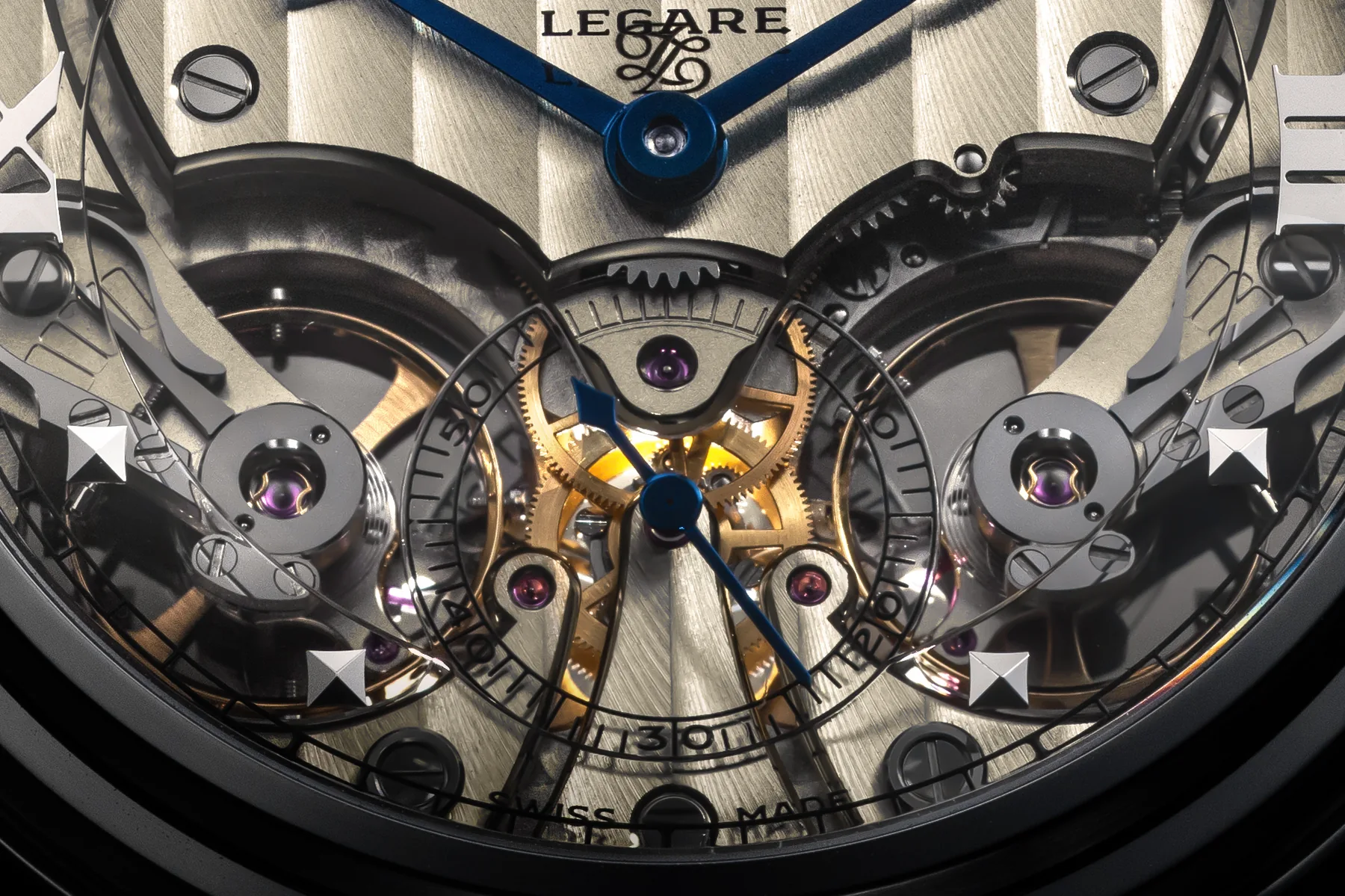
The collector hook is not novelty for novelty's sake. The Chapter I takes a mostly forgotten technical idea and makes it visible on the wrist without pretending the two balance wheels are a resonance system. Legare's own specification describes a double balance wheel running at 21,600 vph, with a differential located at the fourth wheel. In plain language, the visual drama on the dial side is connected to a real regulating architecture, not only decorative skeletonization.
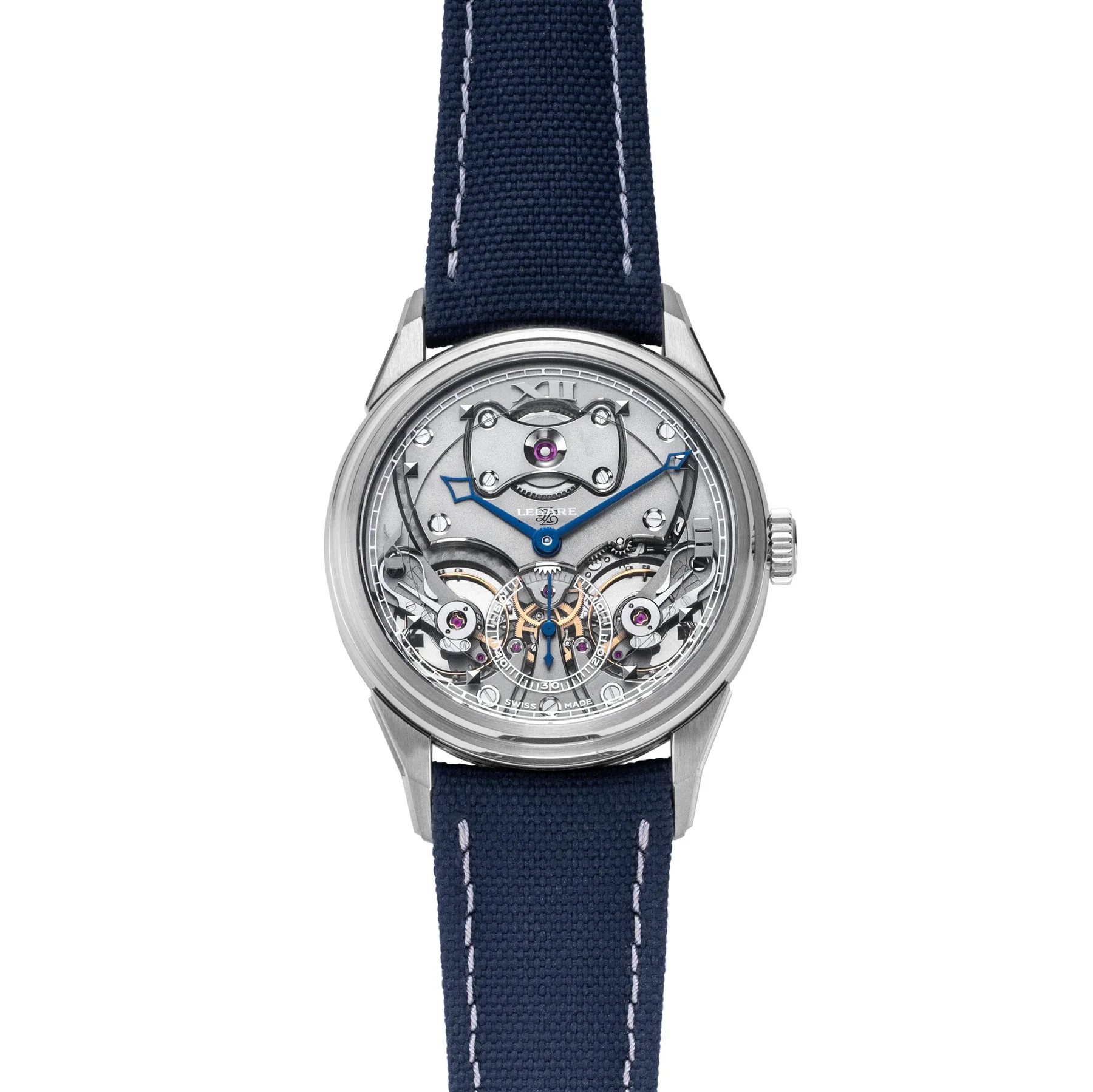
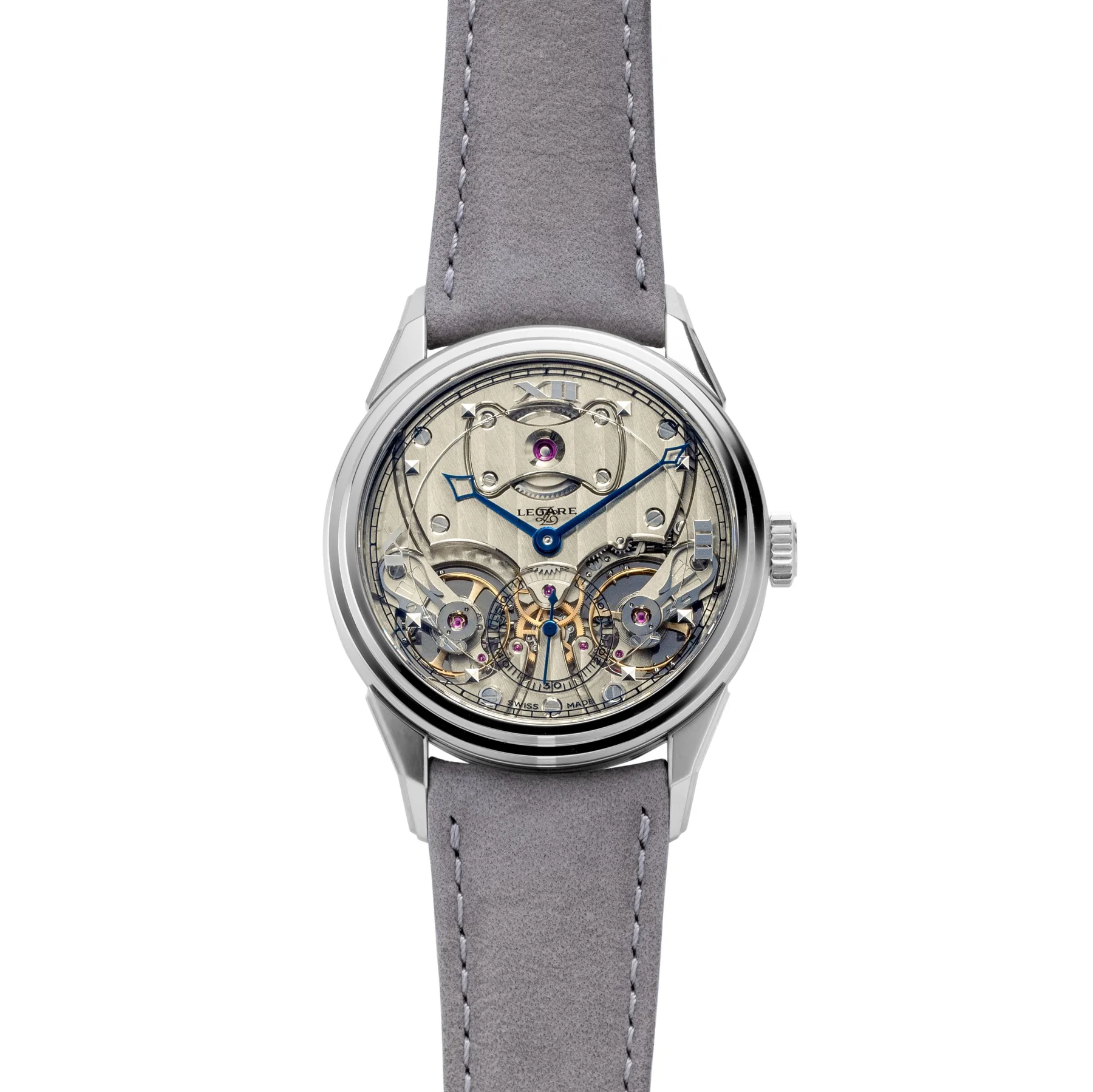
The inverted construction also changes the way the watch is read. Instead of hiding the mechanical argument behind the dial, the LC1-AGP-01 calibre puts the two balances, the vertical gear-train rhythm and the finishing vocabulary in front of the wearer. That is a useful distinction in a crowded independent market: the design is doing the same work as the movement story.

The case keeps the idea wearable
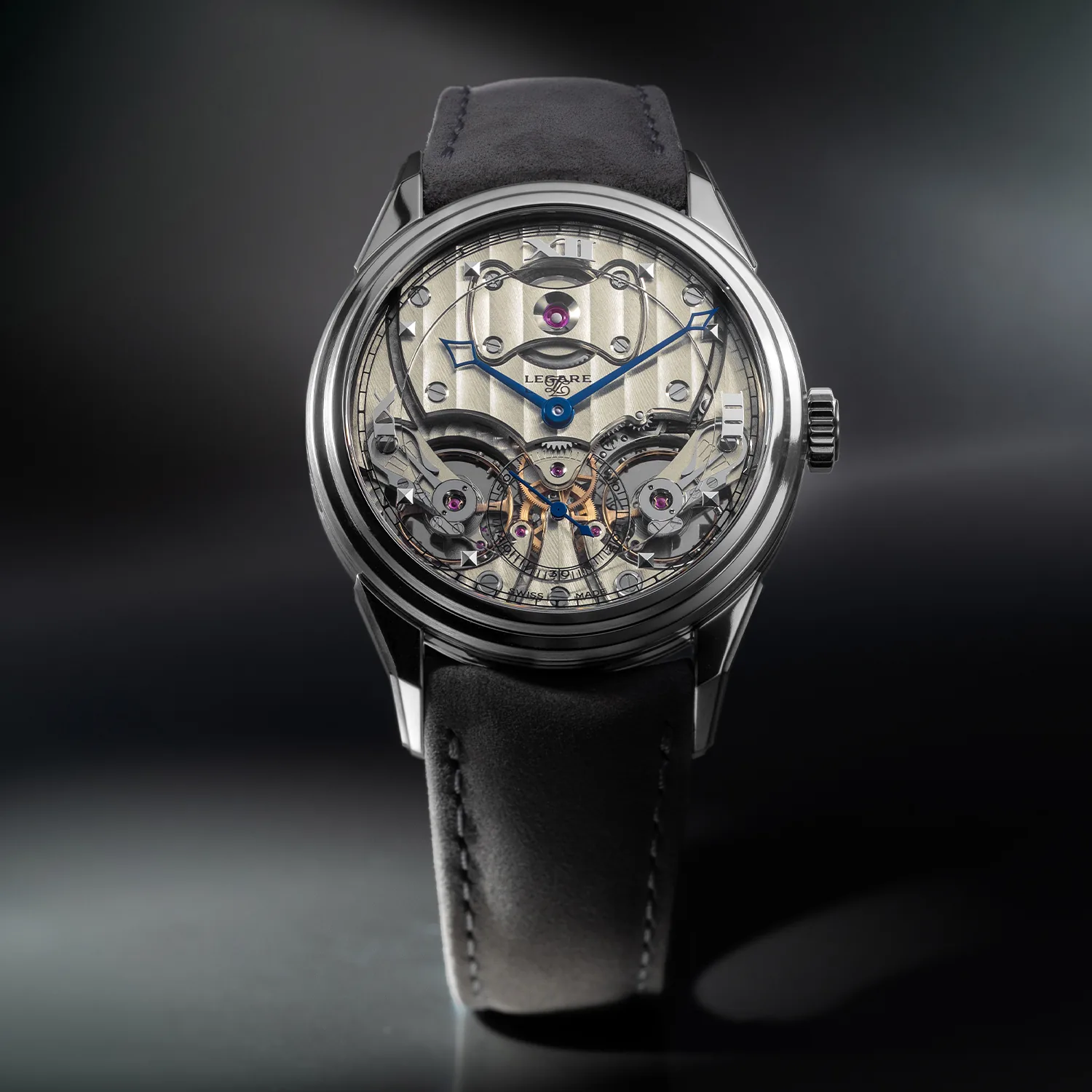
Legare houses the watch in a Grade 5 titanium case measuring 37.5 mm by 9.95 mm, with 5 ATM water resistance. Those numbers are important because complicated independent watches often drift into display-object territory. Here, the case size keeps the project compact enough to feel like a watch first and a thesis second.
The brand says the case architecture is inspired by 1940s handmade casemakers. That reference suits the project: this is not a vintage remake, but it does try to make the watch feel connected to the hand-built world that shaped Piguet's generation.
Finishing as part of the argument
On the official specification sheet, Legare lists Côtes de Genève, polished bevels and countersinks, sand-blasted balance cocks, perlage on the baseplate and bridge interior, and snailing on the barrel. The 34-jewel calibre has a stated 50-hour power reserve and keeps the functions to hours, minutes and seconds.
That restraint helps. A double-balance differential watch does not need a calendar, a tourbillon or a second complication to justify itself. Its reason for existing is the way an old regulating experiment has been reimagined as a modern, front-facing mechanical display.
Distribution tells its own story
Legare says Chapter I will be available exclusively through retail partners: Ahmed Seddiqi & Sons in the Middle East, Art in Time in Europe, Cellini Jewelers on the US East Coast, Sincere Watch in Southeast Asia and Rostovsky Watches on the US West Coast. For a new high-end independent, that matters. The launch is not only a website announcement; it is being placed through retailers that already speak to collector audiences.

A debut with a point of view
The safest way to launch a new independent would have been to make a familiar shaped case, a familiar openworked dial and a familiar tourbillon-shaped talking point. Legare has chosen a narrower path. The Chapter I AGP Inverted asks the buyer to care about a specific watchmaking lineage, a specific 1932 student project and a specific mechanical solution.
That makes it less universal, but more interesting. If Legare can keep that discipline beyond the first chapter, this debut may be remembered less as a dramatic new-brand entrance and more as the start of a serious archive-minded independent watchmaker.


Loading comments...