
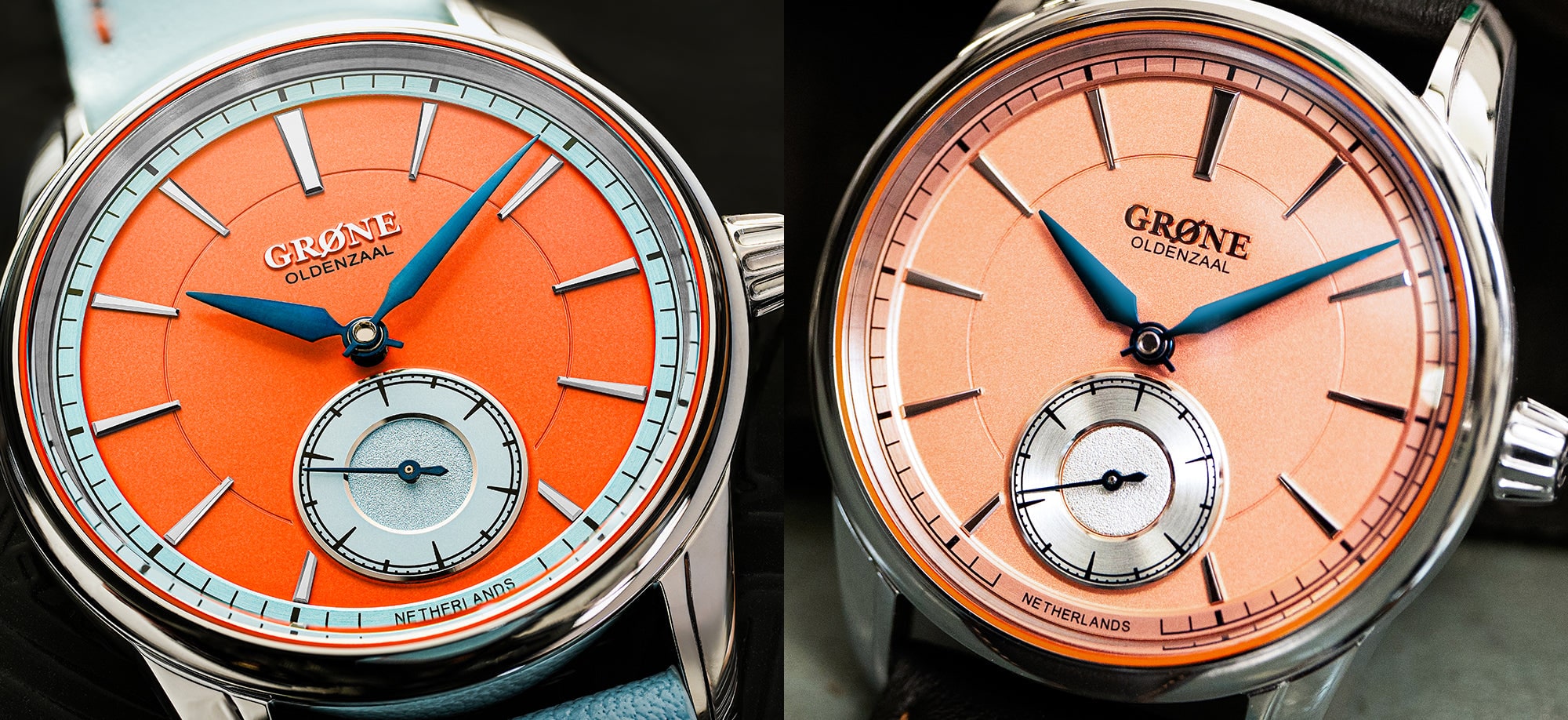
GRØNE Oldenzaal’s Horologium opens for orders today, 13 August 2026 at 3:00PM Amsterdam CEST, and the timing matters because this is not just another colourful small-seconds dress watch. It is Bart and Tim Grönefeld’s more accessible line taking a sharper step toward the language collectors associate with the brothers: sculpted case lines, visible movement finishing, a hand-wound ritual, and a little Dutch mischief.
The watch arrives in two versions, Something Quirky and Something Classic, each limited to 188 pieces. Both are priced at €2,390 excluding VAT, tariffs and shipping, with deliveries expected from mid-September. That price is the collector hook: GRØNE is asking whether a watch can carry recognisable Grönefeld design DNA without living in high-independent territory.
Two Personalities, One Case
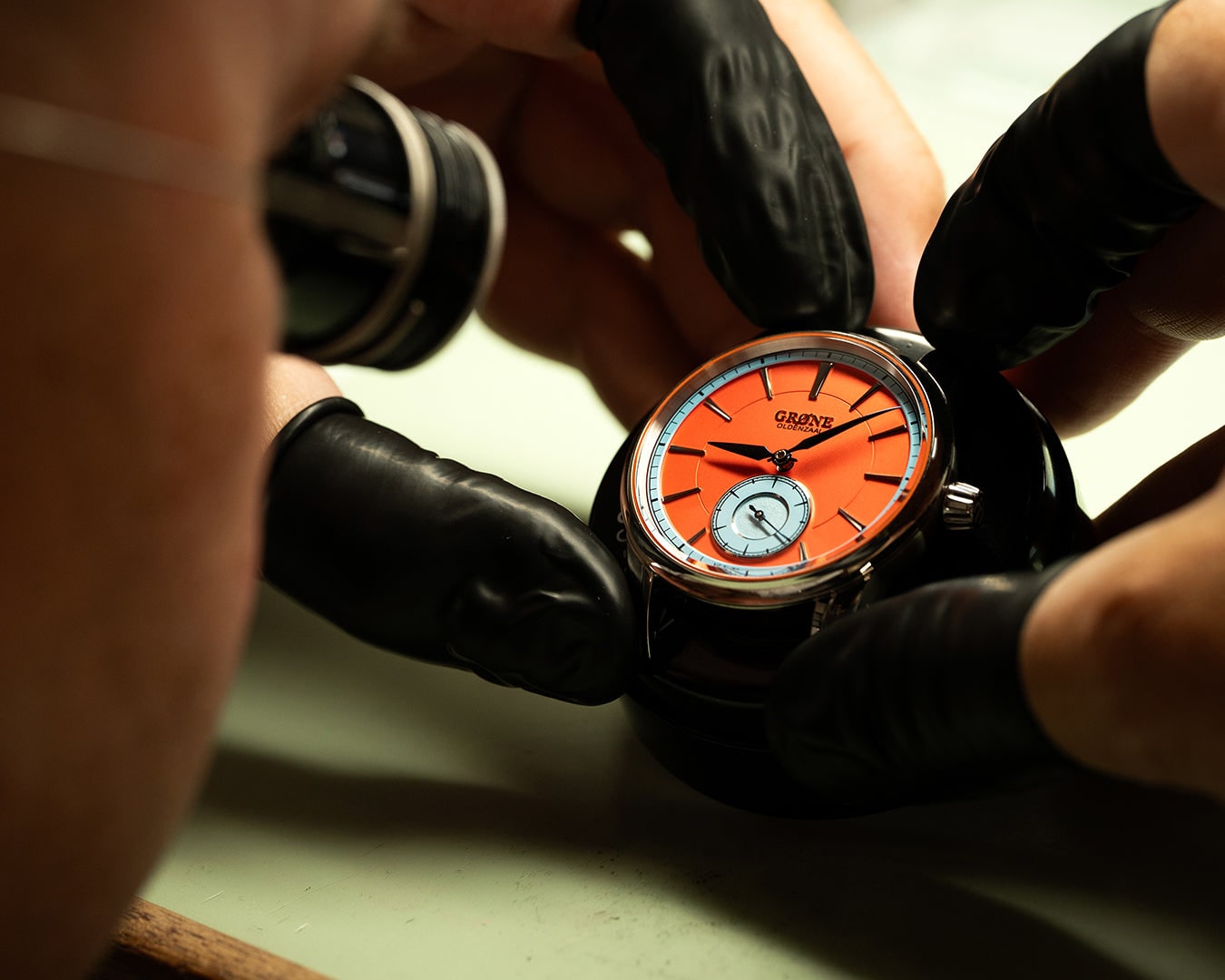
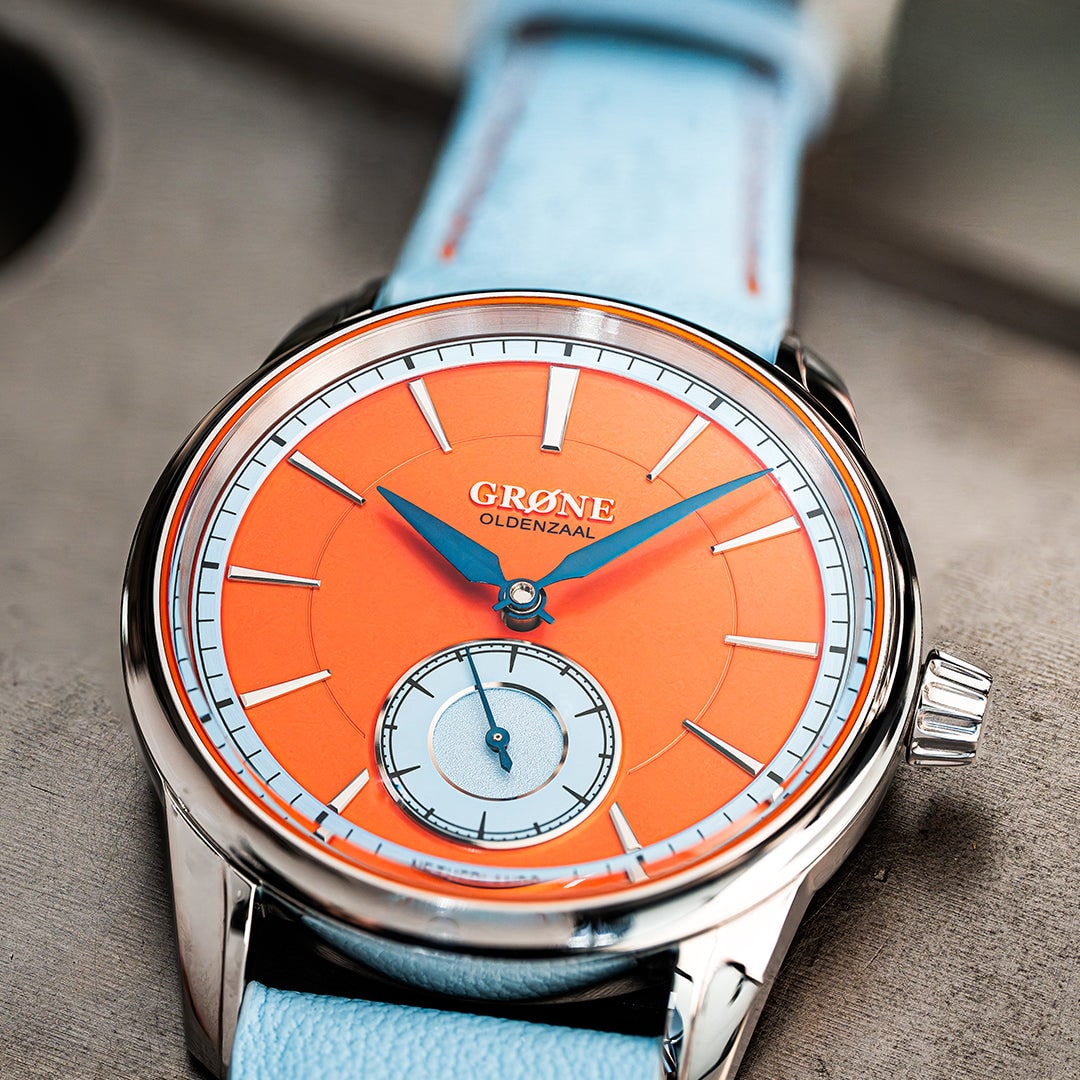
The basic architecture is shared. The Horologium uses a 39 mm stainless-steel case, a 10 mm thickness, 47 mm lug-to-lug, 20 mm lug width, sapphire crystals front and back, orange gaskets, and 50 metres of water resistance. The case mixes a satin-brushed caseband with polished bezels and caseback surfaces, while the lugs curve downward to keep the watch wearable rather than merely photogenic.
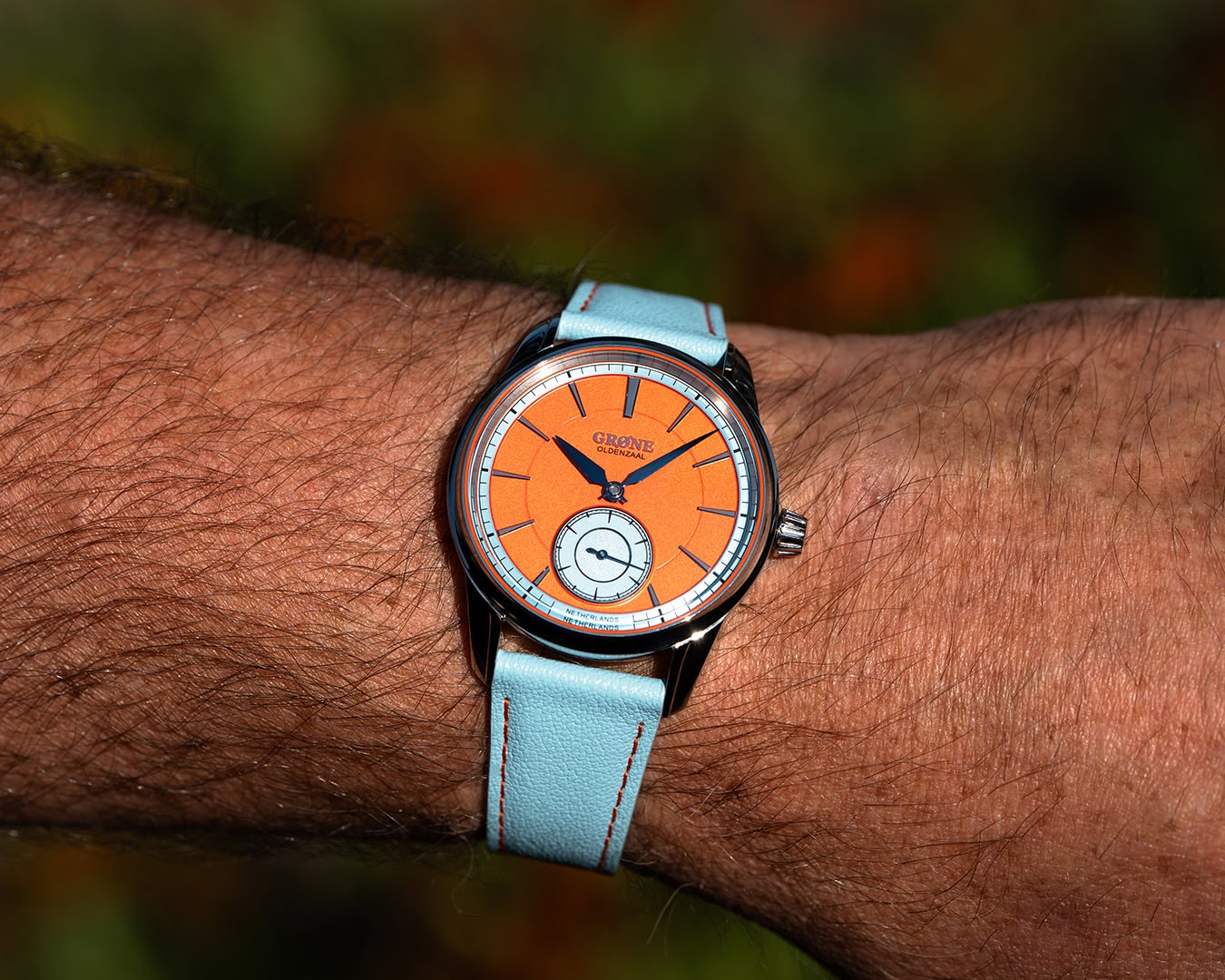
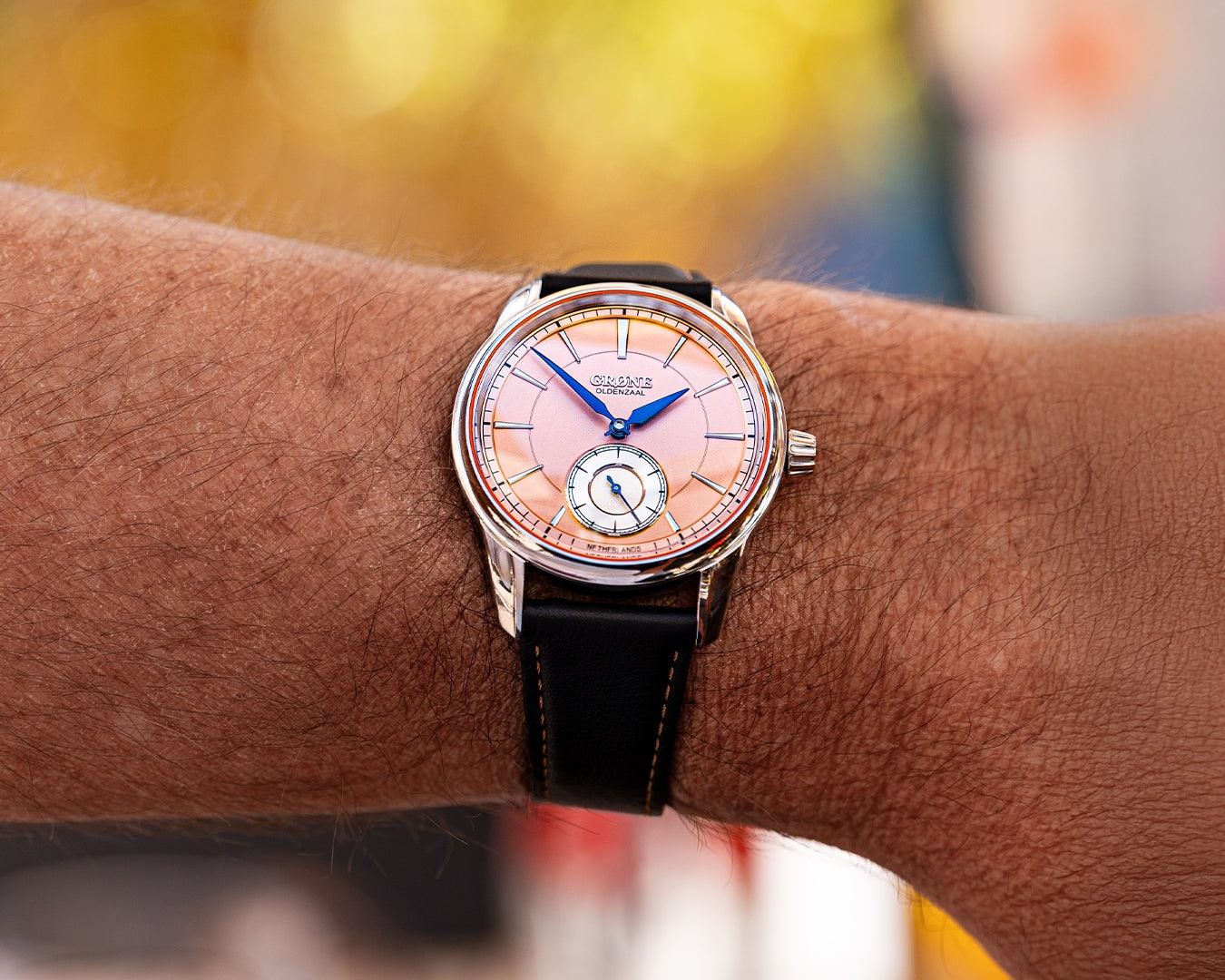
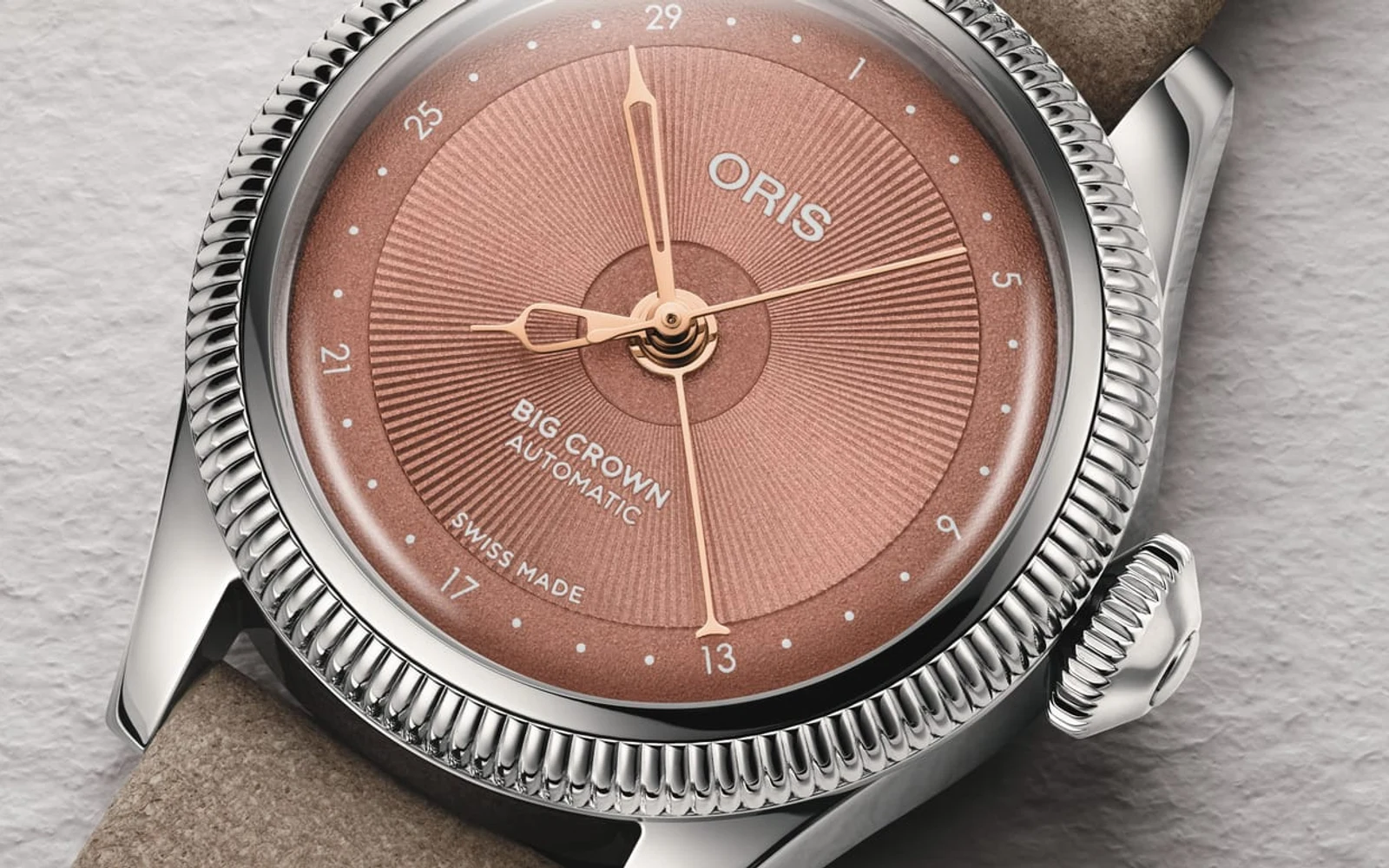
What changes is temperament. Something Quirky uses vivid Dutch orange with baby-blue accents and a matching light-blue strap. Something Classic moves toward a salmon dial, darker strap, and a quieter “if you know” character. The difference is not cosmetic filler; it creates two valid collector reads. One is the extrovert object. The other is the easier daily dress watch.
The Movement Is The Point
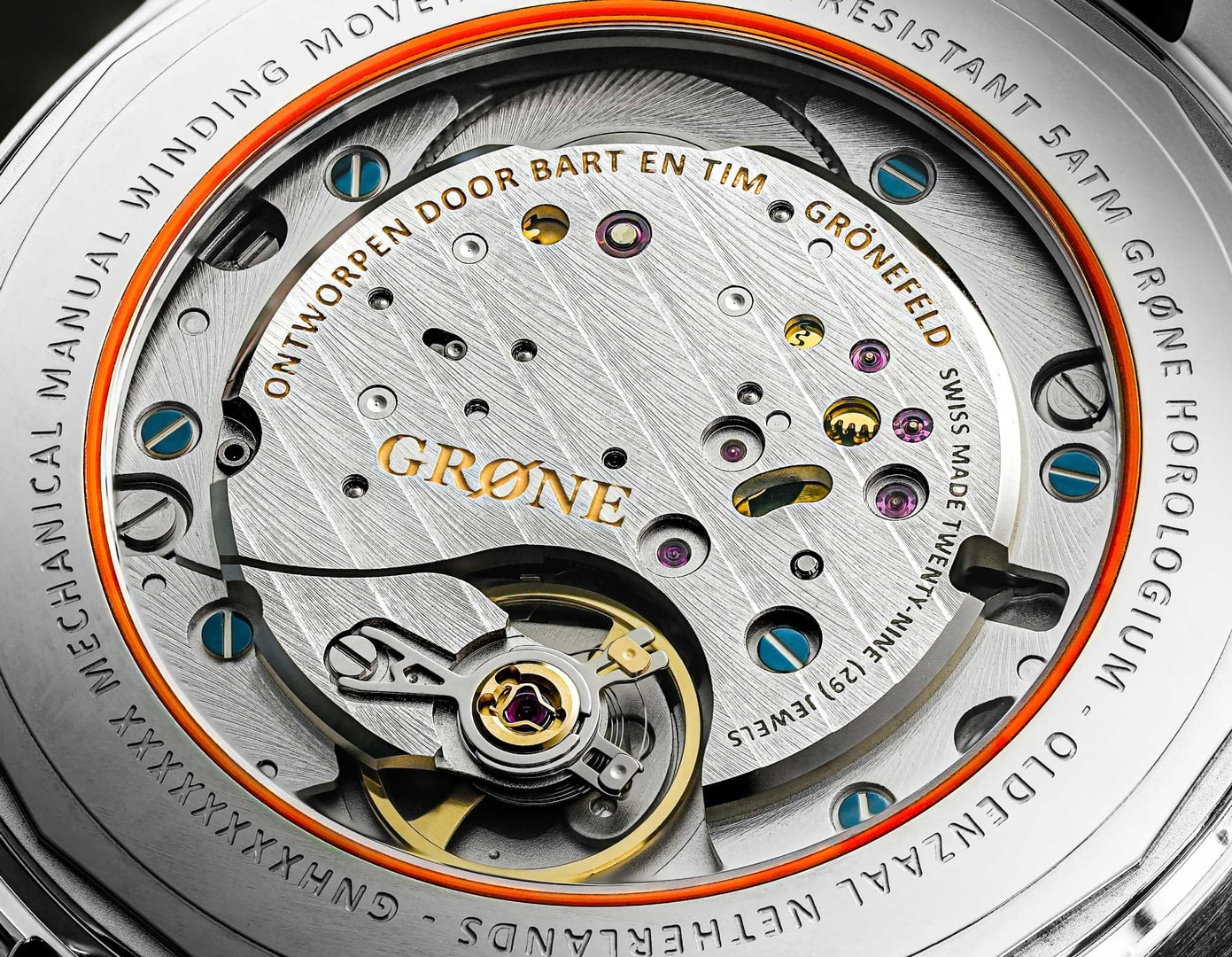
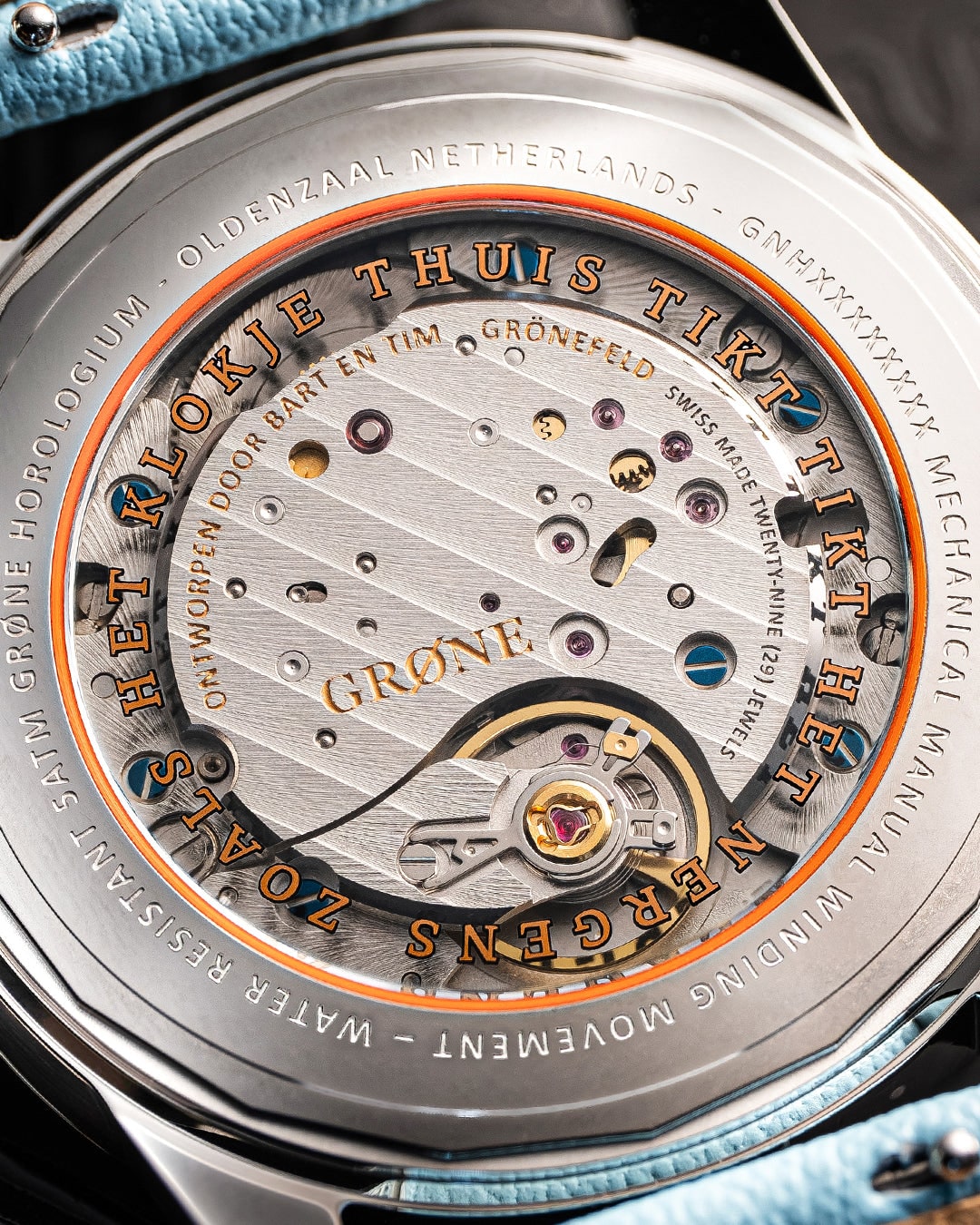
The most important upgrade is visible from the back. GRØNE says the Horologium uses a Swiss-made manual-winding movement by La Joux-Perret, with 29 jewels, a 60-hour power reserve, Côtes de Genève, polished anglage, heat-blued screws and an engraved bridge. For the brand’s three-hander, this is the first exhibition sapphire caseback, and it changes the ownership pitch.
A hand-wound watch asks the owner to participate. At this price, that daily interaction and the visible finishing matter more than chasing another automatic spec-sheet win. The Horologium is not trying to look like a miniature Grönefeld; it is trying to make some of the brothers’ proportion, humour and finishing priorities available in a more attainable object.
Collector Read
The Horologium is interesting because it does not hide its compromise. It is not an atelier Grönefeld, and it is not priced as one. But it does offer a defined design hand, an independent-family backstory, limited production, and a movement-side reason to take it seriously. That combination is exactly where many enthusiast buyers now pay attention.
If the Quirky version is the headline, the Classic version may be the quieter long-term choice. The smarter read is not which one is louder; it is whether GRØNE can make accessibility feel like a design decision rather than a diluted version of the main act.

Loading comments...