
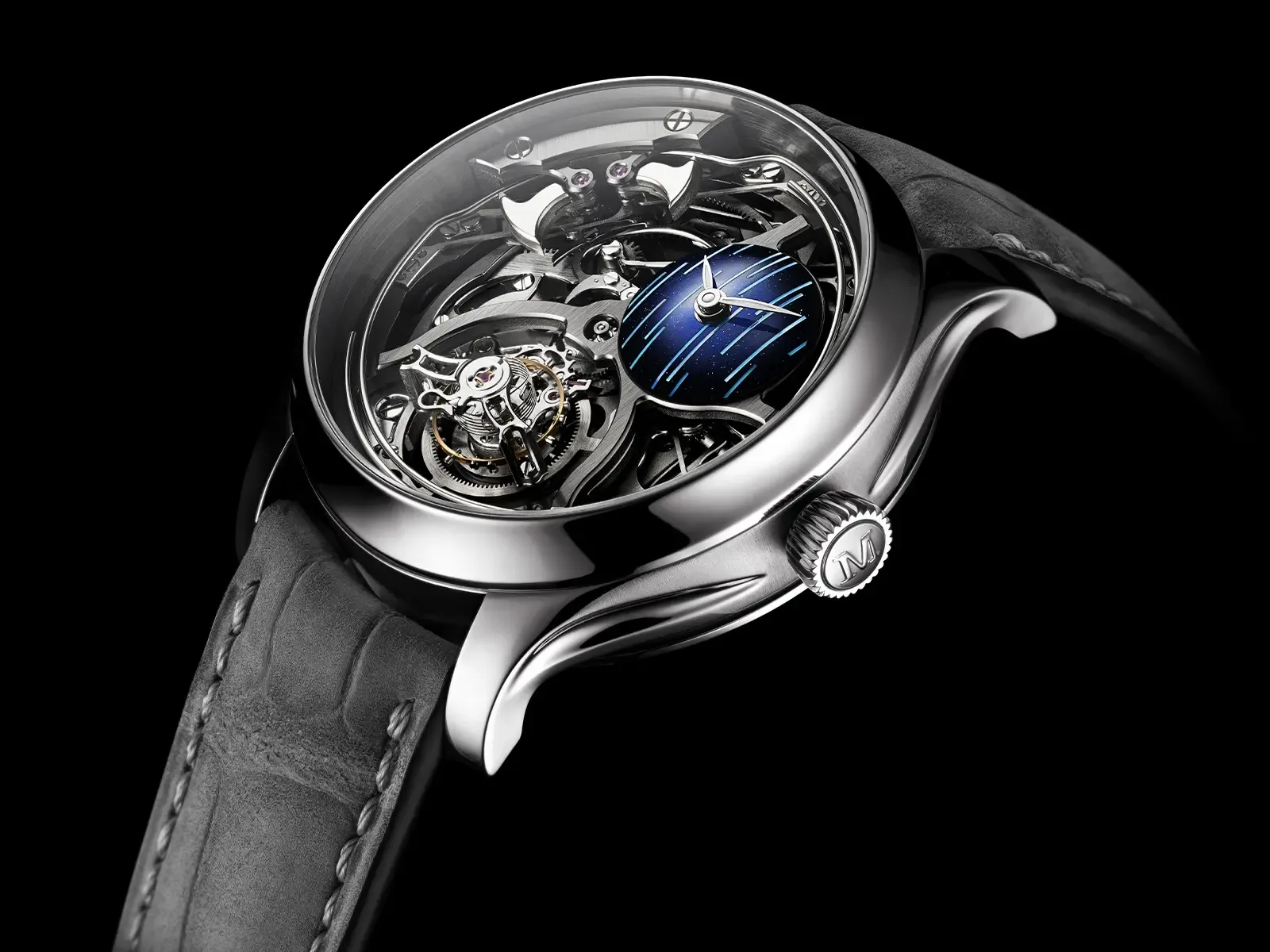
H. Moser & Cie. has built the Endeavour Minute Repeater Cylindrical Tourbillon Skeleton Cosmic Rain around a very Moser contradiction: it is mechanically excessive, but visually disciplined. The watch combines a minute repeater, a flying tourbillon, a cylindrical hairspring and a fully skeletonised hand-wound calibre, then offsets that machinery with a small aventurine-and-mother-of-pearl sub-dial rather than a full theatrical dial.
That is why the Cosmic Rain is worth treating as more than another ultra-expensive complication. In a market where skeleton watches often become demonstrations of how much can be exposed, this one asks a quieter collector question: can a watch show almost everything and still keep a centre of gravity?
What Is New
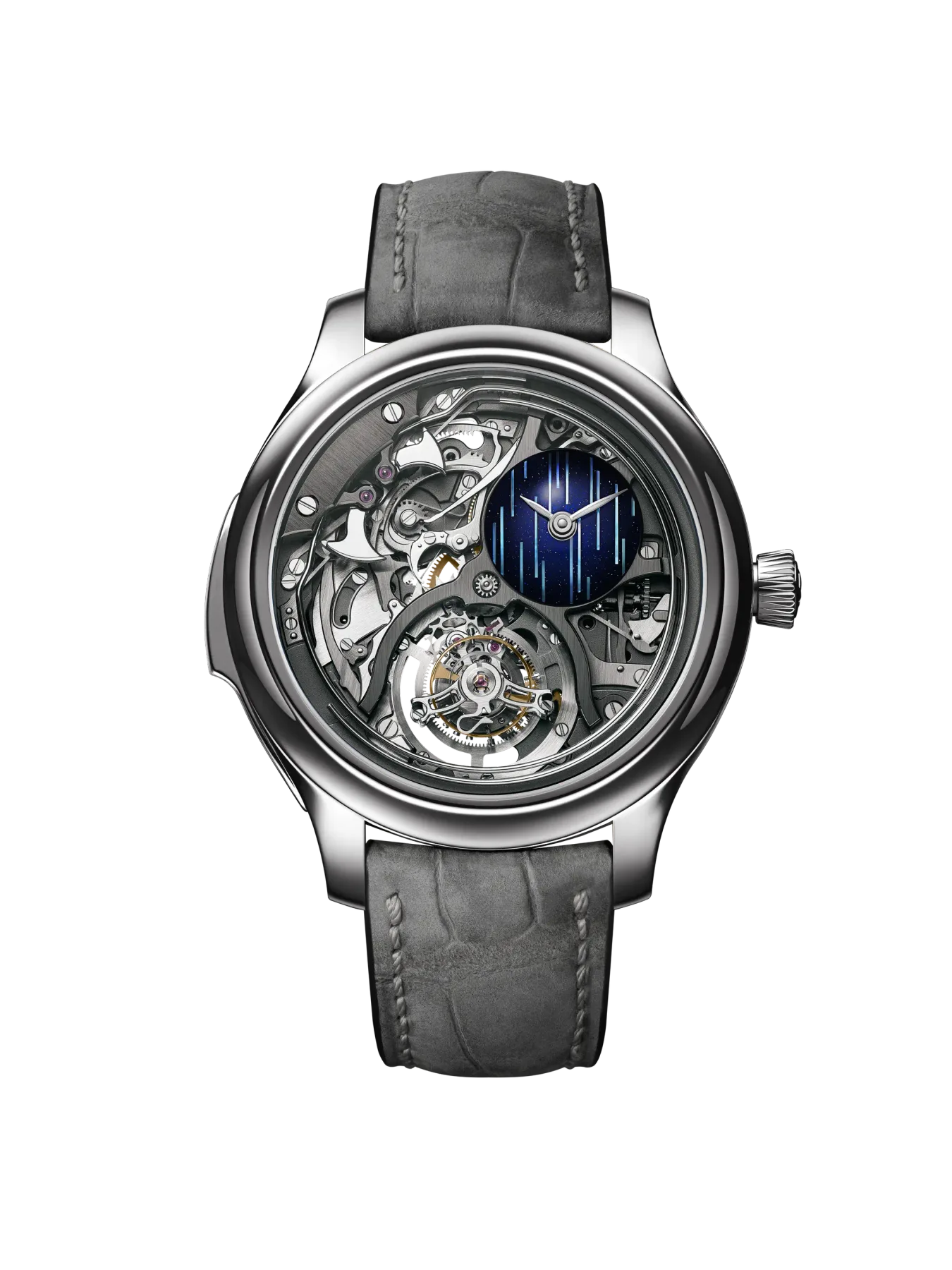
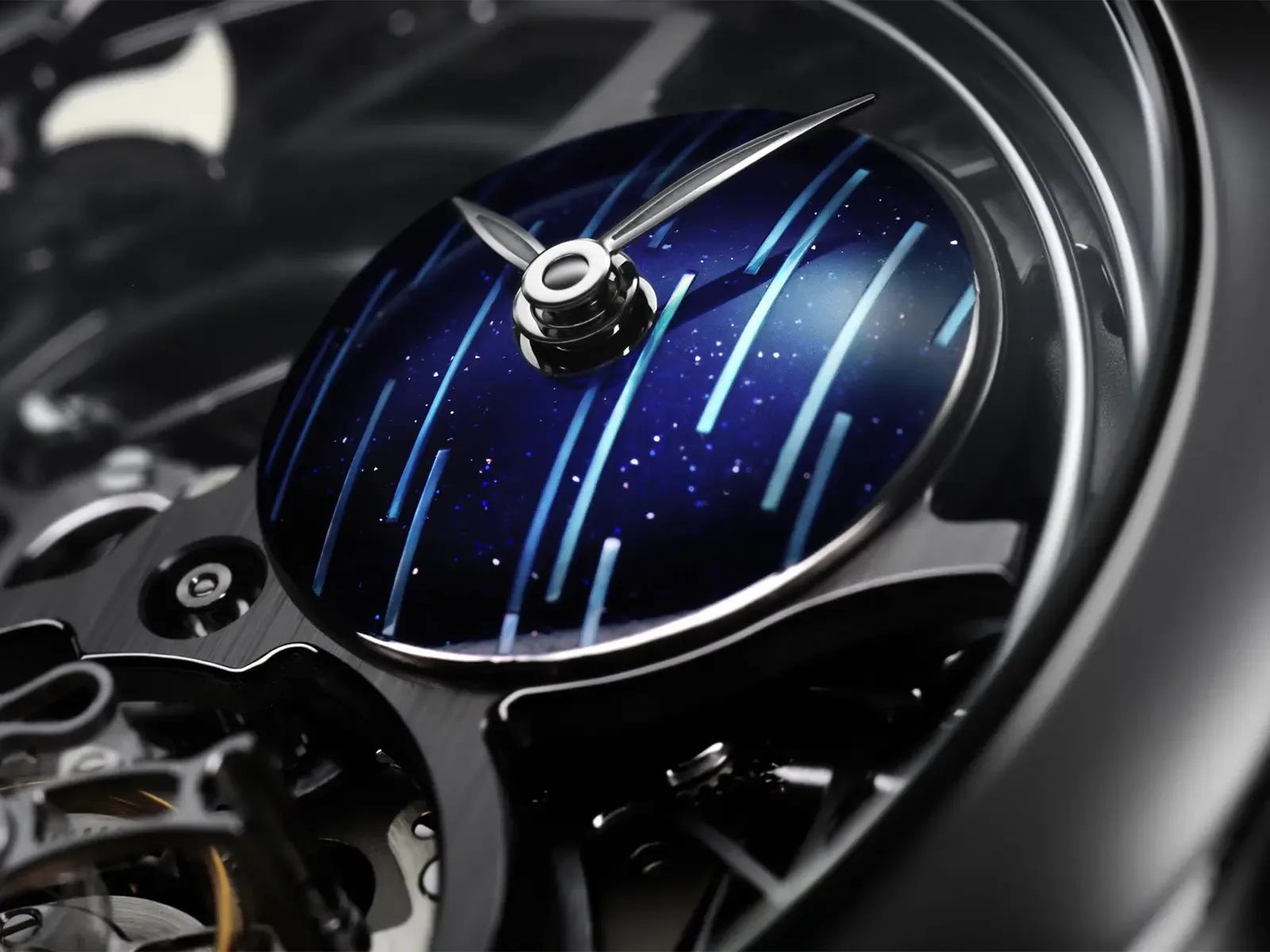
The Cosmic Rain is reference 1909-0501 in H. Moser & Cie.'s Endeavour family. The brand's official page describes a 40.0 mm titanium case, a fully skeletonised dial architecture, a domed sub-dial at 2 o'clock in aventurine with a fumé finish and mother-of-pearl inlays, and a hand-stitched grey nubuck alligator strap.
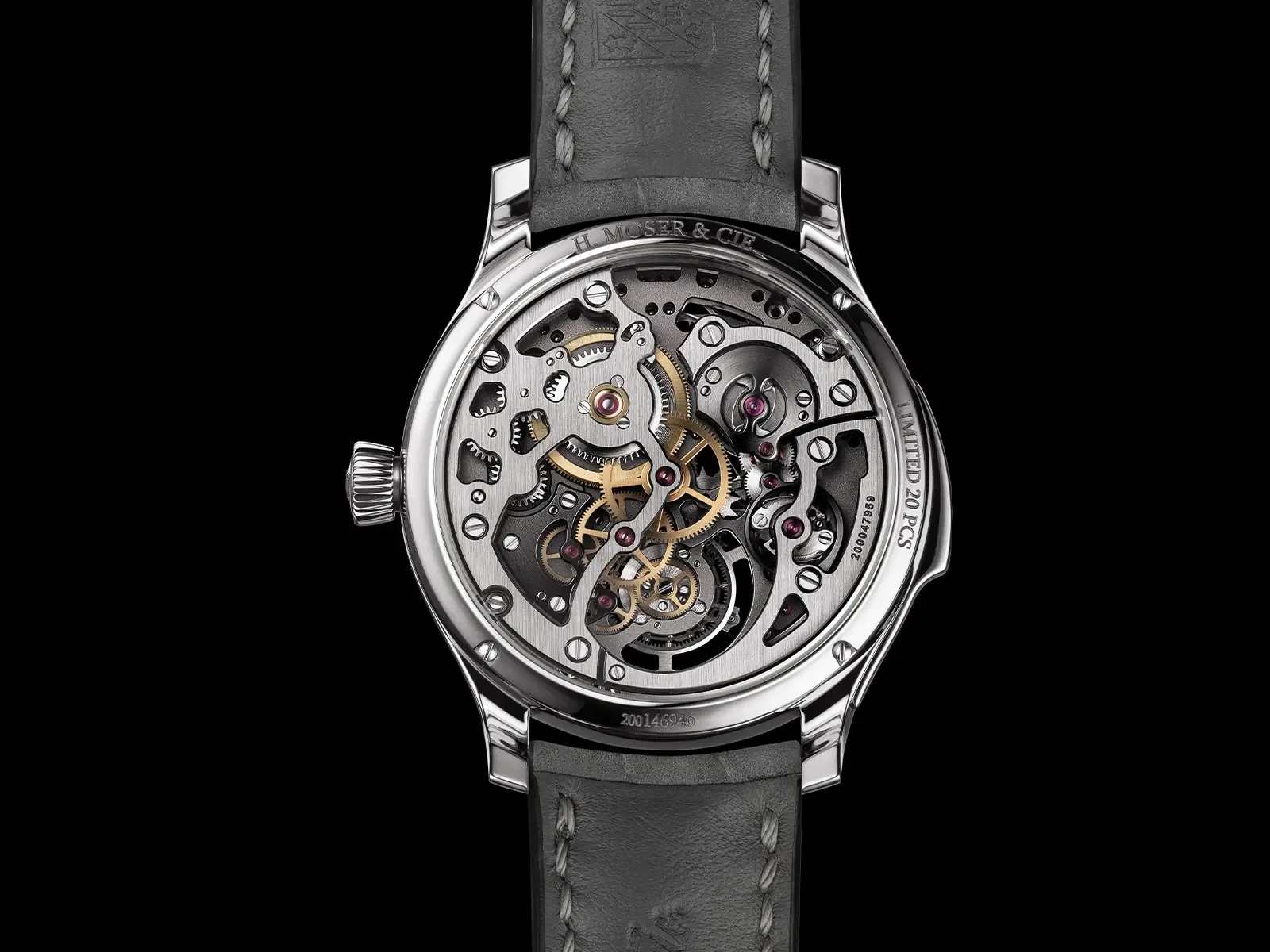
The movement is the hand-wound manufacture calibre HMC 909. Moser states that it integrates more than 400 components, combines the minute repeater and flying tourbillon in one open architecture, and offers a 90-hour power reserve.
Why It Matters
Minute repeaters are usually judged by sound, finishing and discretion. Skeleton tourbillons are usually judged by visibility and motion. The Cosmic Rain sits at the awkward intersection of both. It exposes the mechanism, but it does not turn the entire dial into one flat layer of technical noise.
For collectors, that matters because the piece is not only a list of complications. The smaller off-centre dial gives the watch a visual hierarchy. The repeater and tourbillon remain visible, yet the aventurine insert provides the story: a meteor-shower image set into a stripped-back mechanical stage.
The Mechanical Argument
The official specification is deliberately serious: titanium case, fully skeletonised HMC 909, minute repeater, flying tourbillon, hand decoration and a 90-hour reserve. Moser also frames the tourbillon as a second layer of complexity within the skeletonised construction rather than a decorative aperture added to a conventional dial.
The useful collector read is that the watch is built around three forms of visibility. You see the architecture, you see the regulating organ in motion, and when the repeater is activated you see the striking mechanism's purpose rather than treating it as hidden theatre.
The Design Choice
The risk with this kind of watch is obvious. Aventurine, mother-of-pearl, tourbillon, skeletonisation and a minute repeater can become five competing headlines. Moser's stronger choice is restraint by scale. The celestial material is concentrated in the small domed sub-dial instead of covering the whole front.
That makes the Cosmic Rain more coherent than the name suggests. It is still a high-complication showpiece, but the composition has a focal point. The titanium case also helps the visual mass stay technical rather than jewellery-heavy.
Availability And Collector Context
H. Moser & Cie.'s official product page presents the model as part of the Endeavour line; the GPHG entry lists the same reference 1909-0501 and describes the 40 mm titanium case, minute repeater displayed on the dial side, flying tourbillon with cylindrical hairspring and artistic Cosmic Rain dial.
The relevant buyer context is not everyday value. It is whether the piece makes a convincing case for complexity that can be understood at a glance. Here, the answer is stronger than the long name implies. The Cosmic Rain works because its spectacle has an editorial order: sound, motion, structure, then sky.




Loading comments...