
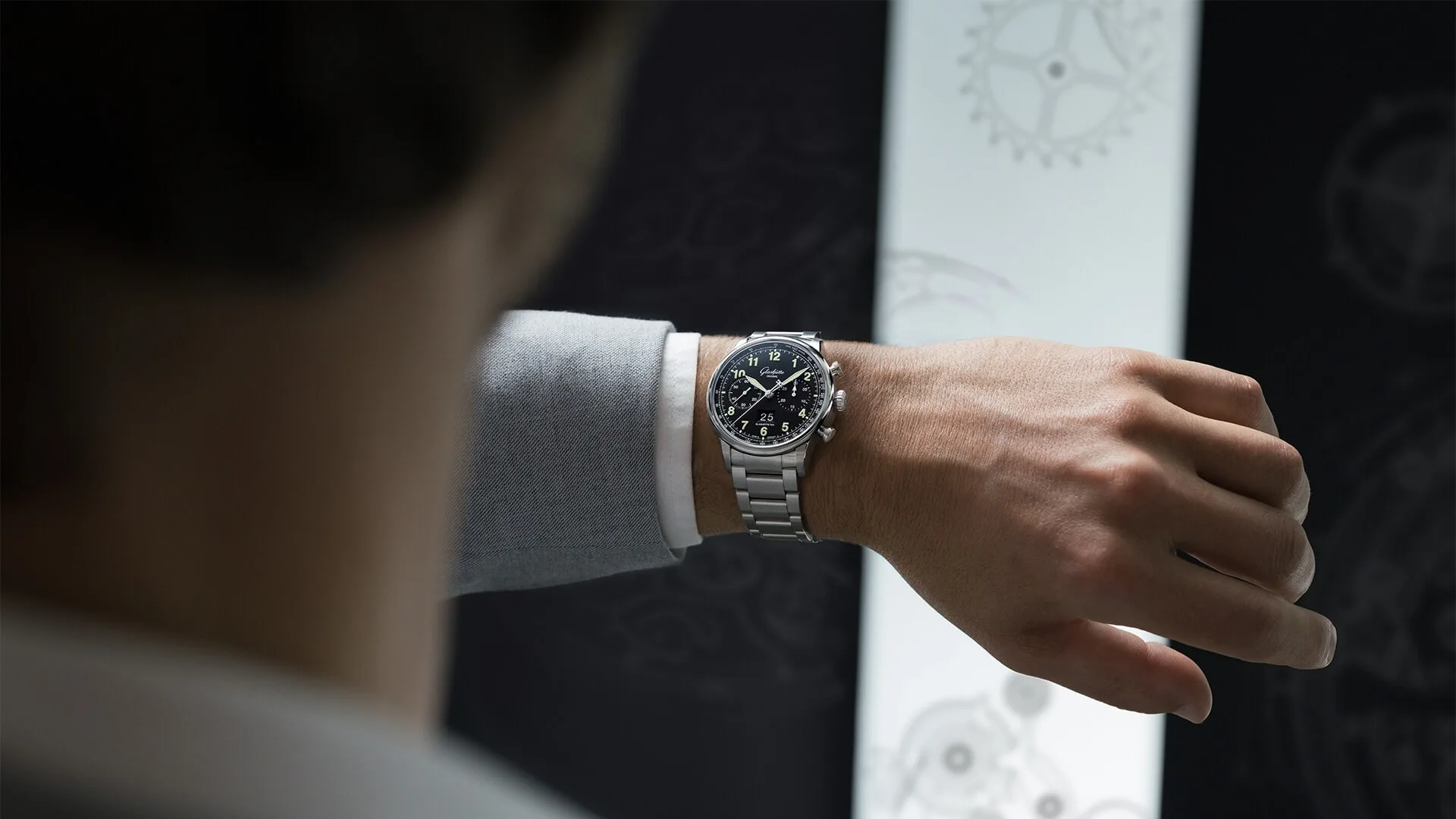
Glashütte Original has built two new 41 mm flyback chronographs around the same automatic Calibre 37-24, then given them deliberately different personalities. The Senator Chronograph Navigator is a black-dial pilot watch; the Senator Chronograph is a silver-dial, Roman-numeral dress chronograph. For a collector, the important question is not which has the longer specification list. It is how much visual character one movement can support without becoming a different watch mechanically.
The Short Decision
One Case, Two Design Traditions
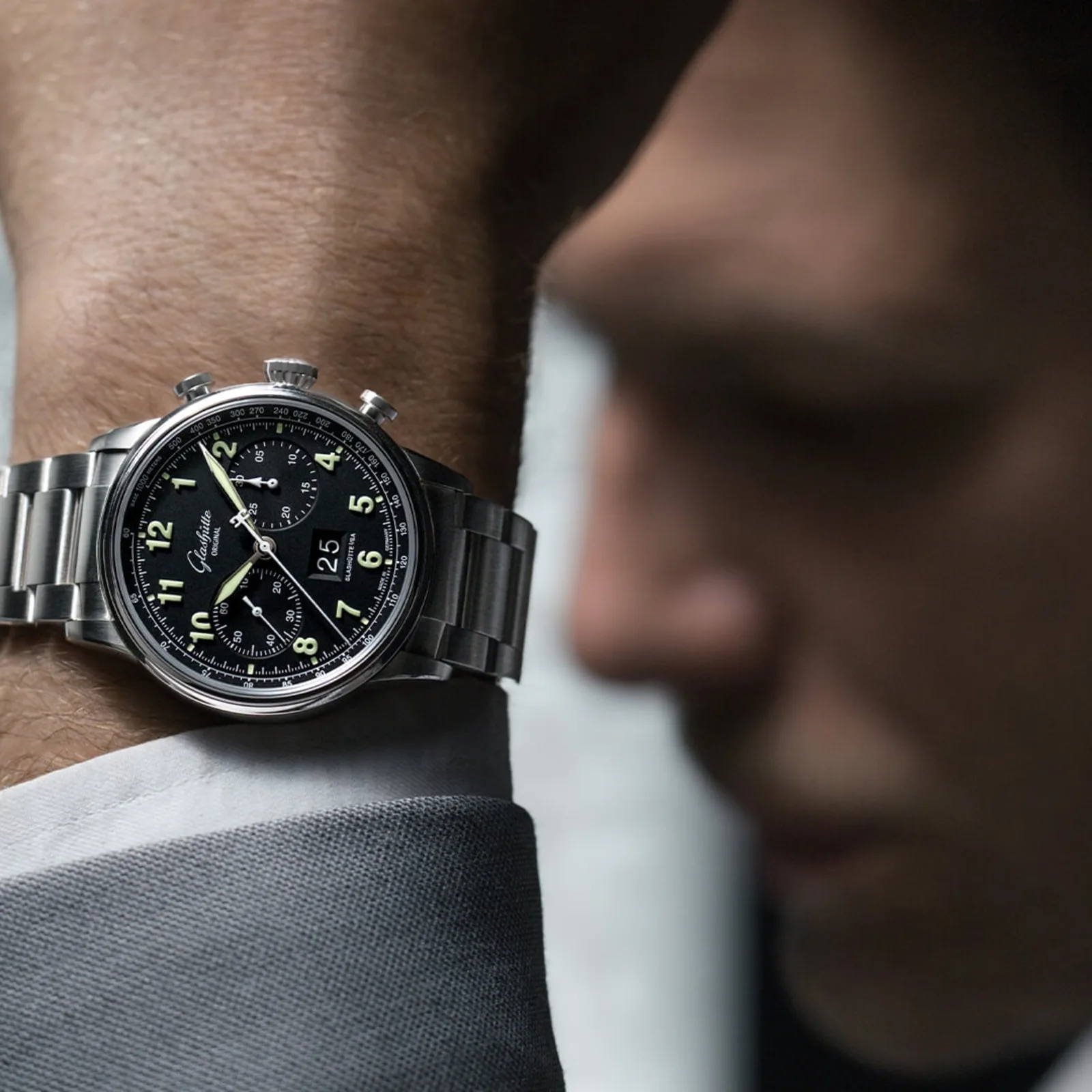
Both references use a 41 mm stainless-steel case that is 12.9 mm thick, a sapphire display back, quick-change straps or bracelet, and 5 bar water resistance. That common architecture removes the usual dimensional distraction from a comparison. The choice is primarily about dial language and where the watch belongs in a collection.
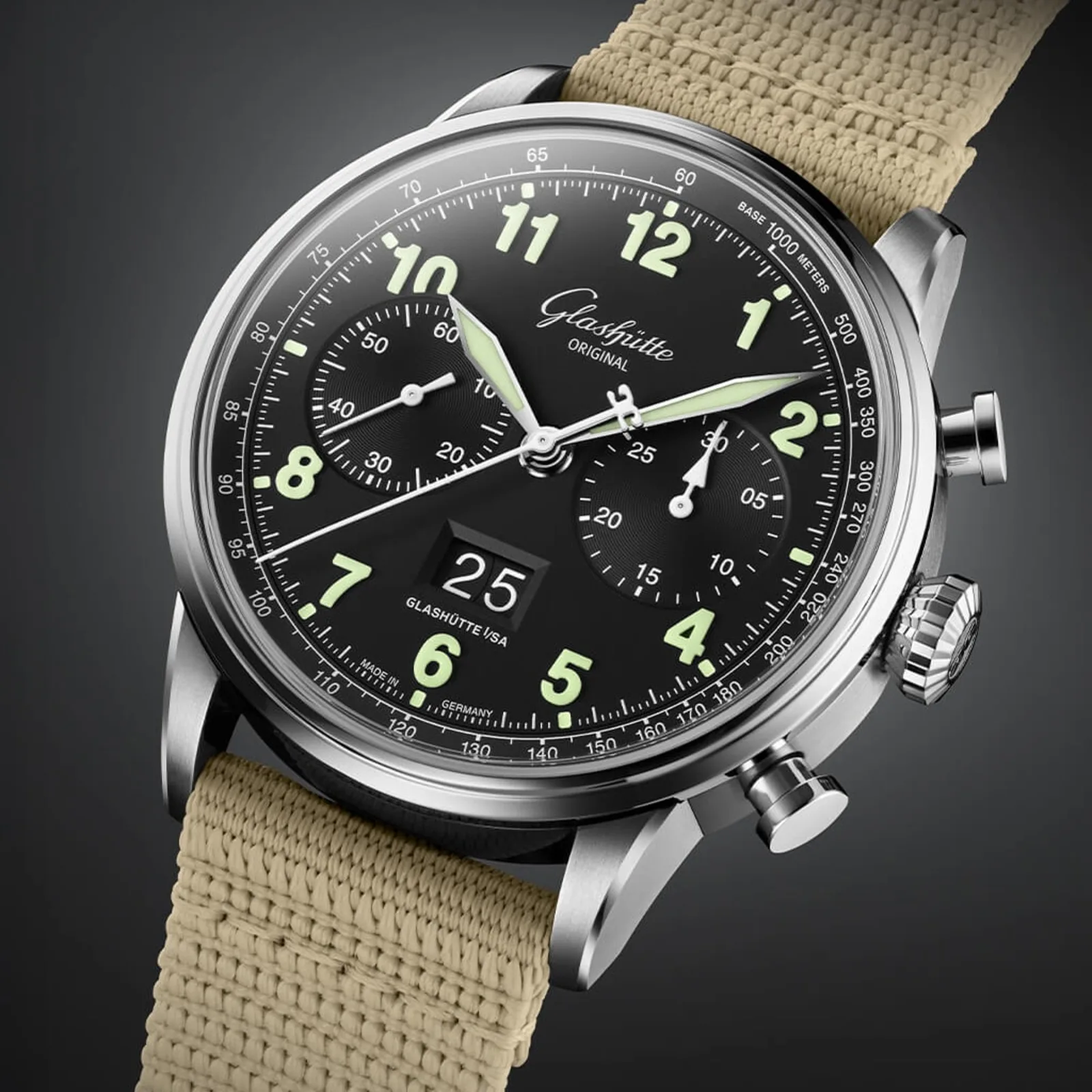
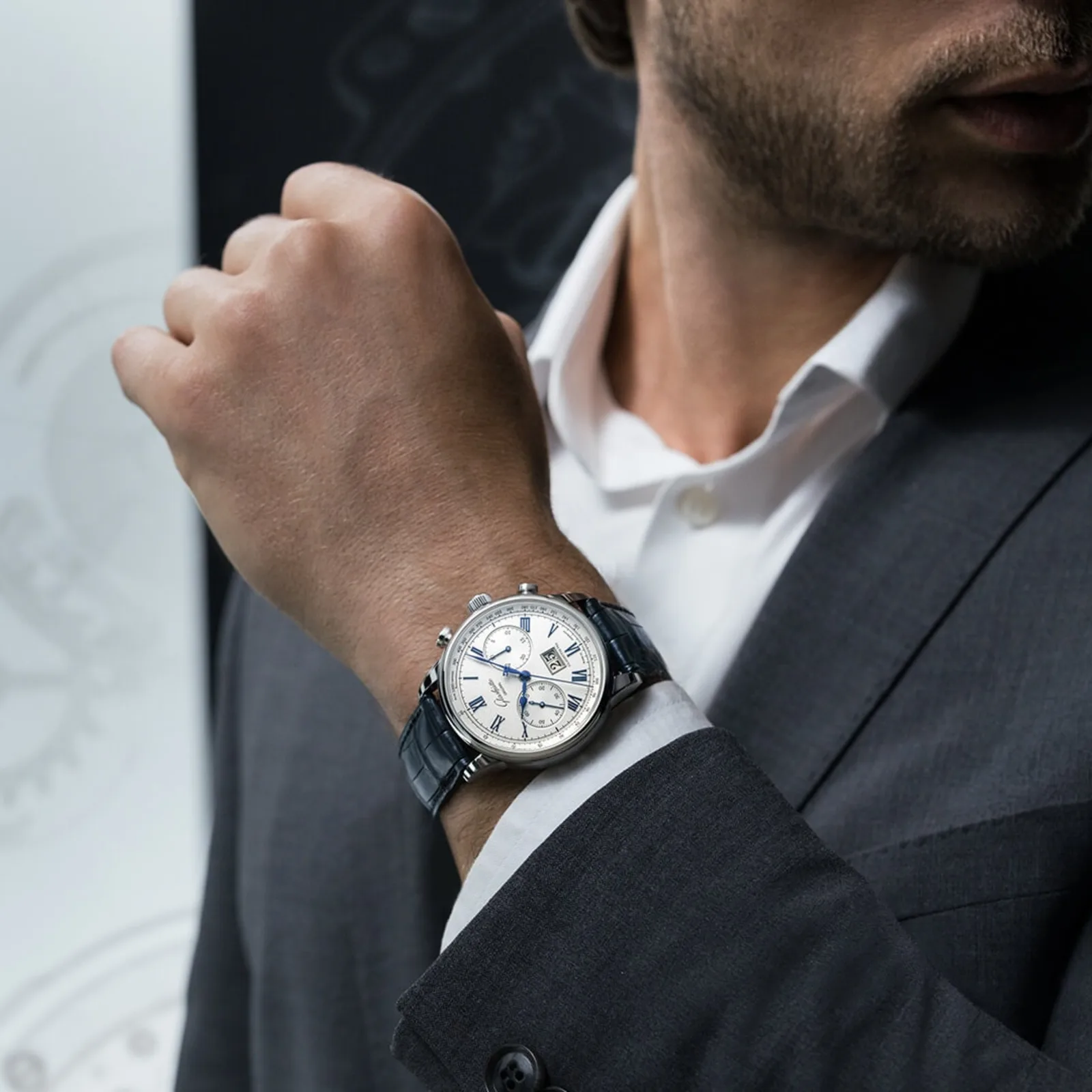
The Navigator refers to Glashütte pilot watches of the 1940s. Its solid luminous Arabic numerals, broad luminous hands, white chronograph indications and grippy crown make the dial read like an instrument. The classic Senator looks further back to observation watches used for maritime navigation in the late nineteenth and early twentieth centuries, but translates that history into a silver dial with blue-coated solid-gold Roman numerals and blued hands.
What Calibre 37-24 Gives Both Watches
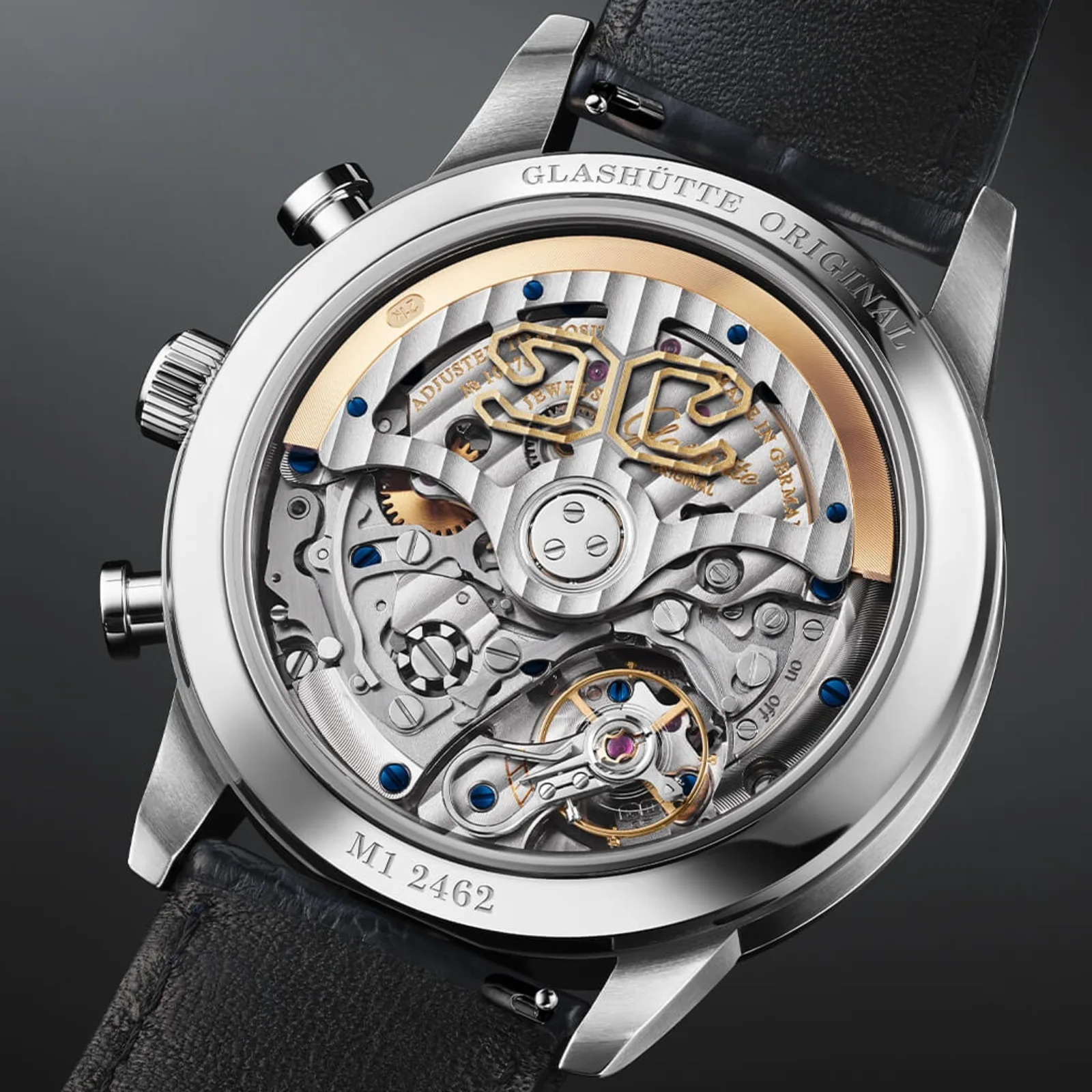
The automatic manufacture calibre combines central chronograph seconds, a 30-minute counter, small seconds, Panorama Date and flyback operation. It runs at 28,800 vibrations per hour, stores 70 hours of power and uses a silicon balance spring. A column wheel controls the chronograph, while a regulator-free balance is adjusted through screws on the balance wheel and a swan-neck system.
The flyback matters because the chronograph can be stopped, reset and restarted with one press. Yet neither watch is a long-duration timing instrument: the display records 30 minutes rather than 12 hours. Buyers attracted by the pilot aesthetic should therefore check whether that timing range fits how they actually use a chronograph.
The Dial Is The Real Complication
Glashütte Original makes both dials in-house, but their craft is expressed differently. On the Navigator, the challenge is controlled contrast: matt black surfaces, solid luminous numerals and a black-on-white Panorama Date arranged for immediate reading. On the classic model, fine embossing, vinyl-like sub-dial tracks, gold appliques and blued steel create more visible decoration.
This is where the shared movement becomes useful to collectors. The watches cannot be ranked by calibre prestige because the mechanical basis is the same. The decision becomes a cleaner test of design: whether the owner wants the mechanism to disappear behind a functional interface or to sit inside a more formal object.
Which Senator Chronograph Belongs In Your Collection?
Choose the Navigator if the collection lacks a high-contrast pilot chronograph and luminous legibility is central to the appeal. Choose the classic Senator if the collection needs one chronograph that can move more easily between tailoring and everyday wear, and if dial finishing matters more than overt tool-watch cues.
The most interesting result is not that Glashütte Original has produced two chronographs. It is that the brand has made movement choice irrelevant between them. With dimensions and mechanics held constant, the collector has to decide what a chronograph should look and feel like. That is a more revealing choice than simply buying the version with more functions.
Loading comments...