
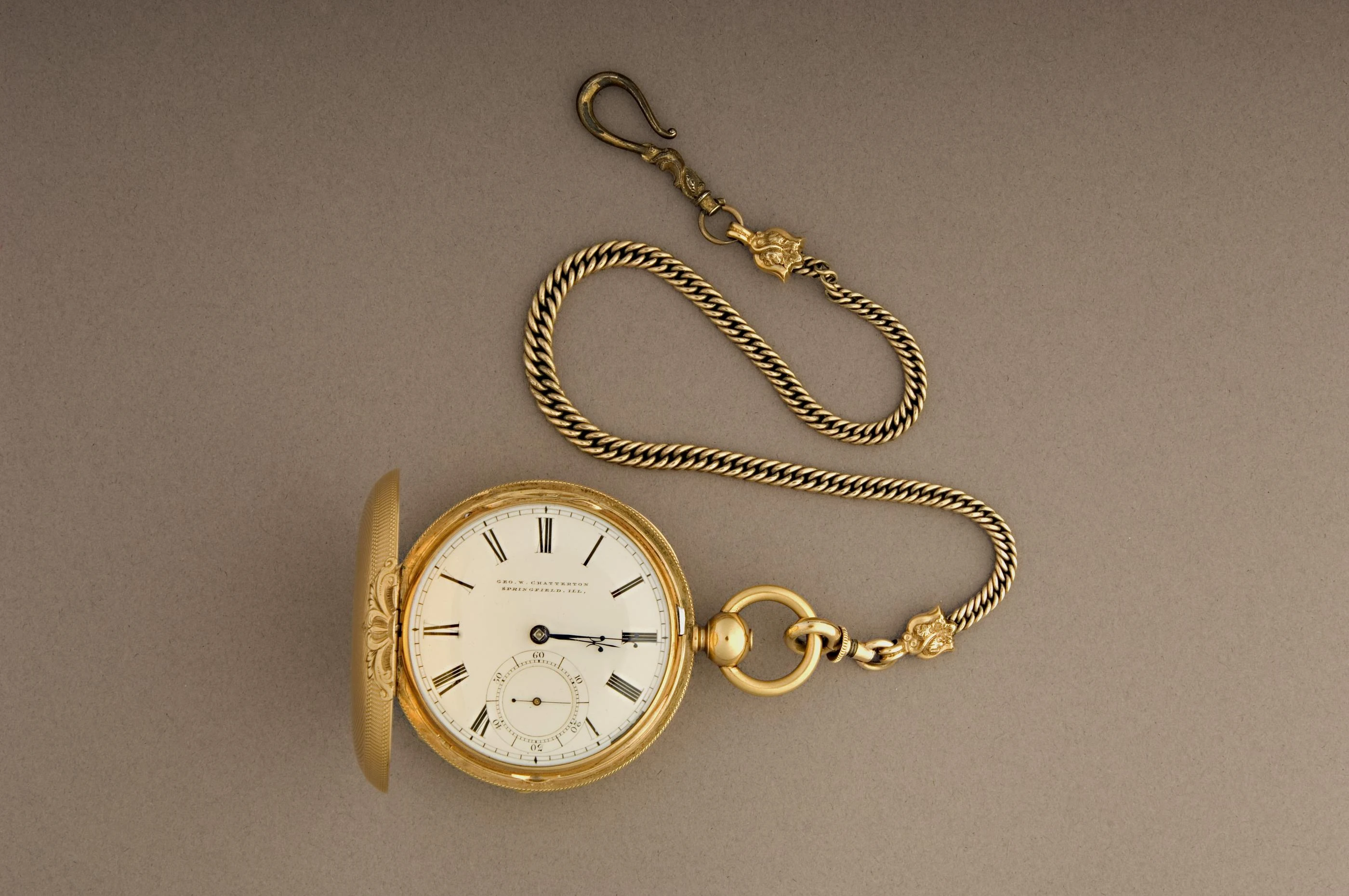
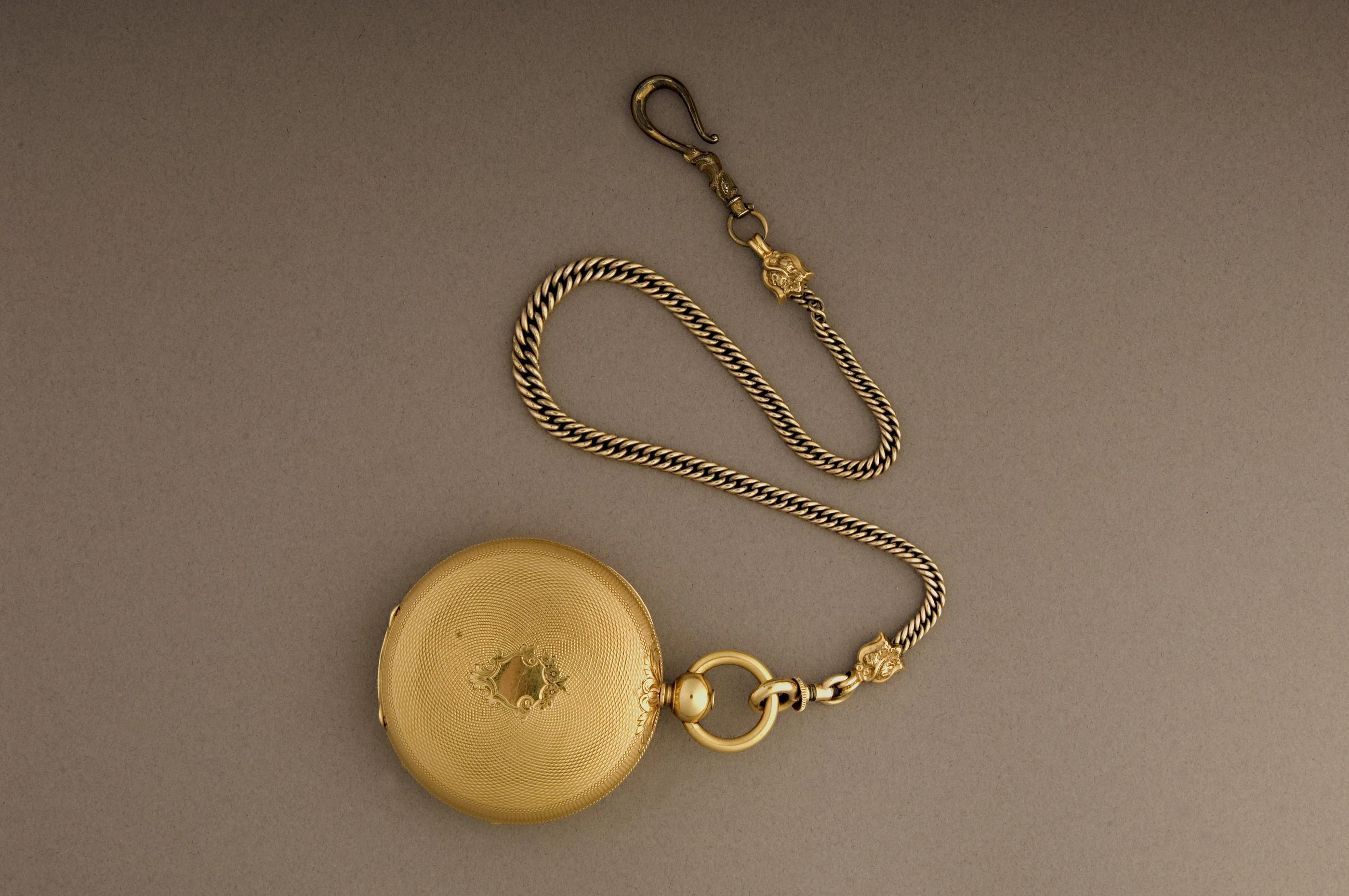
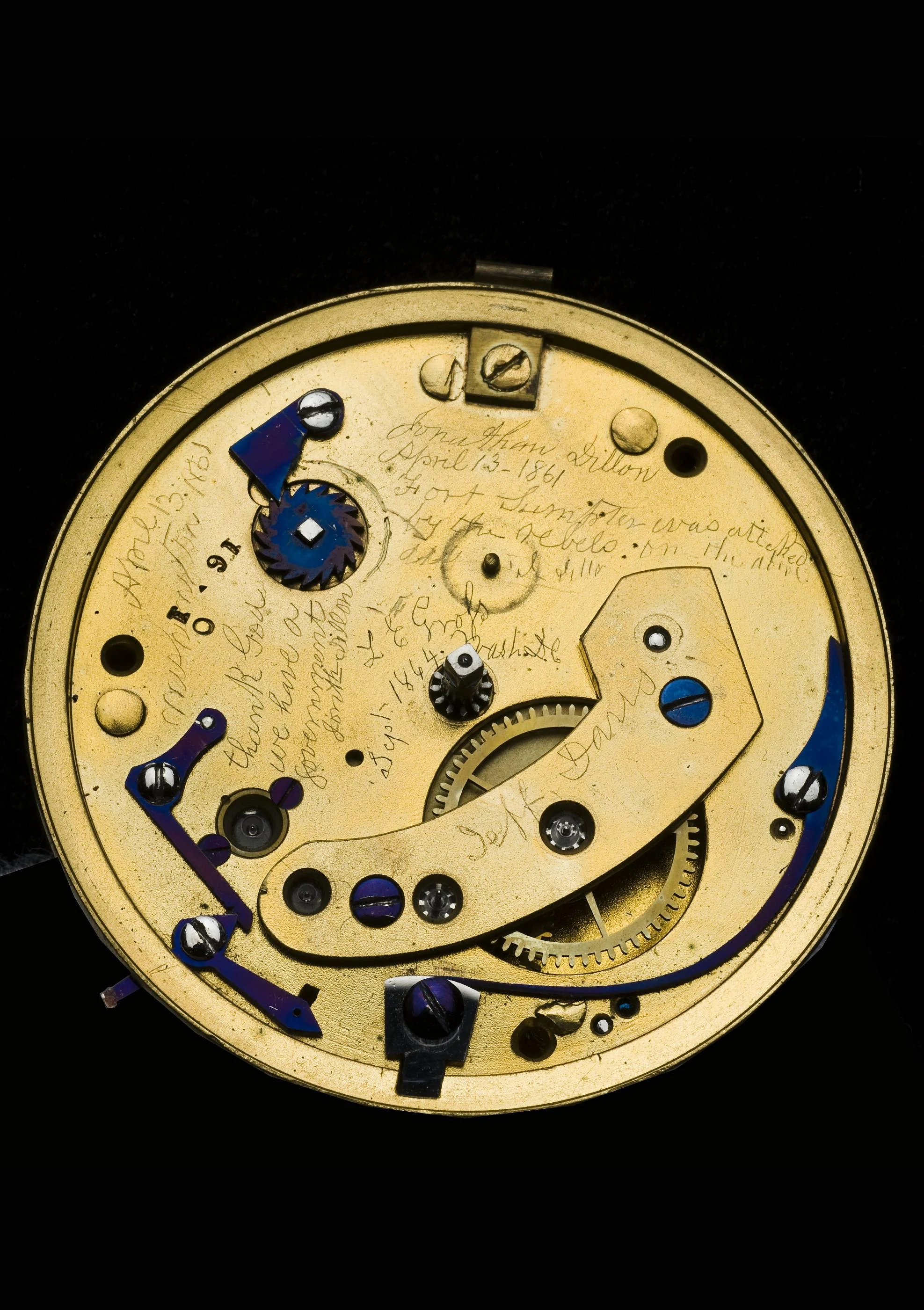
The Smithsonian has photographed Abraham Lincoln’s gold pocket watch with the dial showing, with the case closed and with the dial removed. Only the third view reveals the name Jonathan Dillon. He was the watchmaker who had the piece on his bench in Washington when news arrived of the attack on Fort Sumter in April 1861. Lincoln could consult the time every day without seeing a word Dillon had written.
One watch, several hands
Lincoln bought the watch from jeweller George Chatterton in Springfield, Illinois, in the 1850s. The movement came from Liverpool. An American workshop, whose name the museum does not know, made the 18-karat gold case. A photograph of the outside tells you something about the case and very little about who made the mechanism inside.
Turn to the photograph taken beneath the dial. Dillon scratched his name and the date 13 April 1861 into the metal, along with a few words about the attack. The bombardment began on 12 April. The date on the watch is evidence of what a repairer chose to write as word reached Washington. For the chronology of the fighting, the National Park Service supplies a different kind of record.
How the inscription came to light
In March 2009, after hearing from a great-great-grandson of Dillon, the museum removed the dial. Other hands had left marks there too. A second watchmaker signed himself L. E. Gross in 1864. Someone also scratched the name “Jeff Davis” into the watch. The museum identifies no author for that inscription.
For a collector tracing a watch’s history, the most useful thing about those three photographs is being able to put the layers back in order. The case points to one workshop, the movement to another, and a few scratches to people who later handled the watch. An unattributed name on the metal is still worth recording. It can stay unattributed.




Loading comments...