
Most modern space-watch stories still orbit the same old moon. Barrelhand Monolith is interesting because it points in a different direction: not toward the romance of the 1960s, but toward the practical problem of making a mechanical object survive the next chapter of commercial and crewed spaceflight.
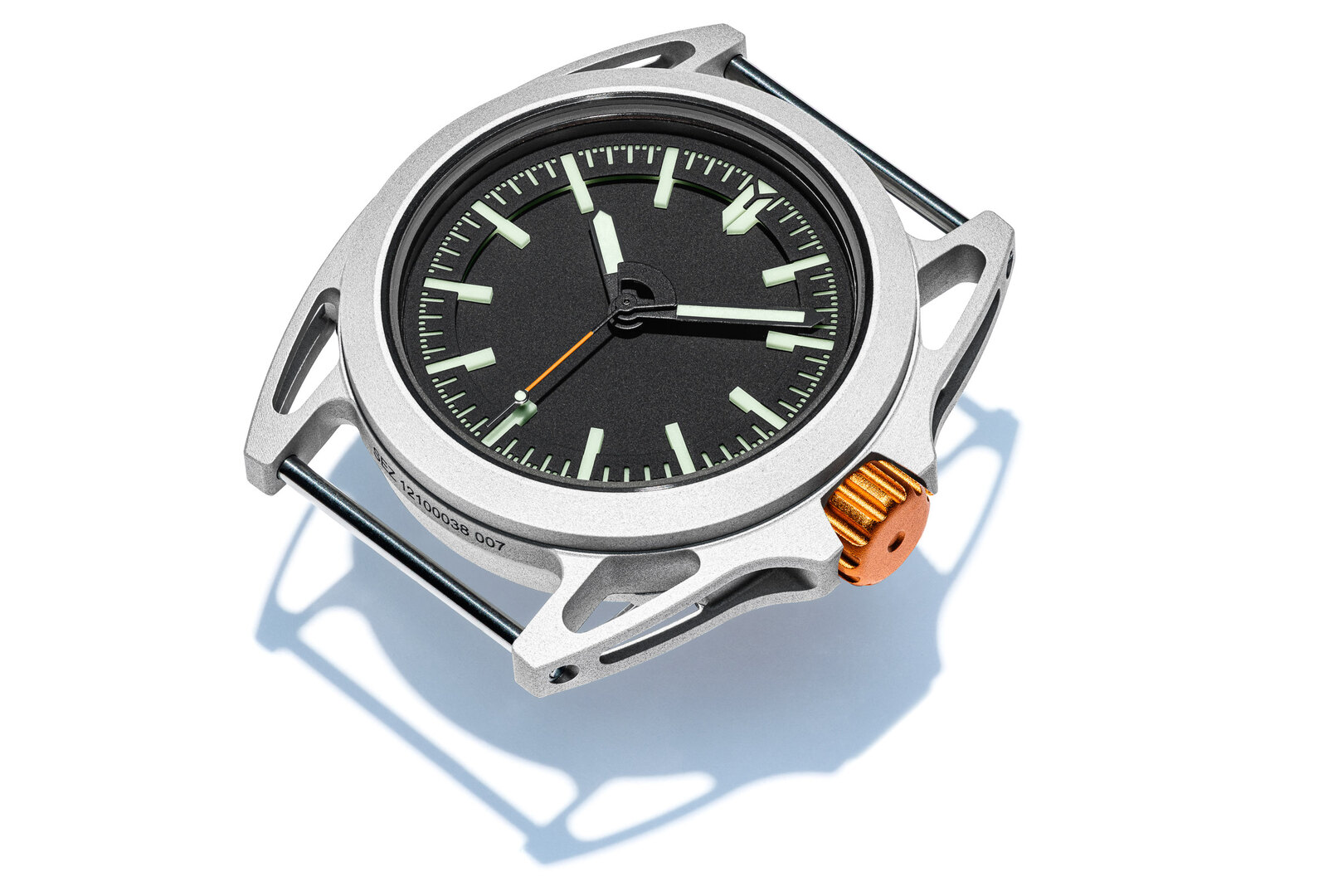
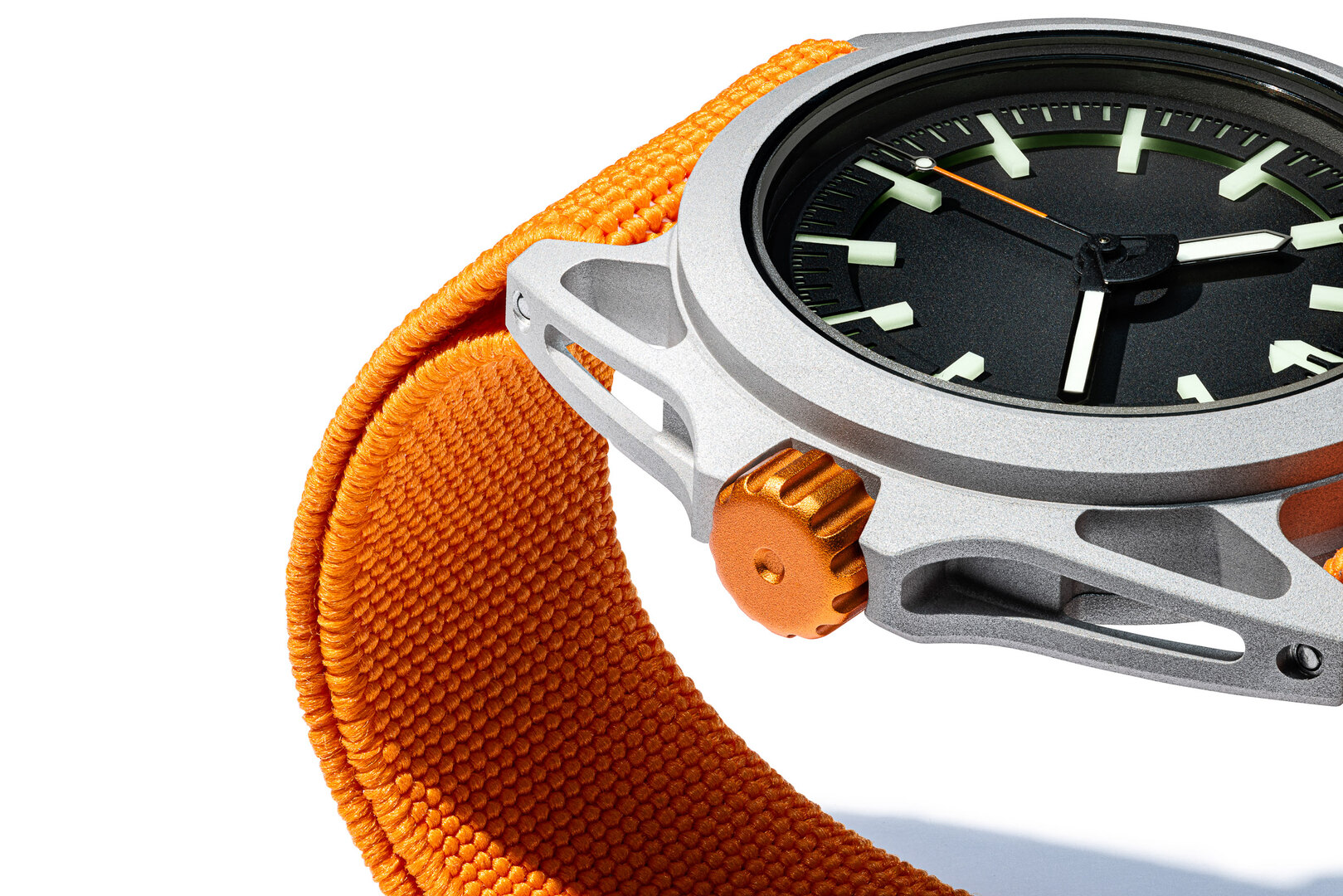
Launched by the San Francisco independent in May and pulled back into the conversation this week by fresh hands-on coverage, Monolith is not a chronograph and does not try to be a Speedmaster sequel. It is a three-hand mechanical tool watch with a 38 × 45 × 11.8 mm 3D-printed Scalmalloy chassis, a bright orange glove-friendly crown, a suspended sapphire system, 20 ATM water resistance and published operating limits that run from vacuum to 20 ATM, -120°C to +120°C and 3,000 g of shock.
Why this is worth reading
The collector hook is not only that Barrelhand has made a watch for space. Plenty of watches borrow space language. What makes Monolith different is that the specification is built around constraints rather than nostalgia: low mass, thermal insulation, shock protection, glove interaction, serviceability and cultural payload.
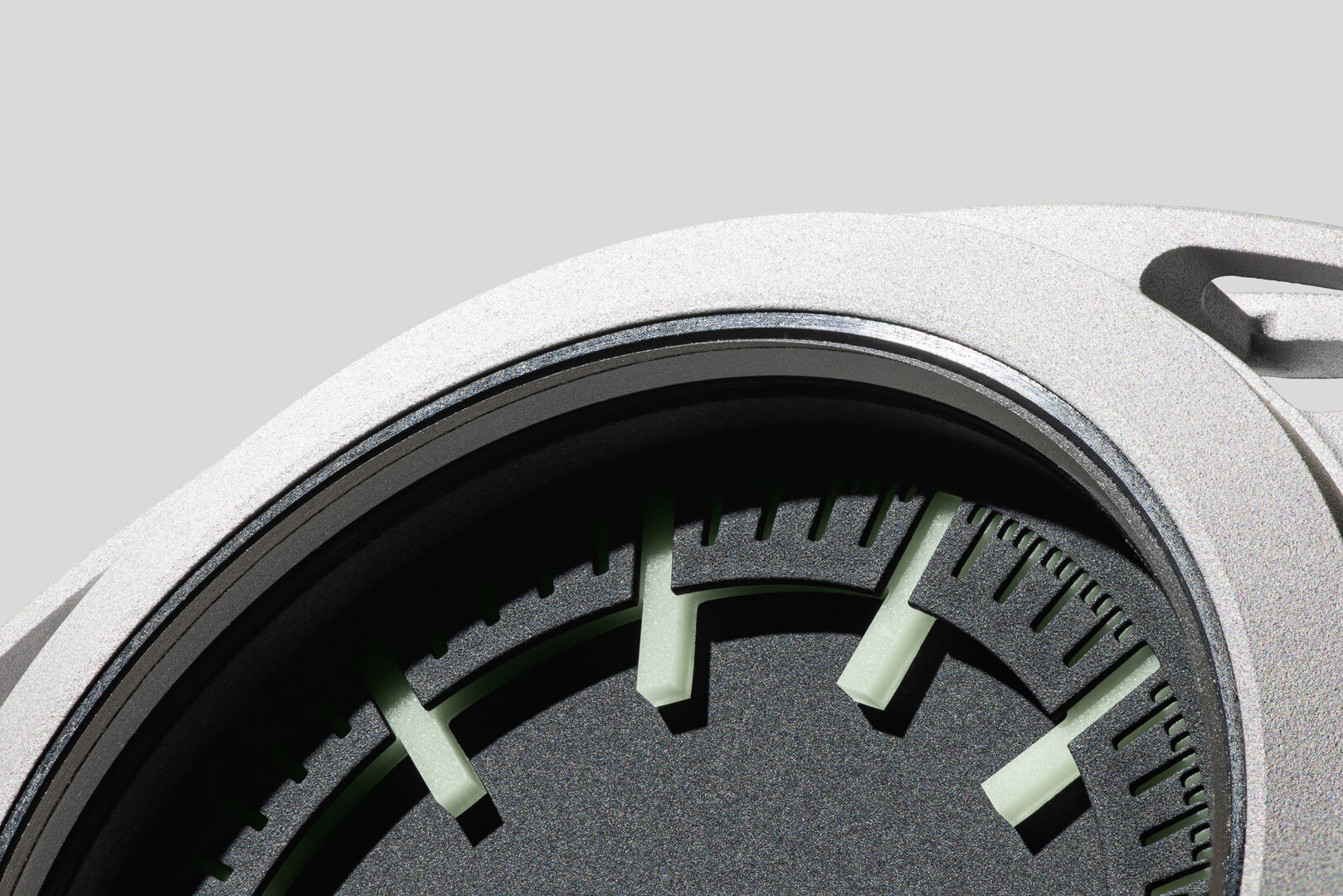
Barrelhand says the watch head weighs 31 g without the EVA/IVA strap. The case assembly uses 3D-printed Scalmalloy with an Aircore insulation chamber; the brand describes Scalmalloy as an aerospace alloy used in satellite development and says the Aircore chamber insulates far better than an equivalent steel case. That is the kind of material choice that changes the conversation from styling to use case.
Collector's Note
Monolith matters because it treats the space-watch category as an engineering brief again. If the original space-watch myth was about a proven instrument being selected for a mission, Barrelhand is asking what a purpose-built mechanical watch should look like when the mission environment is the starting point.
The case is the argument
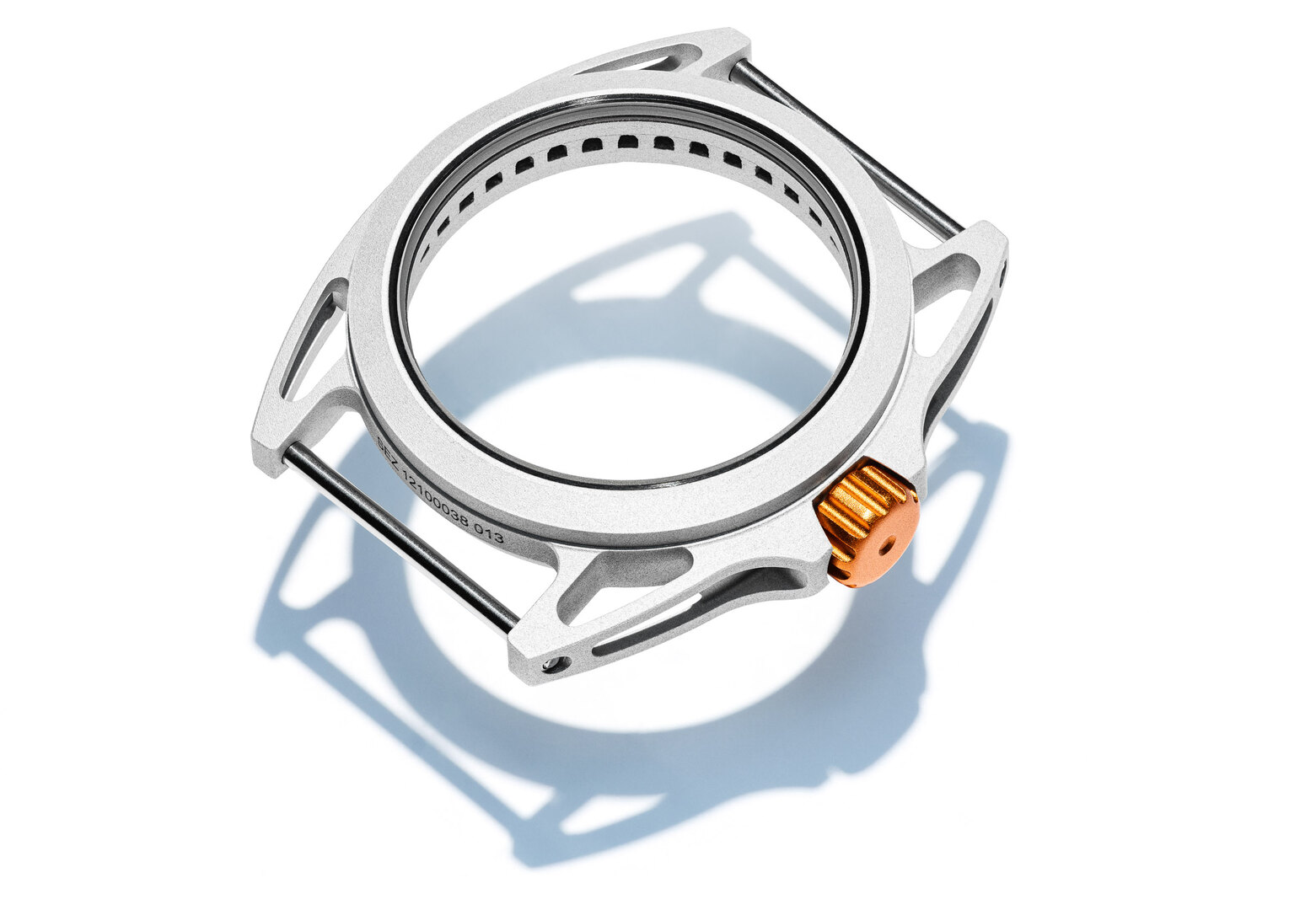
The most important visual decision is the open, skeletal Scalmalloy chassis. It does not imitate a conventional dive-watch or field-watch case. The long lugs, exposed bars and orange Airlock Crown make the object look closer to mission hardware than to a softened luxury sports watch.
That is a risk, but it is also the reason the watch has a point of view. The 8 mm crown is meant to be operated underwater or in vacuum, the Torx hardware is chosen for tool compatibility, and the strap uses EVA and IVA modes with a grade-5 titanium G-hook microadjust. These details are easy to dismiss as extreme until you remember that the whole premise is operation without a normal retail-service safety net.
A simple movement, heavily contextualized
Inside is the M1 Engine, built on a Sellita SW300-1b base. On paper, that sounds less exotic than the case. In context, it is a sensible decision. Barrelhand lists automatic bidirectional winding, stop-seconds, a 4 Hz Glucydur balance, nickel-phosphorous escape wheel and pallet fork, a 50-hour power reserve, factory regulation to ±6 seconds per day and ISO 764 / DIN 8309 antimagnetic certification to 4,800 A/m.
The more important part is how the movement sits inside the watch. Barrelhand describes an Engine Mount system for omnidirectional shock absorption and added insulation from the outside environment. For a tool watch, especially one claiming 3,000 g shock resistance, architecture matters more than movement glamour.
The human payload on the back
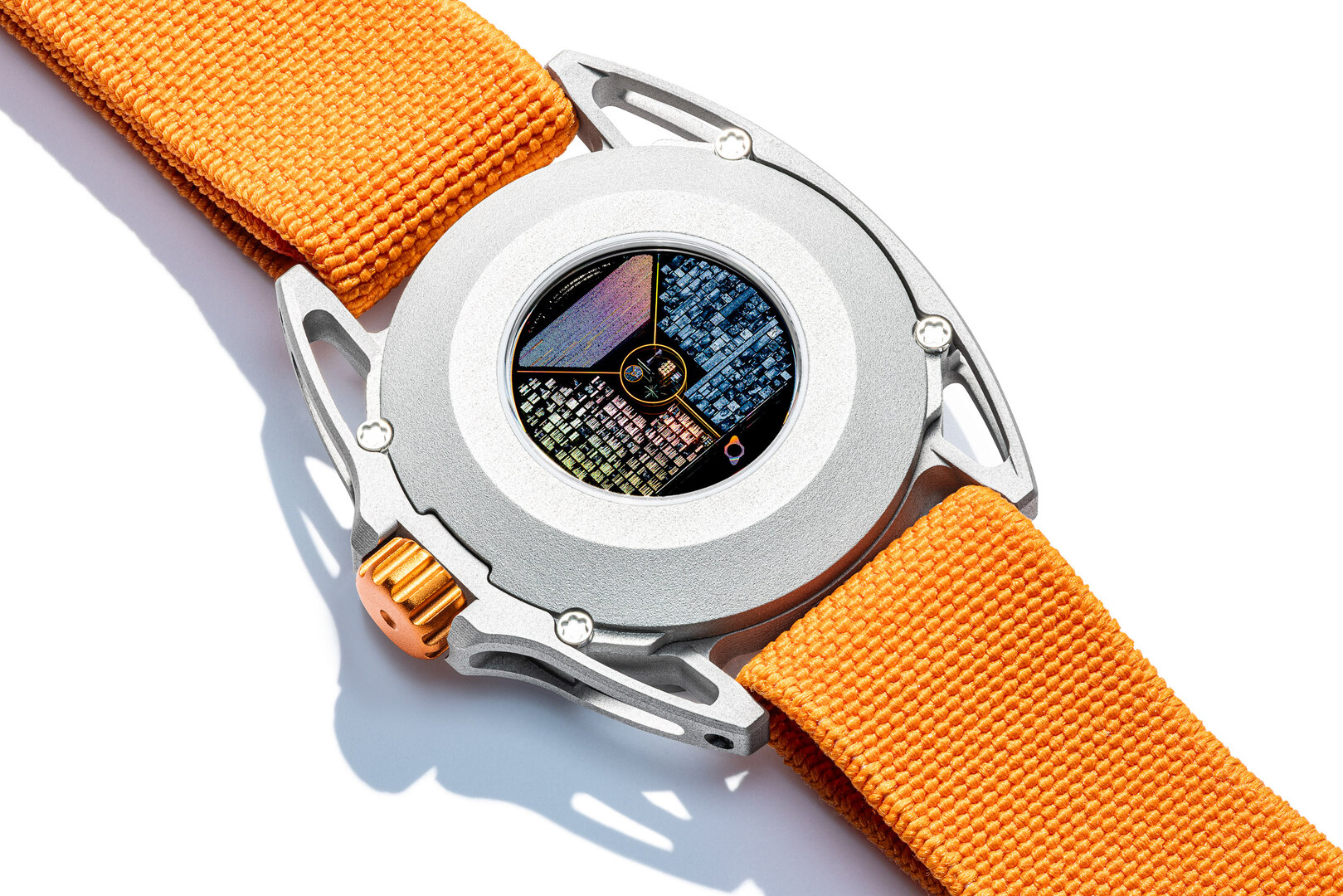
The caseback is not a normal display back. Barrelhand integrates a 19 mm Memory Disc Module, a 1.4 g NanoFiche archive with 3 GB of cultural material. The brand says the archive includes UNESCO preamble translations, artworks, children's paintings, a visual sound artifact by Richard D. James and the original French edition of Le Petit Prince.
This could have been a gimmick. It lands better because it fits the larger idea: space tools are not only about survival, but also about psychological continuity. The watch is trying to be both instrument and message capsule.
Where the collector risk sits
The obvious counterpoint is price. At USD 9,750, Monolith is far above most independent tool watches and sits near serious established-brand territory. It is also an unusual object from a small company, which means buyers are accepting the risks that come with early, engineering-led independents: production scale, service logistics and long-term collectability are still being written.
But that is exactly why the watch is interesting. The safest version of this idea would have looked more familiar and mattered less. Monolith is valuable as a signal that the next great tool-watch story may not come from a brand recycling its mid-century archive. It may come from someone treating extreme use as a live design problem.
Availability
Barrelhand lists Monolith at USD 9,750. The first production run has already been delivered to early customers, with new orders open and deliveries expected in Q4 2026. The brand says the watch completed a first flight test beyond the Kármán line in 2025 aboard Blue Origin NS-34, worn by astronaut Gökhan Erdem.
Final read
Monolith is not the watch most collectors will buy, and that is not the point. It is the kind of independent project that expands the category around it: technically specific, visually uncompromised and strange enough to make the phrase “space watch” feel useful again.
Loading comments...