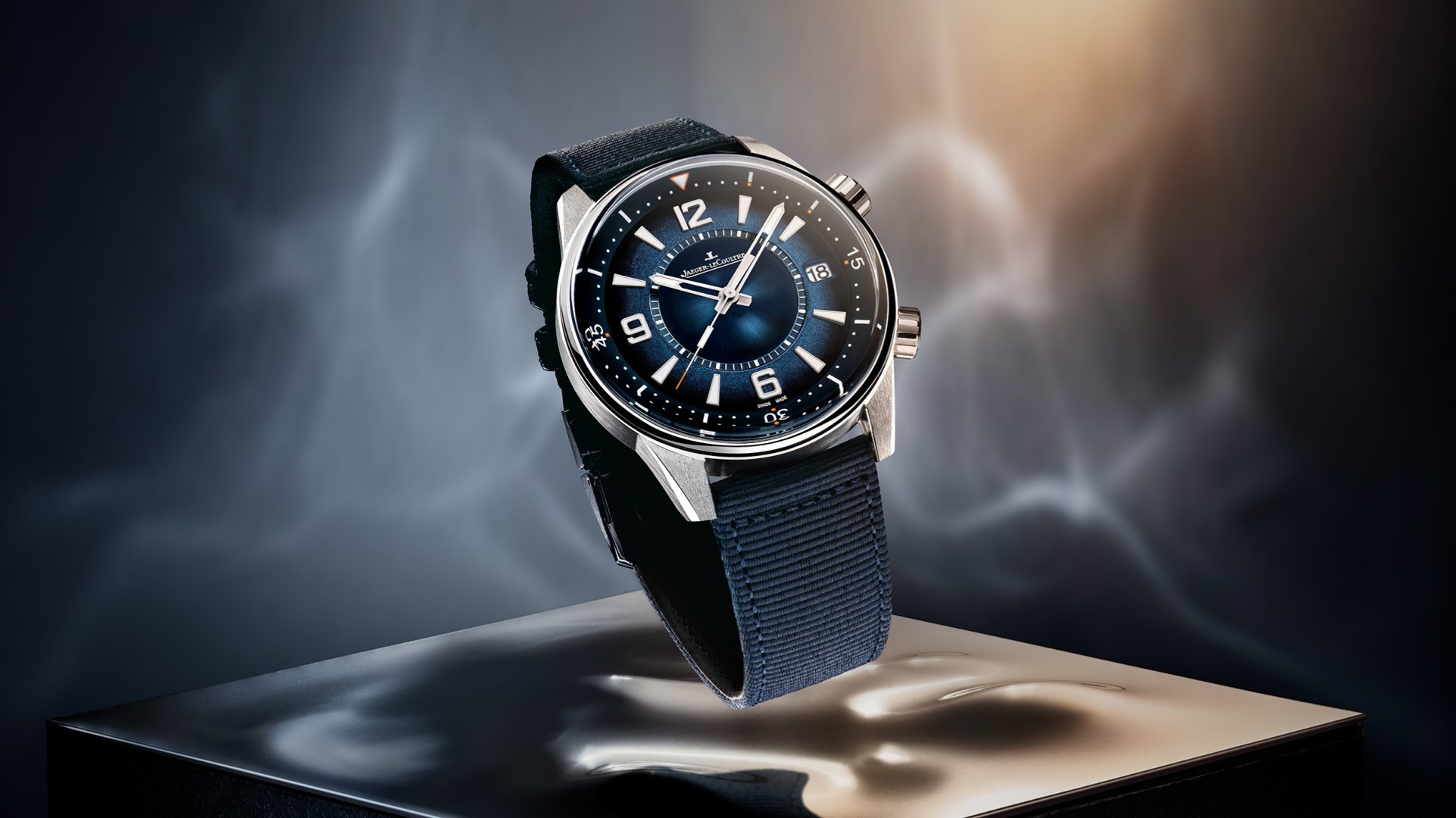
Jaeger-LeCoultre did not need to reinvent the Polaris Date to make it feel new again. The more intelligent move was proportion. In the Maison’s official release dated 22 June 2026, the latest Polaris Date arrives in a 40 mm steel case with a reduced 12.9 mm profile. That sounds like an incremental correction rather than a grand launch line, but it is precisely why the watch matters. The Polaris has always sat in an interesting place between dive-watch utility and luxury-sports restraint. What sometimes held it back was not identity, but size discipline. This new reference tightens that up.
The key point is that Jaeger-LeCoultre has not stripped the watch to achieve the smaller format. The official brief keeps the familiar double-crown architecture, the internal rotating bezel, the dark blue gradient dial, and the in-house Caliber 899. In other words, this is not a softer, simplified Polaris built merely to chase current trends. It is the same idea, edited more carefully for 2026 wrists.
What Jaeger-LeCoultre officially confirms
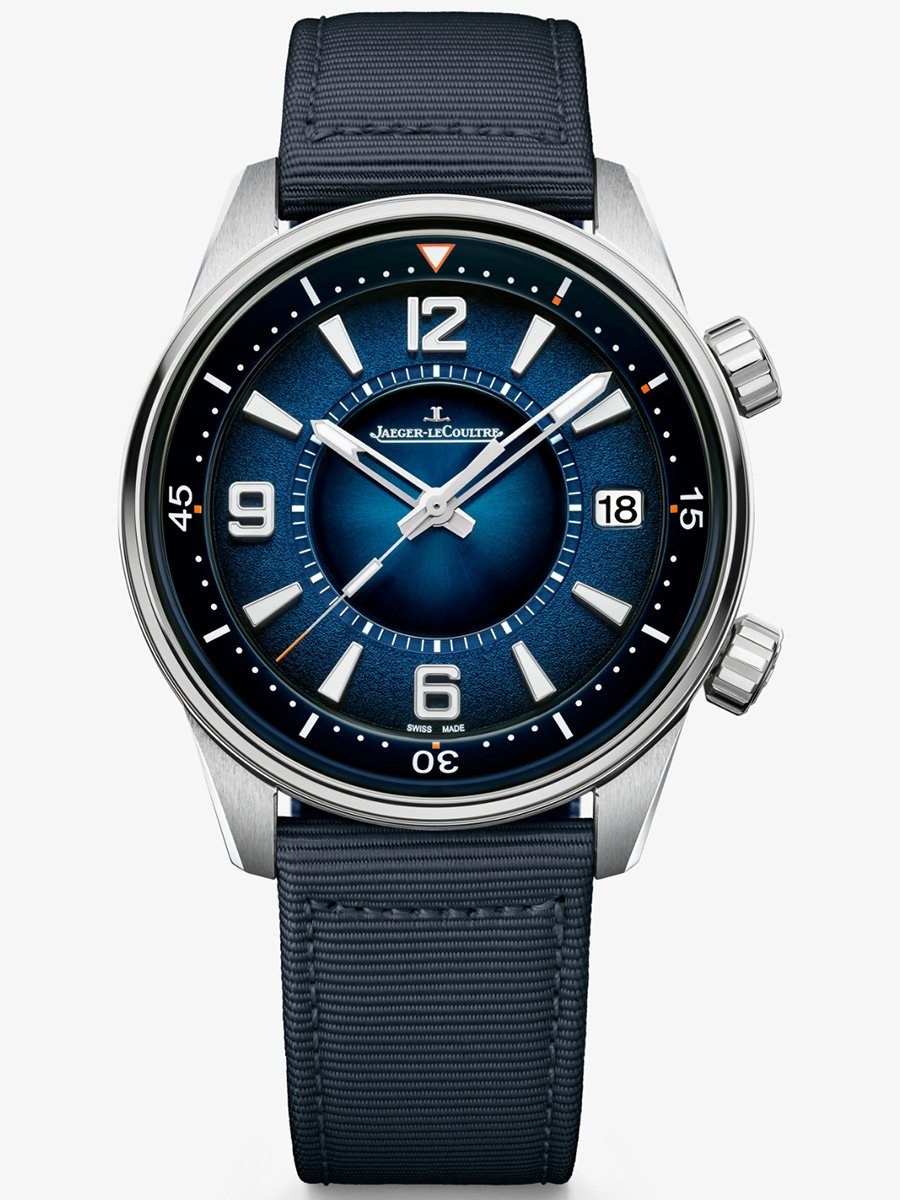
The official press note frames the launch around wearability, and the specifications support that narrative cleanly. The new steel case measures 40 mm across and 12.9 mm thick. The dial remains a dark blue gradient lacquer construction with concentric zones, applied Arabic numerals, elongated trapezoidal markers, and skeletonized hands. Jaeger-LeCoultre also highlights the amount of work behind the dial finish: layered lacquer, hand polishing, and the now-signature sense of depth that separates Polaris from flatter sports-watch dials.
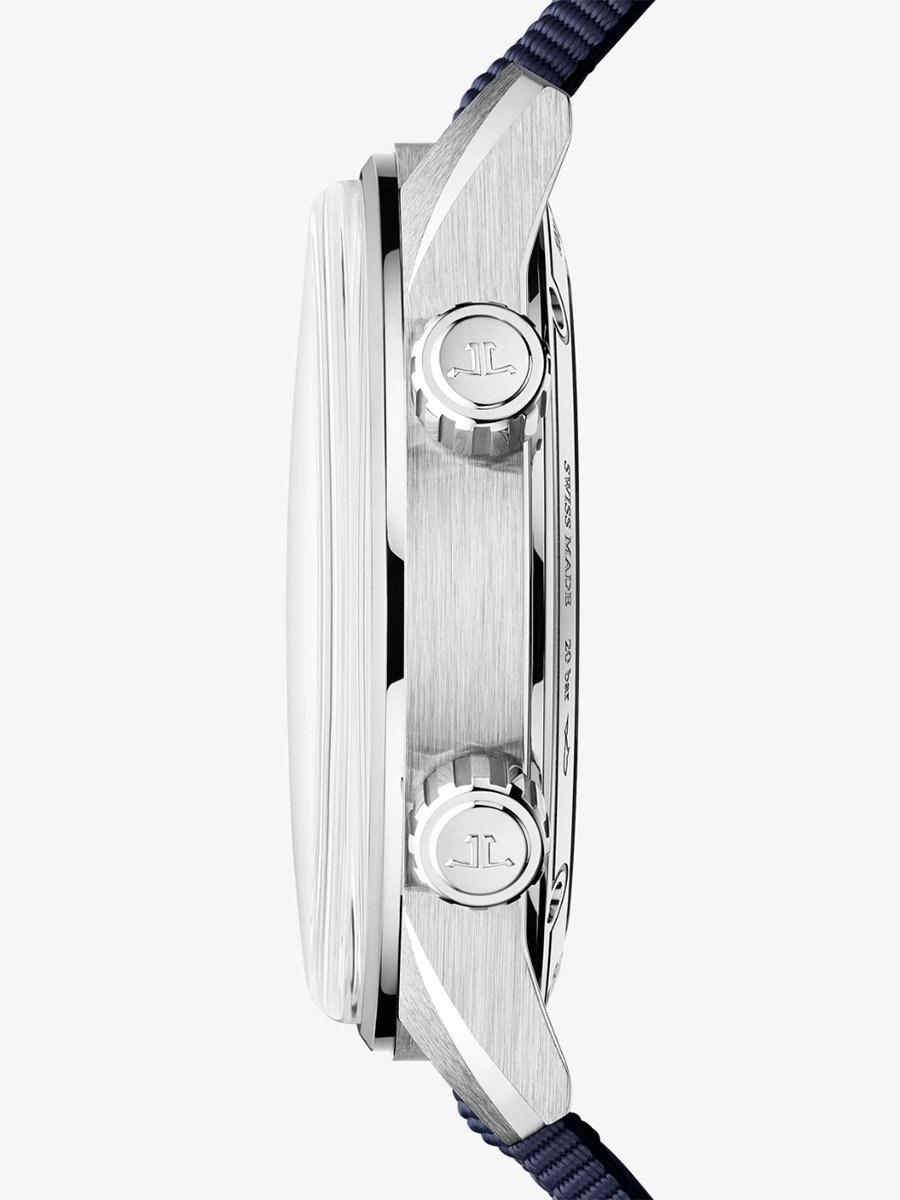
The sports-watch fundamentals stay intact. The internal rotating bezel is still adjusted via the second crown at 2 o’clock, preserving the cleaner silhouette that distinguishes the Polaris Date from more literal external-bezel divers. Water resistance remains 200 meters, which keeps the watch within real dive-adjacent territory rather than making it a purely aesthetic sports piece. Official imagery and secondary coverage also show the watch on a blue canvas strap with a double-folding clasp, reinforcing the practical side of the package.
The movement and why the reduction matters
Inside sits Jaeger-LeCoultre’s automatic Caliber 899, visible through the sapphire caseback. WatchTime’s coverage, which credits Jaeger-LeCoultre’s official materials, notes a 70-hour power reserve and a 4 Hz operating frequency. The important point for Horomag is not just the movement name, but the fact that Jaeger-LeCoultre resisted the temptation to make the smaller watch feel compromised. There is still a real manufacture caliber here, not a thinner but less interesting shortcut.
That matters because the Polaris Date enters a 2026 landscape where the conversation around sports watches is shifting away from brute presence. Collectors and newer buyers alike have become less impressed by large-case bravado and more attentive to how a watch actually integrates into daily wear. A 40 mm Polaris Date is not revolutionary by the numbers alone. It becomes meaningful because the older format already had the right ingredients. Jaeger-LeCoultre simply moved the recipe closer to where the market has gone.
Why the Polaris design benefits from smaller proportions
The Polaris Date was never a watch that needed more theatre. Its appeal has always been tied to controlled detail: layered textures, strong lume shapes, vintage-adjacent numerals, and a case that tries to balance polish with technical intent. When those cues live inside a better-sized case, they read more clearly. The watch stops trying to prove itself and starts feeling more resolved.
That is especially true of the dial. Jaeger-LeCoultre’s blue gradient work is one of the stronger visual signatures in this segment, but it gains power when it does not have to fight oversized real estate. The narrower profile also helps the Polaris feel more like a genuine crossover watch. It can still sit inside the sports-watch conversation, but it now looks more plausible as an everyday luxury watch rather than only as an enthusiast’s niche alternative.
Positioning, price, and Horomag take
WatchTime lists the new Polaris Date at $10,400, placing it in a competitive but still serious territory where buyers expect a real manufacture movement, finishing depth, and a distinct design language. On paper, that means Jaeger-LeCoultre is not chasing value-watch headlines. Instead, it is sharpening the product logic of a watch that was already close to being more universally desirable.
From Horomag’s perspective, this is exactly the sort of release that deserves attention even without a radically new complication. Jaeger-LeCoultre has read the current luxury-sports climate well. Rather than making the Polaris louder, busier, or more collectible by artificial scarcity, the brand made it more believable on the wrist. That is a stronger long-term move than another color stunt or a dramatic size jump.
If there is any caution, it is that some buyers may still want bracelet options or an even more explicit dive-tool identity. Fair enough. But the new Polaris Date succeeds because it understands its own lane: refined, sporty, practical, and now finally proportioned in a way that broadens the audience without flattening the personality.
Loading comments...