Buying a serious Seiko dive watch sounds simple until the catalog starts branching in every direction. There are accessible Prospex models, heritage-inspired SPB references, higher-spec Marinemaster pieces, special editions, and professional-looking divers that range from everyday tool watches to collector bait. The trick is not finding the most expensive Seiko diver you can justify. The trick is understanding which layer of Seiko dive-watch logic actually fits your wrist, your routine, and your tolerance for enthusiast detail.
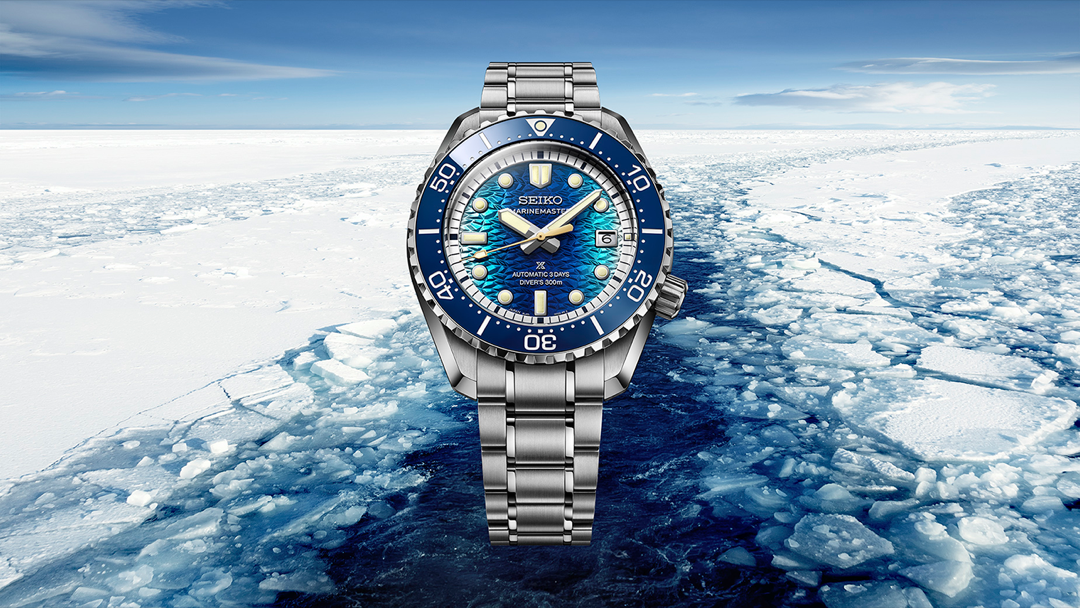
This guide uses the current Prospex Marinemaster conversation as a useful anchor. Seiko’s 2026 Marinemaster 1968 Heritage Diver’s Watch family, including the JAMSTEC limited edition and the regular HBF001, shows both sides of the decision: real technical credibility, serious 8L movement appeal, and a price point that asks you to be honest about what you actually want from a dive watch.
Start with the job, not the reference
The first mistake is choosing by reference number before choosing by role. A dive watch can be a summer watch, a daily office watch, a travel watch, a collector object, or a genuinely rugged instrument. Those are different jobs. If you mostly want a watch that can handle water, straps, knocks, and casual wear, you may not need the highest-tier movement or the most limited dial. If you want a watch that feels like the top of Seiko’s mechanical dive-watch ladder, then the Marinemaster argument becomes stronger.
For a first serious Seiko diver, ask three questions. Will it be worn on the bracelet most days? Does the case thickness bother you under a cuff? Do you care more about movement pedigree or easy daily ownership? The answers matter more than the model name.
Understand Seiko’s movement ladder
Seiko dive watches are unusually sensitive to movement tier because the brand spans such a wide price range. Entry and mid-range Prospex models often make sense because they deliver durability, strong lume, useful water resistance, and recognizable Seiko dive-watch design without trying to be luxury objects. Higher-tier references, especially those using 8L-family movements, are aimed at buyers who care about the connection to Grand Seiko-adjacent manufacturing and more serious mechanical finishing.
The 2026 Marinemaster models use Caliber 8L45, which is central to their appeal. That movement choice helps explain why these watches are not just another dial variation. It also changes the buying question. You are not only paying for case shape and branding; you are paying for a more serious engine inside the watch. That is meaningful if you value mechanical hierarchy. It is less meaningful if your daily priorities are thinness, price restraint, and low-stress ownership.
Case size is only half the story
Many buyers look at diameter first, but Seiko divers often live or die by thickness, lug shape, bracelet integration, and how the caseback sits. A watch can look manageable on paper and still feel tall. Another can sound large but wear well because of curved lugs and a stable bracelet. The current Marinemaster silhouette matters because it carries the familiar Seiko professional-diver language while trying to feel more refined than the blunt instruments of the past.
If you are buying online, compare more than the diameter. Look for thickness, lug-to-lug, bracelet taper, clasp design, and whether micro-adjustment exists. A serious dive watch should be easy to resize across seasons. If the bracelet cannot adjust to wrist swelling or temperature changes, the watch may spend more time on rubber than you expected.
Choose between permanent collection and limited edition
Seiko is very good at limited editions. That can be a strength and a trap. The JAMSTEC limited edition brings a stronger story, a more distinctive visual identity, and a real connection to ocean research. For collectors, that matters. It makes the watch easier to remember and gives the dial more context than a simple color change.
But a permanent-collection model can be the smarter daily buy. It usually feels calmer, dates more slowly, and asks less of the rest of your wardrobe. If the watch is going to be your main diver, the less dramatic option may give you more long-term satisfaction. If it is a second or third Seiko and you already have a straightforward diver, the limited edition becomes more appealing.
Do not ignore service and ownership
A serious Seiko diver is still a mechanical tool watch, and ownership is not only about the purchase price. Higher-spec movements may offer more emotional value, but they can also make servicing more important. Bracelets, bezels, crystals, and gaskets matter too. If you plan to actually swim or travel with the watch, service access and parts availability should be part of the decision.
This is where Seiko’s scale helps. The brand has a long dive-watch history and a broad service footprint compared with many microbrands. Still, if you are stepping into the higher end of Prospex, you should treat it like a real mechanical purchase rather than an impulse sports watch.
When to buy the Marinemaster tier
The Marinemaster tier makes sense if you want a Seiko that feels like a destination rather than a stepping stone. It is for the buyer who already understands why cheaper Prospex watches are good, but wants a stronger case, a more serious movement, and a design with flagship energy. It is also for someone who wants Seiko specifically, not just “a diver around this price.”
If your real comparison is a Longines HydroConquest, Oris Aquis, Tudor Black Bay, or another Swiss sports watch, be honest. Seiko wins when you value its Japanese dive-watch language, movement story, and practical tool-watch credibility. It becomes harder to justify if you are mainly chasing brand prestige or resale shorthand.
Horomag recommendation
For most buyers, the smartest path is to start with purpose. If you need one watch for daily wear, choose the calmer regular-production diver with the best bracelet fit. If you already own a basic Prospex and want the next meaningful Seiko step, the 8L Marinemaster tier deserves attention. If you collect stories as much as specs, the JAMSTEC model has the stronger emotional pull.
The main rule is simple: do not overbuy just because Seiko makes it easy to climb the ladder. Buy the diver whose case you will actually wear, whose movement you actually care about, and whose dial you will still enjoy after the launch excitement fades.